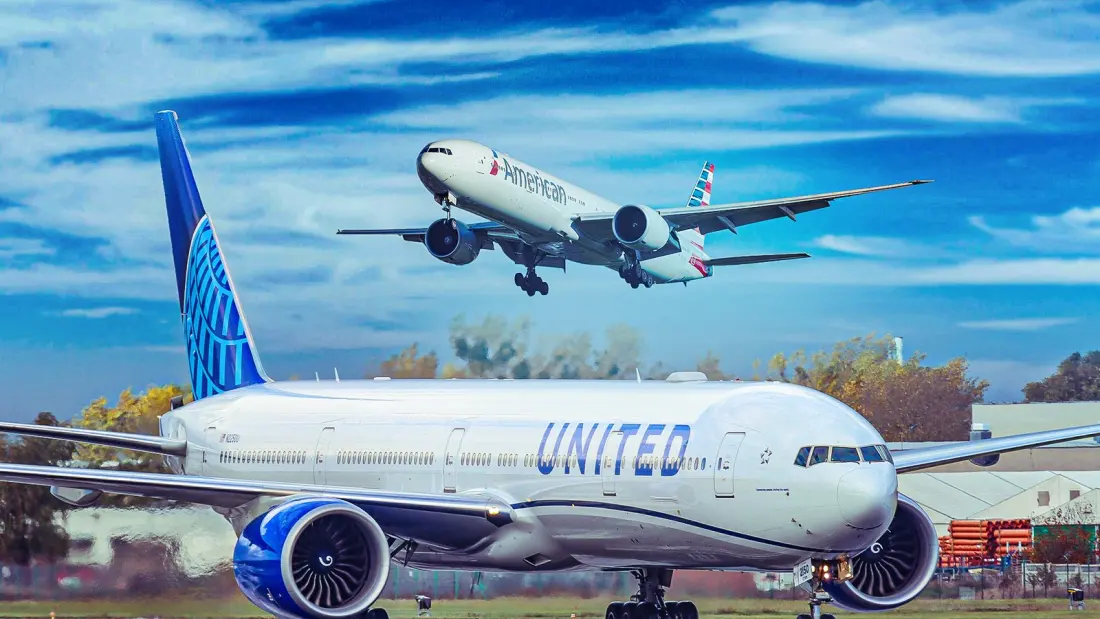
American Airlines and United Airlines both treat the Boeing 777-300ER as their flagship long-haul jet, but if you look closely at where they fly it and how they've configured the cabins, you'll find two completely different aircraft philosophies under the same metal.
American bought 20 of the type between 2012 and 2016 as part of a fleet overhaul, its first genuinely huge jet since retiring the 747 in 1985. United followed between 2016 and 2020 with 22 planes, switching to the 777-300ER largely because its ageing 747s needed expensive work and the A350s it had ordered wouldn't arrive in time. Boeing offered a similar-sized aircraft, sooner, and cheaper.
The cabin layouts tell the real story. American is now retrofitting all 20 of its jets with 70 Flagship Business suites, 44 premium economy seats and 330 seats in total — dropping Flagship First entirely. That makes roughly 35-44% of the aircraft premium, a huge commitment for an airline that otherwise runs smaller premium cabins. United's 350-seat layout has 60 Polaris business seats and 24 Premium Plus seats, but crucially also over 100 extra-legroom Economy Plus seats — more than double American's extra-legroom count. Strip those out and American actually offers considerably more true premium seating, with business class stretching further forward on the aircraft.
Where the jets fly reinforces the split. American concentrates its 777-300ERs on premium-heavy routes to partner hubs: London, Tokyo, Sydney, São Paulo and Buenos Aires, spread across five hubs including New York, Dallas/Fort Worth, Miami, Los Angeles and Charlotte. United has consolidated its fleet mostly at San Francisco and uses the plane as a long-range people mover across the Pacific — Manila, Shanghai, Hong Kong — often on routes with strong cargo demand. Notably, United doesn't send the type to London at all.
For travellers, this matters when picking flights and cabin products. Want the largest business-class cabin American offers, or future Flagship suites? Aim for its 777-300ER routes. Redeeming for Polaris on a Pacific route? United's version delivers that, with the bonus that premium economy and Economy Plus give solid mid-tier options. Delta, meanwhile, is skipping this aircraft entirely and will use the larger, newer A350-1000 on ultra-long-haul flying — with a cabin layout closer to American's premium-heavy approach.
In short: same plane, two airlines, two strategies — one built to sell lie-flat suites to London, the other to move 350 people across the Pacific.