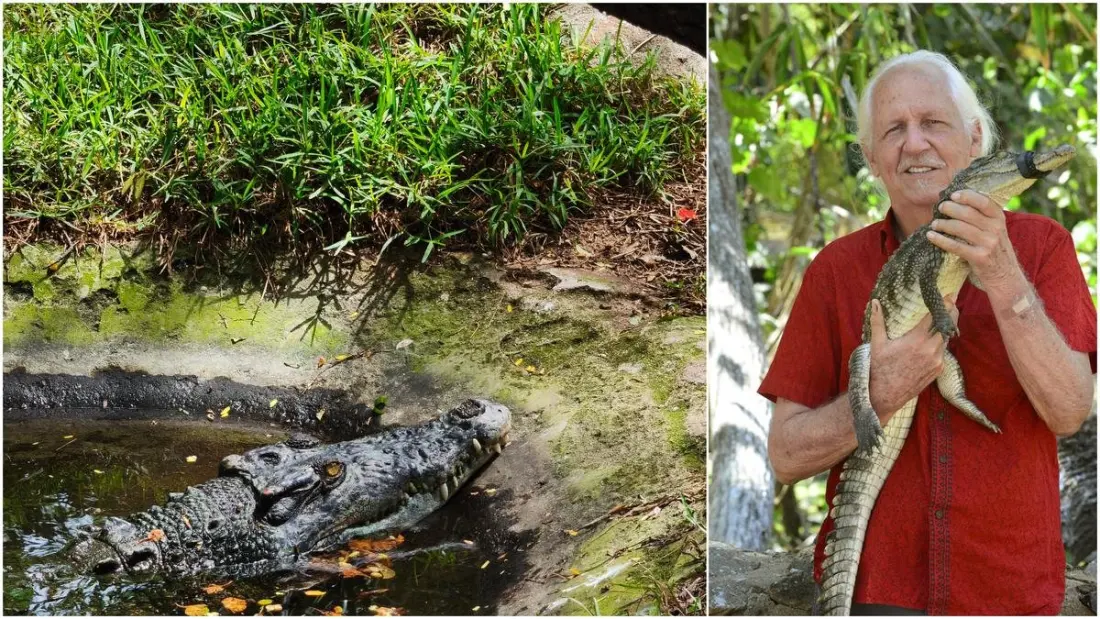
Half a century ago, a herpetologist who'd run out of money hitched a truck ride home from Odisha and scribbled an idea in a letter: why not breed crocodiles, release them back into the wild, and charge visitors a small entry fee to keep the lights on? That scribble became the Madras Crocodile Bank Trust, founded on August 26, 1976 by Romulus 'Rom' Whitaker and Zai Whitaker along with a group of fellow conservationists. This year it turns 50.
The backstory is grim. By the 1960s, hunting for skins had devastated India's three crocodilians — the mugger, the saltwater crocodile and the gharial — prompting protection under the Wildlife Protection Act of 1972. The Croc Bank became part of the answer. Today it holds around 395 crocodiles, including more than 47 gharials, plus 32 other reptile species — turtles, snakes and lizards — on an eight-and-a-half-acre campus at Vadanamelli village off the East Coast Road near Mahabalipuram.
The founding story has charm: the first gharial arrived from Uttar Pradesh in a box and, to everyone's relief, ran straight into the water. Startup funding came from wedding gifts, family backing (Zai's father Zafar Futehally founded WWF-India; her uncle was the ornithologist Salim Ali) and the sale of a tape recorder. Their first coastal plot cost about ₹5,000 an acre.
Beyond breeding, the institution has shaped Indian conservation well beyond its fences. It runs a Snake Bite Mitigation Project, helped establish the Andaman and Nicobar Environmental Team in 1990, and set up the Irula Snake Catchers' Cooperative, which gave the Irula community a livelihood producing venom for antivenom after the snakeskin trade was banned. Early researchers there pioneered work on sea turtles, freshwater turtles and gharials.
For the 50th year, trustee Ganesh Muthiah plans a 15,000-kilometre road trip through 20 states over 120 days to launch a Save the Reptiles campaign, alongside photography contests and outreach. And Rom, now in his eighties, is still expected at the celebrations — staff describe him as their Indiana Jones.
Why go? It's one of the few places in India where you can see all three native crocodilian species up close, watch keepers like 38-year-old G Gowrishankar call muggers towards them 'like goats', and join educator-led feeding sessions that debunk snake myths. Volunteers get hands-on husbandry experience — reptiles hide illness well, so keepers check behaviour, feed supplements and screen faeces daily. One warning everyone repeats: these are wild animals, however still they look. Keep your distance from the pens.
The essentials: it's at 4, East Coast Road, Vadanamelli Village, near Mahabalipuram; closed Mondays; entry is ₹110 for adults and ₹50 for children. Easy to pair with the Mahabalipuram shore temples on the same road.
Story via The Hindu Travel.