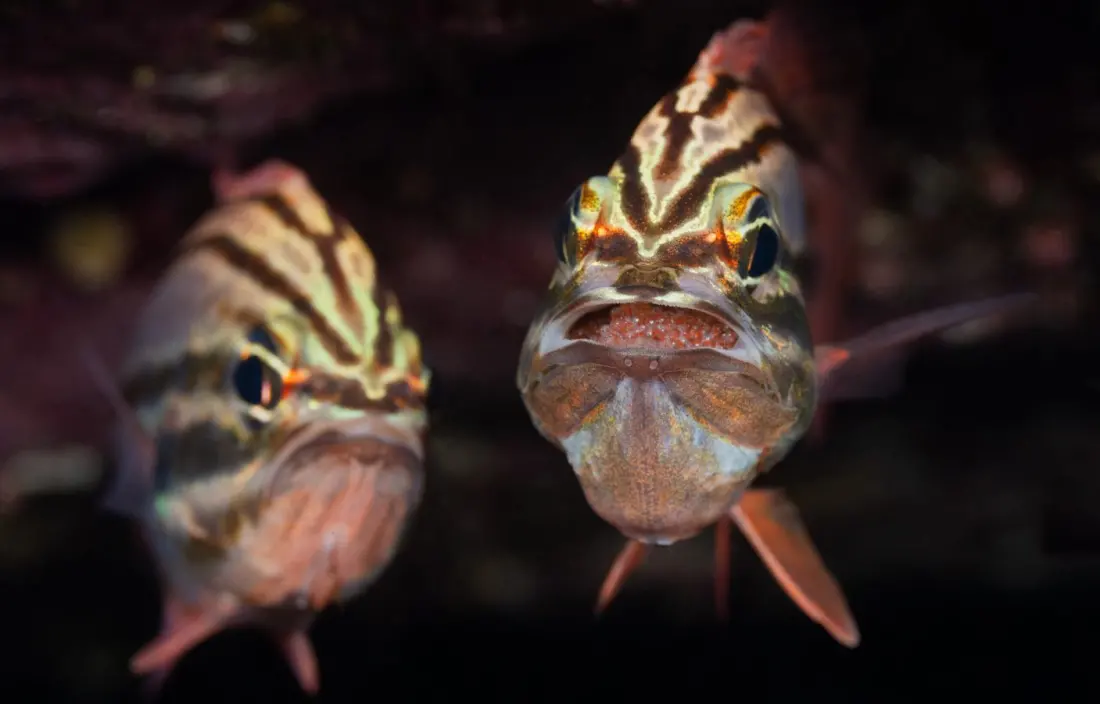
Seahorse fathers fall pregnant. Blenny dads guard eggs in discarded bottles. Cardinalfish males carry thousands of eggs in their mouths and go hungry while they do it. A new piece by marine biologist William Gladstone in Australian Geographic takes a close look at how ocean animals around Australia handle the perilous first days of life, and the strategies are stranger and more touching than you'd expect.
Start with the seahorses and their cousins, the seadragons. Males incubate embryos in a belly pouch or under the tail skin, physically shielding them while also passing over nutrients and proteins and removing waste through skin contact. Fewer embryos survive per brood than in nest-spawning species, but they hatch bigger and better developed — a trade-off that pays off.
Then there are the male blennies, who set up temporary bachelor pads each mating season using old oyster shells, empty bottles, rock cracks and holes in wharf piles. Females inspect both the nest and the suitor, deposit eggs, and leave immediately to find another mate. The father then spends up to 10 days cleaning the clutch and chasing off predators, solo.
Gladstone's own research on the onespot puller, a damselfish, quantifies just how costly fatherhood can be: devoted dads guard and clean their eggs so intensively that their feeding rate drops by 85 per cent. Between breeding cycles they gorge to recover. Mouthbrooding cardinalfish and gobbleguts take abstinence further — the male sweeps fertilised eggs into his mouth, where his larger head and jaws can hold thousands, aerating the bundle with jaw movements for the one to two weeks until hatching, without eating.
Not every strategy is hands-on. Port Jackson sharks stash their eggs in deep crevices for a marathon 10–11 month incubation, choosing sites that shield embryos from storms and predators, and packing each tough egg case with a generous yolk. Mourning cuttlefish, who live only a year or two, seal each egg in a protective capsule and hide the lot inside sponges. Rainbow cales, found only off southern Australia, opt for timing: they spawn in a simultaneous rush off the seafloor during the strongest falling tides around new and full moons, letting currents sweep fertilised eggs beyond the reach of bottom-dwelling predators.
Why should a traveller care? Because these are the animals you might actually see. Port Jackson sharks and rainbow cales live in southern Australian waters; seadragons are a bucket-list find for snorkellers and divers around Sydney, Adelaide and Melbourne; cuttlefish gather in spectacular numbers in South Australia's Spencer Gulf. Knowing the breeding seasons and habits adds a whole layer to a dive trip — and it's a good reminder to watch, not touch, especially anything guarding a nest or carrying eggs.
The common thread, Gladstone notes, is that none of these parents will ever meet their offspring after hatching. The care is front-loaded, often at real cost to the adult, but it gives the next generation its best shot in a very hungry ocean.
Australian Geographic