
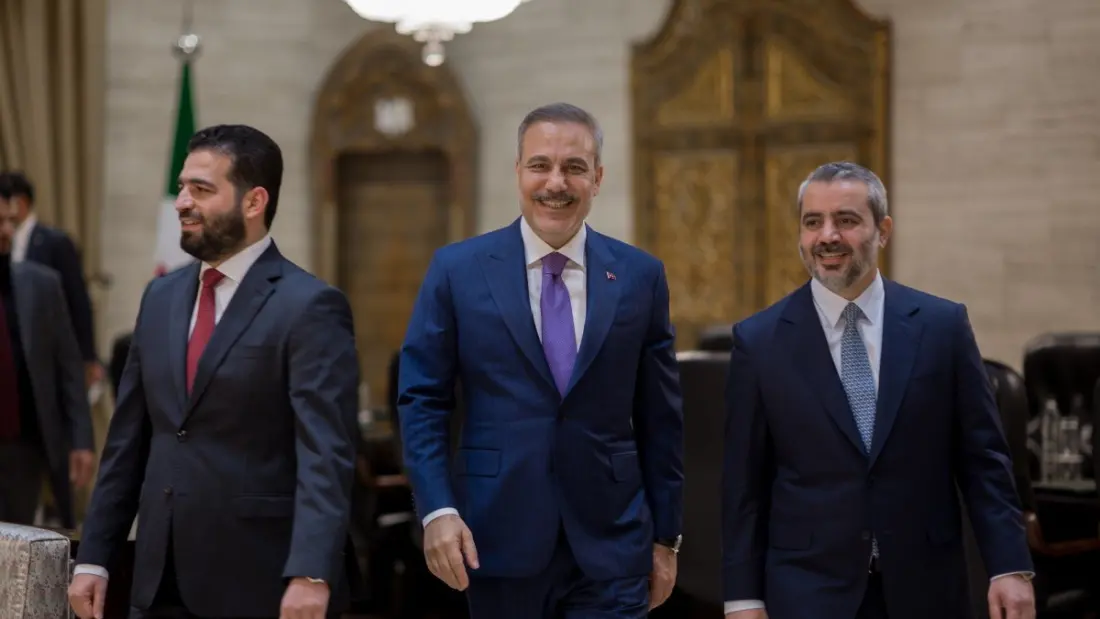
Syria is edging back onto the map. Turkish Foreign Minister Hakan Fidan spent two days in Damascus in mid-September, meeting President Ahmed al-Sharaa on day one before talks with Foreign Minister Asaad al-Shaibani and Interior Minister Anas Khattab. The headline outcome: Ankara's public backing for a unified, stable Syria, and confirmation that President Erdoğan is planning a visit to the Syrian capital — his first since the Assad government collapsed in 2024.
For anyone who has written Syria off as off-limits, the details in Fidan's readout are the interesting part. He described Damascus's streets as increasingly peaceful and vibrant, and praised Syrian efforts to build a country that, in his words, embraces all segments of society.Türkiye has pledged continued support through the transition, which matters because sustained Turkish engagement — trade, security coordination, eventually transport links — is one of the more realistic paths to normalisation.
Fidan also spent time on heritage, and not casually. His itinerary included the tomb of the 12th-century scholar and mystic Ibn Arabi, the shrine of Mawlana Khalid al-Baghdadi, and the tomb of Salahuddin Ayyubi (Saladin) — sites tied directly to the shared Turkic-Arab history of the region. He visited the Turkish Air Martyrs' Cemetery and the Suleymaniye Complex too, and met members of Syria's Turkmen community, a group he called integral to the country's future.
That heritage list doubles as a preview of what a reopened Damascus could offer travellers: some of the Islamic world's most significant shrines and Ottoman-era architecture, packed into an old city that was, before 2011, one of the region's great short-break destinations. The Umayyad Mosque, the souqs, the blacksmiths' alleys of Old Damascus — all of it is still there.
Why should a holidaymaker care? Because diplomatic visits like this are usually the precursor to practical changes: flight resumptions between Istanbul and Damascus, easier border crossings, tour operators dipping toes back in. Turkish Airlines and the overland route through Türkiye are the obvious corridors when movement normalises. That said, this is early diplomacy, not a green light — most foreign ministries still advise against travel to Syria, and independent tourism infrastructure remains thin. Watch this space rather than book flights.
The realistic takeaway: Syria's reintegration is being discussed at the highest levels, its leader is receiving foreign ministers, and the cultural treasures of Damascus are being showcased to the world again. For travellers, that's a story to follow over the next couple of years — first business and diaspora traffic, then, if stability holds, the return of leisure travel to one of the oldest continuously inhabited cities on earth.