Eindhoven spent most of the 20th century as a company town. Philips, which began here in 1891, once employed around half the region's workforce — and when it pulled out for Amsterdam in the late 90s, the city had to rebuild its identity fast. It managed it within a decade, reinventing itself as a design and innovation hub that now hosts Dutch Design Week, the biggest event of its kind in northern Europe, held here since 2005.
This year's edition runs 17-25 October across more than 100 locations, drawing an expected 350,000 visitors and thousands of designers. The programme ranges from a bar built out of mushrooms to experiments with coarse Dutch wool turned into wearable garments. But you don't need the festival to see what makes this city tick — the repurposing habit shows up everywhere.
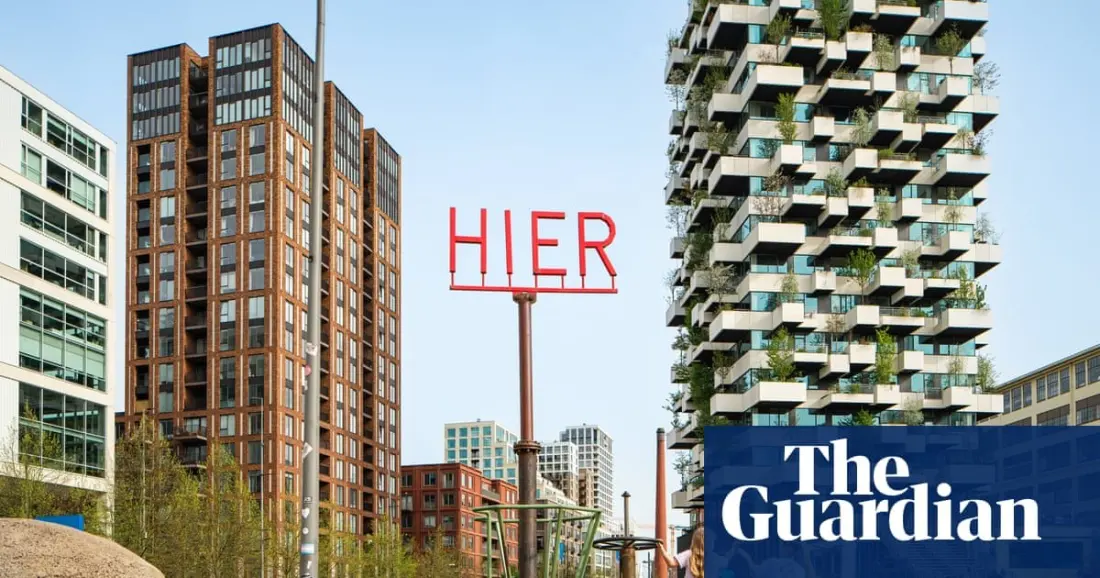
Start with Strijp-S, once off-limits Philips territory and now the city's liveliest quarter, home to concept stores, an indoor food market, the MU Hybrid Art House and an indoor skatepark. Radio Royaal, a well-regarded restaurant serving things like lemon risotto with samphire and rhubarb, sits in the old engine room. The neighbourhood is also marked by the 19-storey Trudo Tower, its facade planted with over 70 species of greenery — affordable housing wrapped in plants.
Strijp-R offers the strongest pull for design fans. Designer Piet Hein Eek bought the former Philips ceramics factory, the RK Complex, in 2010 and filled it with affordable studios for young creatives — only five of the 25 have changed hands in 15 years. His scrap-wood furniture, exhibition space and shop draw visitors year-round, and the onsite Green Restaurant is attached to his 14-room boutique hotel, with doubles from €135.
The city has a green streak that surprises given its industrial past: roughly 40% green cover, riverside walkways with bat boxes along the Dommel, and parks like Philips de Jongh and Karpendonkse Plas for walking and cycling. With an average commute of 15 minutes, Eindhoven was recently named the world's least stressed city.
Elsewhere, the 2024 mural Echoes of Harmony on the Muziekgebouw facade was named the world's best by Street Art Cities, and the Berenkuil — a two-level roundabout — is the Netherlands' largest legal graffiti zone, where work only lasts days before being sprayed over. Vintage hunters are well served too: Eindhoven gets nicknamed 'Vintage Valhalla', with curated shops like Yatva Vintage and upcycled clothing at Luna & Lore near Strijp-R.
Accommodation plays along with the theme. Hotel Mariënhge, in the centre, is a former monastery with clean lines and cheeky art, doubles from €83. Eindhoven suits anyone who likes their city breaks short, walkable and creatively recycled: design devotees, vintage shoppers, street-art fans, or travellers wanting a low-key Dutch alternative to Amsterdam or Rotterdam — reachable by direct train and a short hop from Eindhoven Airport.