
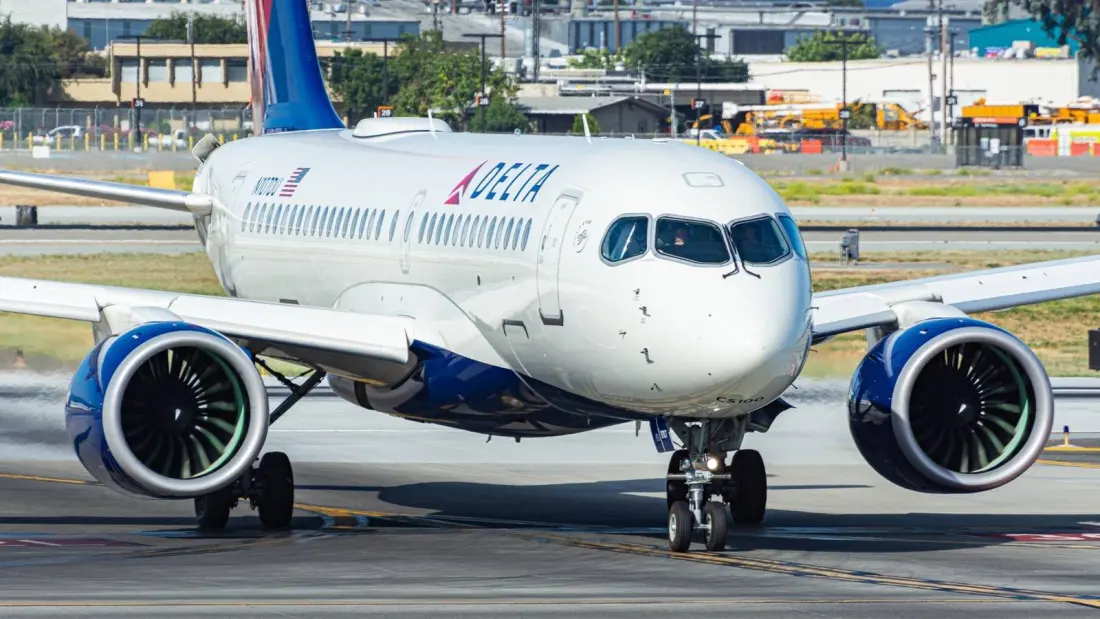
The US Federal Aviation Administration has proposed a new airworthiness directive covering certain Airbus A220-100 and A220-300 aircraft registered in the United States — the type flown by Delta Air Lines, JetBlue and Breeze Airways. The issue: motive-flow flexible fuel lines near the wing and pylon area may have been installed twisted after a production configuration change that wasn't matched by an updated installation procedure. Over time, a twisted hose can rub against its protective shroud and wear through, potentially leaking fuel close to electrical harness connectors — which the FAA flags as a possible ignition source and therefore a fire risk.
To be clear, this is not a grounding. The proposal would build on a 2021 directive and expand it to cover four extra aircraft, bringing the total number of affected US-registered A220s to just 13. Operators would visually inspect the fuel-line assemblies and replace anything damaged. The FAA pegs the inspection at roughly 10 labor hours, about $850 per aircraft, with a replacement costing around $10,005 per pylon if needed. Comments on the rule are open until October 19, 2026.
The US move mirrors Canada. Transport Canada issued Airworthiness Directive CF-2025-47 in September 2025 after determining that four additional A220s hadn't correctly received the new production installation procedure. The Canadian order requires a general visual inspection of the left and right fuel-line assemblies, replacement of any deformed parts, and proper cleaning, lubrication and torqueing of components. The FAA proposal incorporates the Canadian directive by reference with some US-specific wording adjustments. Delta's response to the news was brief: it complies fully with regulator directives because safety comes first.
Context matters here. Airbus had passed 500 A220 deliveries by March 2026, with more than 25 operators worldwide, and the type is becoming central to US carriers — firm orders stand at 145 for Delta, 100 for JetBlue and 90 for Breeze, with Breeze in particular building much of its network around the A220-300. Thirteen aircraft out of a fleet that size is a small slice, and the fix is routine preventive maintenance, not a response to any incident.
For travellers, the practical takeaway is simple: expect no disruption. If you're booked on a Delta, JetBlue or Breeze A220 flight, there's no fleet-wide grounding or service withdrawal on the table — at most, one of the affected aircraft gets a ten-hour inspection. The story is really a window into how aviation safety works: a minor installation issue from years ago keeps getting chased down across borders until every affected airframe is checked. That's the system doing its job, quietly, before anything goes wrong.