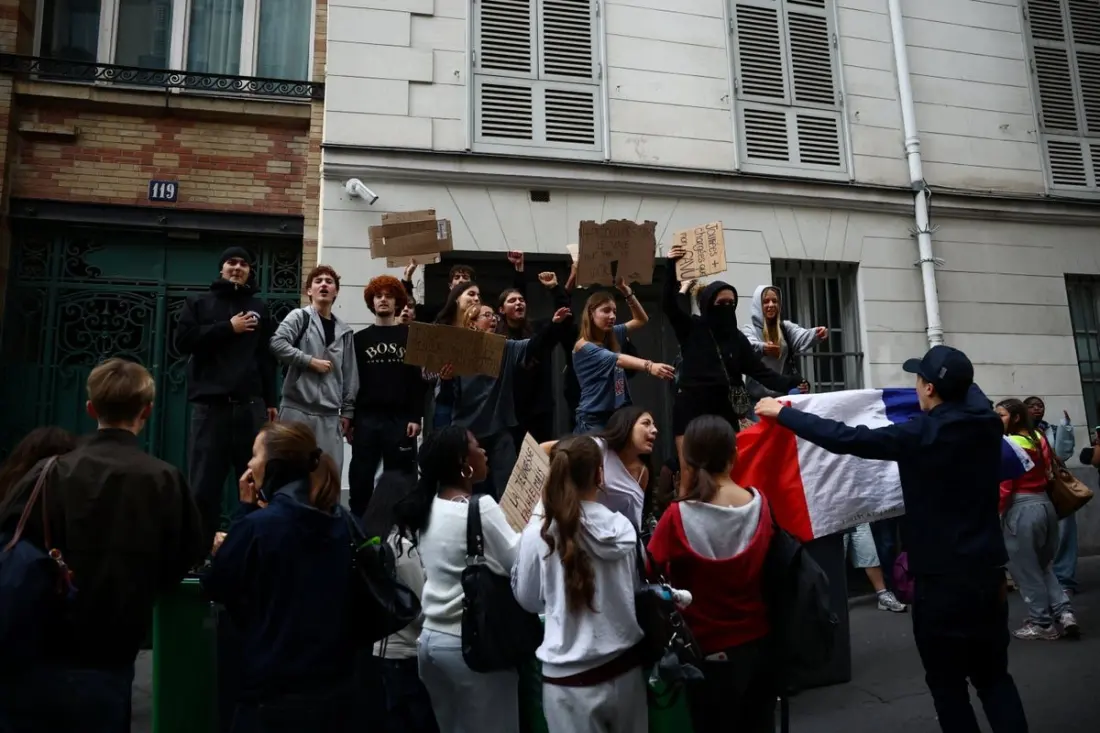
Violent student demonstrations have swept across France since September, and Tuesday 6 October marked the biggest day yet — hundreds of thousands marched in Paris, Marseille, Nantes, Lyon and elsewhere. Riot police responded with tear gas and water cannons, and the scenes have been ugly: barricades torched in Strasbourg, Lyon and Rennes, a baby injured by a firework near a barricaded school in Saint-Cyr-l'École, and a teenager who lost a hand picking up a police grenade.
Prime Minister Sebastien Lecornu has called these the most violent student demonstrations in decades. His government counts at least 215 teenagers, 700 police officers and 85 school staff injured so far. The trigger is a schools funding dispute — crumbling classrooms, overcrowded classes and unfilled teacher vacancies — though officials argue the movement has been hijacked by outsiders and tipped into urban violence. Rights groups, meanwhile, accuse police of using excessive force against minors. There's no clear end in sight: the CGT union is organising further school and university walkouts.
So should you cancel that Paris trip? Officially, no. The UK's Foreign Office has issued no warning against travel to France, which matters because it means you can't claim a refund on the basis of safety concerns — providers aren't obliged to refund if you simply want to cancel, and travel insurance won't pay out unless government advice changes. The FCDO's general guidance for France notes that strikes and demonstrations happen frequently and with little warning, and simply asks travellers to monitor the news, check with their operator and follow police instructions.
The US embassy has gone further, warning that the protests have turned violent and spread beyond school campuses, prompting hundreds of high school closures. American travellers are told to exercise increased caution: stay alert at tourist sites and crowded places, and steer clear of demonstrations and heavy police activity.
The practical takeaway for any traveller, whatever your passport: France remains open for business and there's no formal barrier to going. But city centres on protest days are best avoided — a march can reroute you, shut a museum, or strand you behind a barricade with little warning. Check local news the morning of travel, keep away from crowds carrying banners and the riot police facing them, and give yourself extra time for trains and airport transfers, as French industrial action routinely disrupts transport too. If your dates are flexible and the unrest continues, it's worth talking to your provider about postponing rather than cancelling outright.