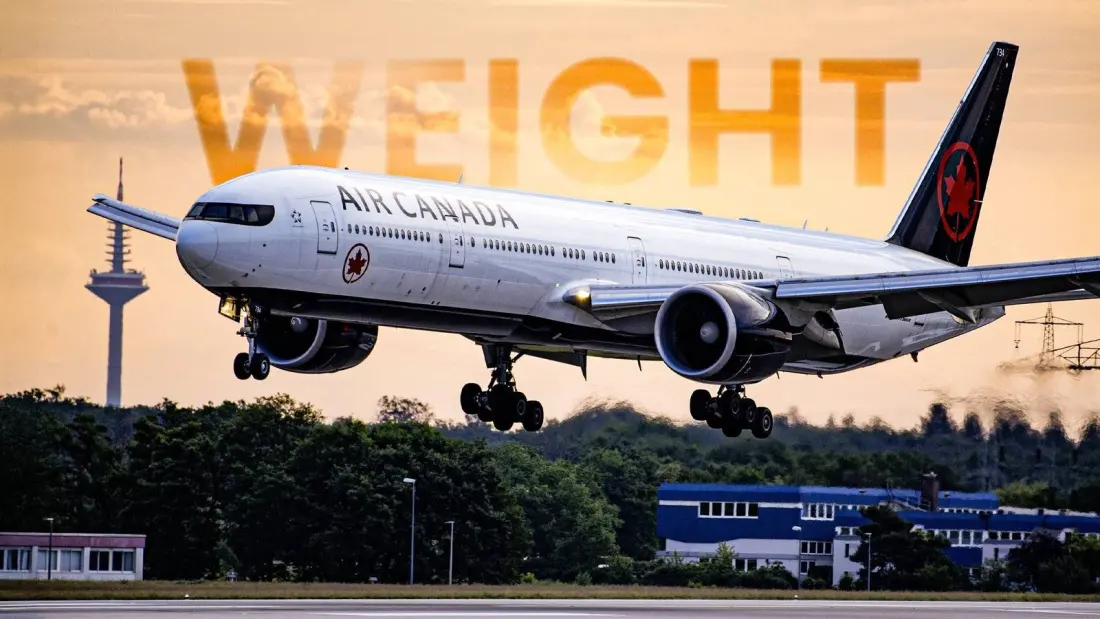
On a steamy July afternoon at Toronto Pearson, Air Canada's Boeing 777-300ERs sometimes have to leave money on the tarmac — literally. When temperatures climb, the air thins, takeoff performance drops, and the allowable takeoff weight of the airline's ageing flagship falls below what it planned to depart with. Fuel and passengers can't be cut, so belly cargo gets bumped, and freight revenue goes with it.
Air Canada flies 19 of these 777-300ERs, averaging 16.3 years old, including seven reconfigured to squeeze in 440 seats. Despite the type's hefty 351.5-ton maximum takeoff weight, the airline has ordered the Airbus A350-1000 — eight firm, plus rights for eight more — as its next long-haul flagship. The reason isn't raw gross weight; it's how much of that weight is actually usable.
The A350-1000 starts roughly 20 tons lighter thanks to its composite airframe, and its modern Rolls-Royce engines burn dramatically less fuel. Using the airline's Toronto-to-Tokyo Haneda flight as an example, the 777 is estimated to burn about 94.8 tons of fuel on the 6,464-mile sector versus 79.7 tons for the A350-1000 — a 16.4-ton saving on departure fuel alone. Run the full weight equation and the Airbus can carry 5.3 tons more payload while still sitting 3.6 tons further below its structural limit. Newer A350-1000s also gain an average 2.5 tons of extra allowable takeoff weight from improved performance software.
That margin matters most on hot days out of Pearson, which sits at elevation with a runway where a max-weight 777 departure is already borderline at 30°C. But the bigger prize is new routes. The A350's surplus range could unlock nonstops from Toronto to Bengaluru, Bangkok or Ho Chi Minh City — markets of 8,300–8,700 miles with no current nonstop. Air Canada has already signalled intent, saying in September it plans Ho Chi Minh City service in 2027 and has made its Vancouver–Bangkok route year-round.
For travellers, this is the quiet arithmetic behind which cities get nonstop service and how much cargo (and sometimes seats) an airline can sell in peak summer. It also hints at where Air Canada's route map may stretch next.
Story via Simple Flying.