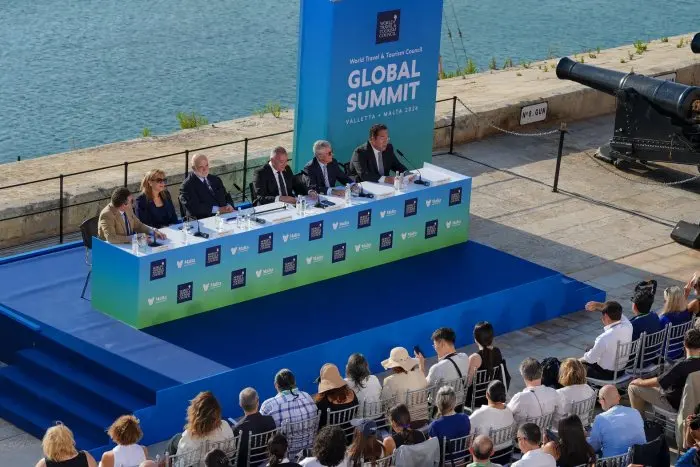
Valletta is currently hosting the World Travel & Tourism Council's 26th Global Summit, with more than 1,000 delegates — including over 200 travel CEOs and government leaders — gathering in Malta's capital for the industry's flagship annual event. The theme this year is FUTU[RE]SET, and the agenda leans heavily on investment, connectivity, AI and technology, workforce development and sustainable destination growth.
The headline numbers came out at the opening press conference. WTTC's research forecasts that travel and tourism across Europe will grow 3.1% in 2026, up from 2.6% last year and comfortably ahead of the wider economy. International visitor spending in Europe is projected to rise 5.8%, with business travel spending up 4.2% and leisure up 3.1%. Globally, the sector is expected to grow 2.5%, outpacing the broader economy despite ongoing geopolitical uncertainty.
WTTC chief executive Gloria Guevara framed the sector as remarkably resilient: it contributed US$11.6 trillion to the global economy last year — 9.8% of world GDP — and supports 366 million jobs, roughly one in nine worldwide. In Europe, tourism underpins around one in ten jobs. The council's message to governments was blunt: the industry is ready to invest and innovate, but policymakers need to deliver smoother travel, better connectivity, talent development and sustainable growth conditions to unlock the full opportunity.
Malta itself is the poster child for the numbers. Tourism is forecast to contribute US$4.9 billion to the country's economy in 2026 — 16.9% of GDP and more than one in five jobs. The islands also recorded the fastest annual growth in tourism's GDP contribution of any European economy in 2025, at 16.8% versus a European average of 2.6%. Malta Tourism Authority CEO Carlo Micallef used the moment to pitch a value-over-volume vision: tourism that delivers economic, social and environmental benefits to local communities rather than simply chasing arrivals.
The speaker list gives a sense of the event's weight, with former Canadian PM Justin Trudeau, former Spanish PM José María Aznar, EU Commissioner for Sustainable Transport and Tourism Apostolos Tzitzikostas, and Nick Adams, the first US Presidential Envoy for Tourism, all in attendance.
So why should a holidaymaker care? Two reasons. First, the forecasts signal a busy, confident European travel market in 2026 — international visitor spending is growing fast, which typically means busier hotspots and earlier booking being rewarded. Second, Malta is staking its future on quality, sustainable tourism, which shapes everything from hotel investment to how crowded Valletta's streets feel in peak season. Travellers drawn to heritage-rich destinations with a compact, walkable core will find a country actively trying to grow thoughtfully rather than exponentially.
Coverage based on Breaking Travel News.