
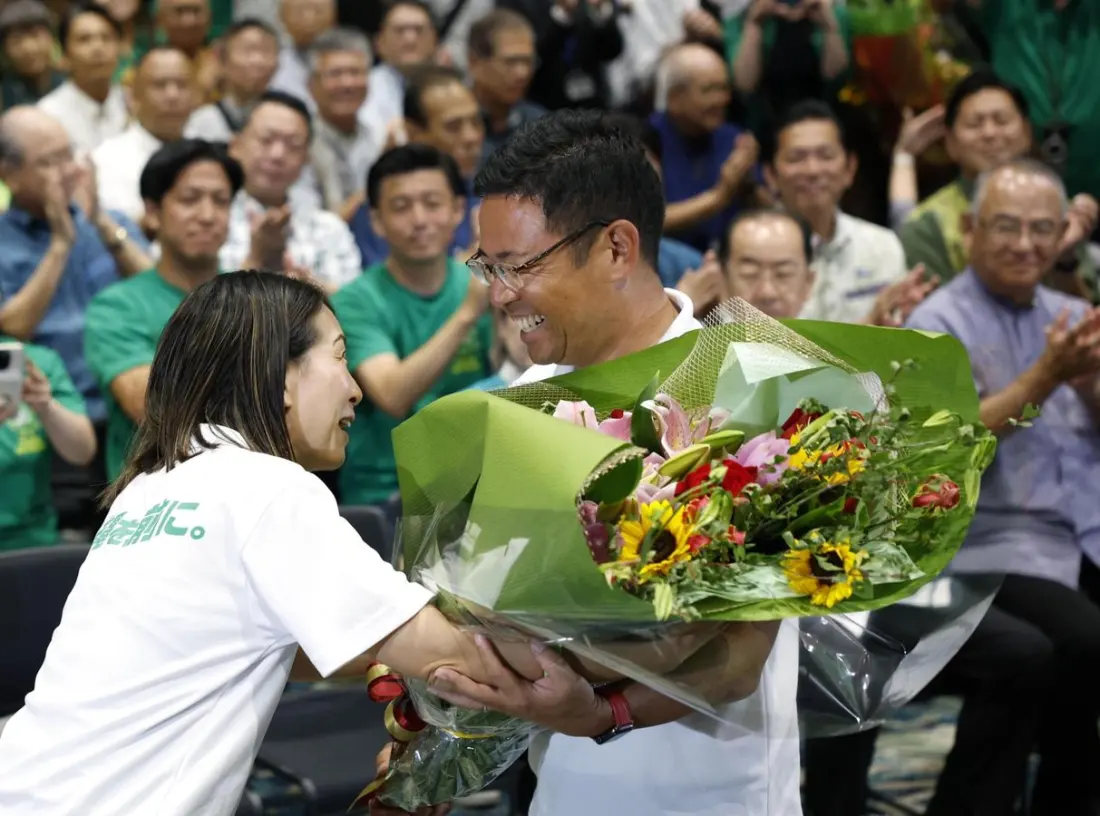
Okinawa has a new leader, and for the first time in over a decade, he's on the same page as Tokyo about the US military presence. Genta Koja, 42, won Sunday's gubernatorial election as the candidate backed by Prime Minister Sanae Takaichi's Liberal Democratic Party, defeating two-term incumbent Denny Tamaki, who had long fought to move US bases off the island entirely.
The headline issue — relocating US Marine Corps Air Station Futenma from Ginowan to a coastal site in Nago — has divided Okinawa for nearly 30 years. Koja's win means the central government's plan will now face far less local resistance, with construction of the replacement facility already underway and a return of the Futenma site possible as early as 2036.
But what's striking is that the bases weren't the deciding issue this time. Exit polls by Kyodo News found only about 21% of voters put base issues first, while nearly half chose the economy. Koja campaigned on doubling the prefecture's per capita income — the lowest in Japan — by revitalising an economy that leans heavily on tourism, and on securing a bigger development budget from Tokyo after years of cuts under anti-base governors.
For travellers, that tourism-first agenda is the part that matters. Expect Okinawa's new administration to push for more investment in visitor infrastructure, access to the outer islands, and promotion of the prefecture's beaches, diving and Ryukyu culture. Koja is also the first Okinawa governor born after 1972, the year the island returned to Japanese control after 27 years under US administration — a generational shift in a place where that history still shapes daily politics.
There's a geopolitical backdrop too. Okinawa hosts the bulk of facilities used exclusively by US Forces Japan, and its southwestern islands sit near Taiwan, prompting Japan to reinforce defences across the prefecture. For visitors that mostly shows up as occasional noise around base areas rather than anything that affects a holiday, and the Futenma move could eventually free up prime waterfront land in Ginowan.
In short: Okinawa is heading into a phase of tighter alignment with Tokyo, more central funding, and a government that sees tourism as its best route to raising local incomes. If you've been putting off a trip to the Yaeyama Islands or a diving break around Kerama, expect the prefecture to keep working on making that easier.