
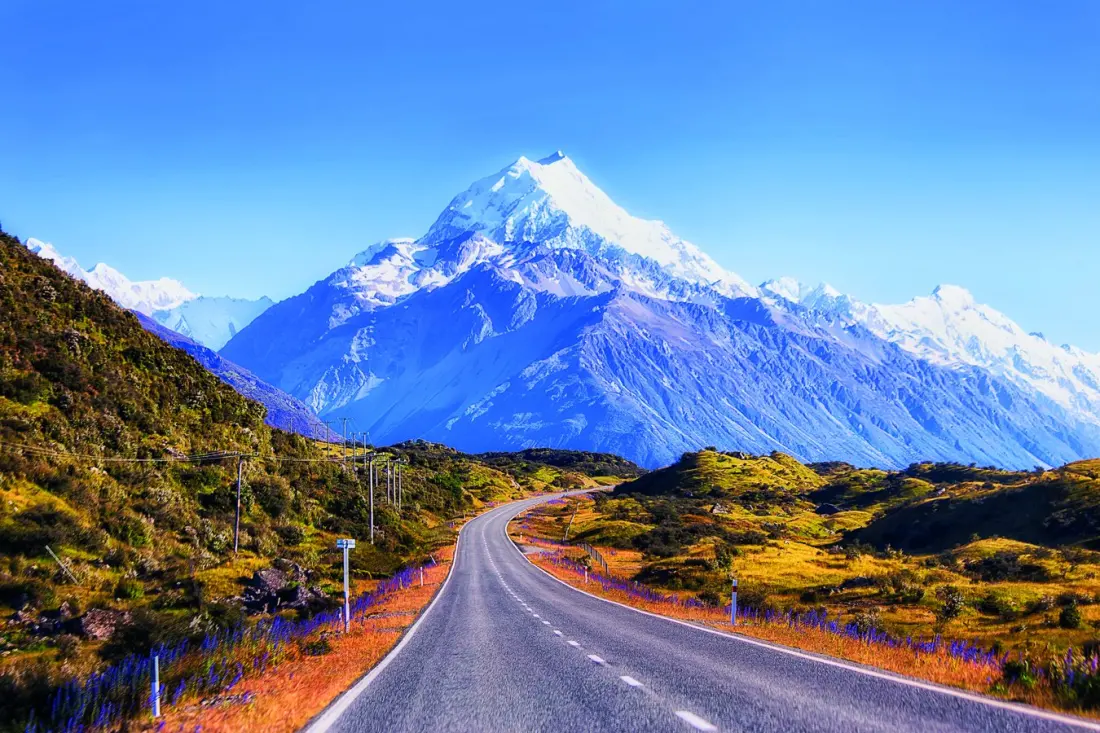
Most visitors to New Zealand's South Island blitz the West Coast in a day, pausing at a glacier between Queenstown and Abel Tasman. Writer Ash Bhardwaj went back after 20 years and gave Te Tai o Poutini the time it deserves — five days and 300km of rainforest, gold-rush history and some of the world's wettest weather.
The region is a narrow strip wedged between the Southern Alps and the Tasman Sea, so damp that eastbound clouds dump extraordinary rainfall on the coast. Only around 35,000 people live here, making it the least crowded corner of the country. Māori settlers arrived around 1200 CE, drawn by pounamu greenstone — the South Island's only source of this treasured jade — and Europeans followed during the 1864–67 gold rush.
Crossing Arthur's Pass from Christchurch (stop for a lamb and kumara pie), the writer reached Hokitika, the heart of the greenstone trade. At Bonz 'n' Stonz, run by Ngāi Tahu carvers, visitors can carve their own amulet from pounamu or the far rarer blue aotea stone, found in just one river. He ate fish and chips from Dulcie's on a driftwood-strewn beach with Aoraki/Mount Cook glowing on the horizon.
Ninety minutes south lies Ōkārito, a gold-rush boomtown that swelled to 4,000 people in 1865 and now counts barely 30 residents. It's a conservation success story: Glacier Valley Eco Tours leads native tree planting and predator trapping on the moraine above the lagoon — New Zealand's largest unmodified wetland — and birdsong is noticeably returning, helped by the national Predator Free 2050 programme.
A sobering counterpoint comes at Franz Josef Glacier, which has retreated nearly 2km in two decades and is now too unstable to walk on from the valley floor. Then there's Jackson Bay, the literal end of Highway 6 — just 80km from Milford Sound as the crow flies, but a 550km drive thanks to impassable fjords. The reward: the Craypot, a vermilion seafood shack serving chowder, whitebait fritters and green-lipped mussels caught by the local fleet, plus a chance of spotting rare Fiordland crested penguins.
If you'd rather walk than drive, the 55.7km Paparoa Track — New Zealand's tenth official Great Walk — threads rainforest, river gorges and limestone karst to finish near the Punakaiki Pancake Rocks. Do check Department of Conservation advice before setting out; easy-access trails here can quickly turn into serious alpine terrain.
This corner of New Zealand suits travellers who enjoy the journey more than the tick-list: slow drivers, birdwatchers, food stops and anyone curious about Māori craft and conservation. Give it days, not hours, and it pays you back. — Wanderlust