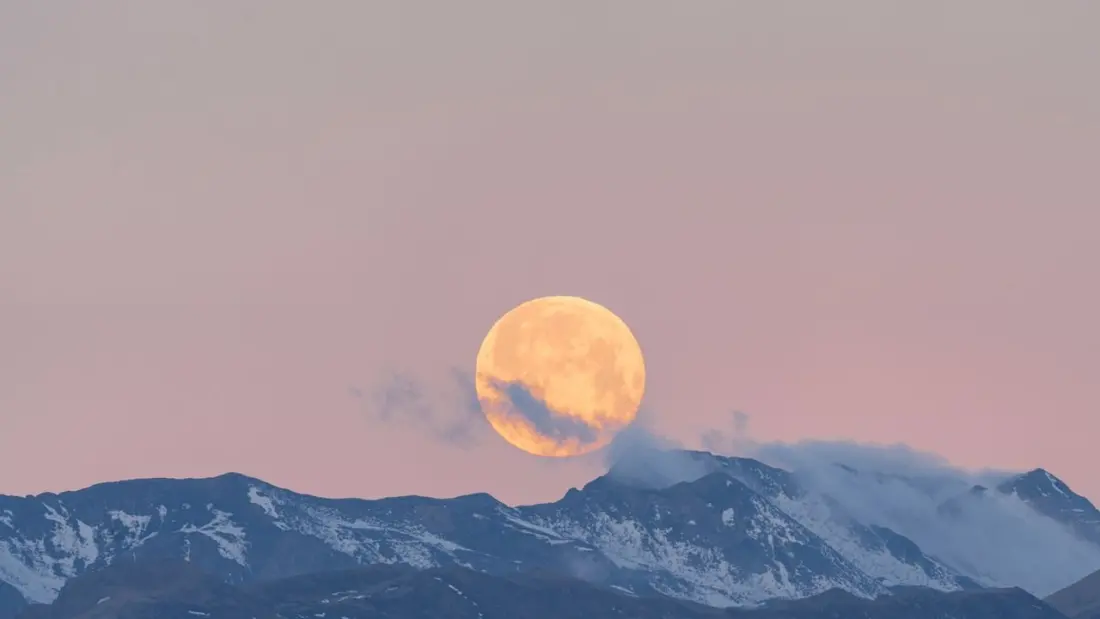
Set your alarm for dusk: on Saturday 26 September, September's full moon – the Harvest Moon – will light up UK skies, and this year there's a bonus. Saturn will be sitting close by, glowing as a bright point of light next to the Moon.
The Moon reaches peak illumination at 4.49pm UTC (5.49pm BST), but the real show starts after sunset, when it climbs above the eastern horizon. In London, moonrise is expected around 6.27pm; exact times shift depending on where you are. No telescope or binoculars needed – just eyes and an open patch of sky. Forecasters suggest southern and eastern England will get the best conditions, weather permitting.
So what exactly is a Harvest Moon? It's simply the full moon closest to the autumn equinox, which fell on 23 September this year. Every few years it lands in October instead. The name comes from practical farming history: at northern latitudes, the gap between successive moonrises shortens around this time, meaning brighter early evenings for several nights running. Before machinery and floodlights, that extra light was a gift to farmers gathering crops late into the evening.
There are two reasons this one is worth actually going outside for. First, low on the horizon the Moon can look strikingly large – an optical trick called the 'moon illusion' – and take on a rich orange or reddish tint as its light filters through more of the atmosphere. Second, Saturn is currently extremely well placed, approaching opposition in early October, so the planet should be easy to pick out next to the Moon even from a light-polluted city.
If you fancy a bit of cosmic framing, astrologers have plenty to say. Lisa Stardust notes the Harvest Moon's orange glow lingers longer than other full moons, marking the turn towards colder months, while Debbie Frank describes it as a cue to reset and set intentions for the final stretch of the year – this one falls in impulsive Aries, apparently. Science is more sober: there's little solid evidence full moons affect sleep or behaviour. What genuinely changes is the sky itself – brighter early evenings for a few nights either side.
For travellers, this is a low-effort, high-reward evening. Head somewhere with a clear view east – a hilltop, coastline, park or rooftop – and arrive around sunset. Rural spots away from city glow will make Saturn easier to spot, though the Moon itself will dominate from anywhere. If clouds spoil Saturday, the nights immediately after still deliver a big, bright, rising moon.
Check the original article on Condé Nast Traveller UK.