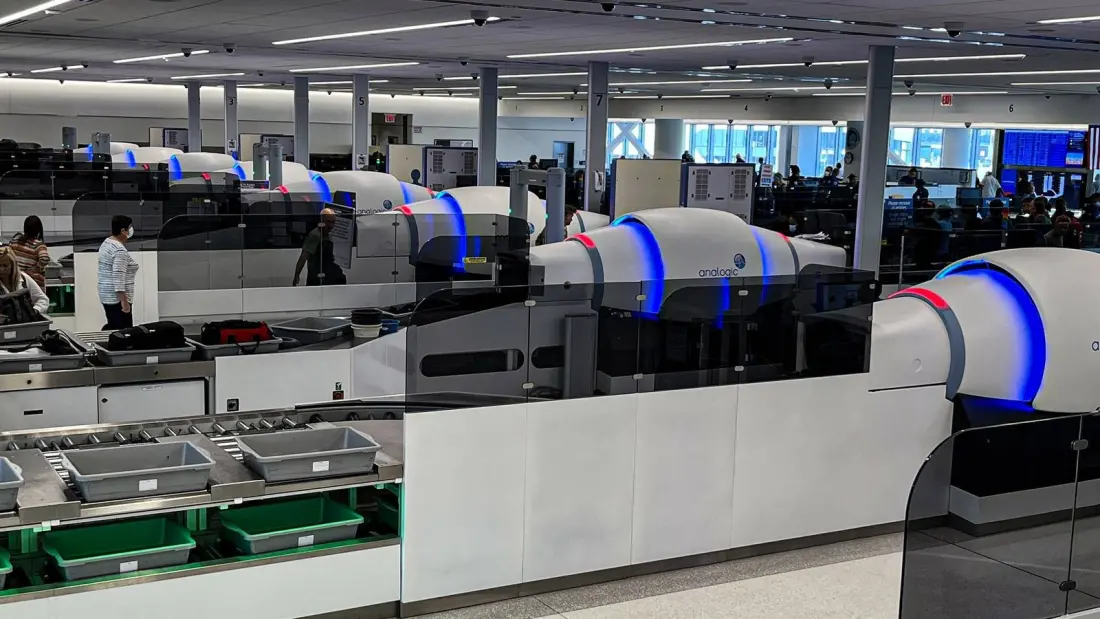
America's airport security is getting a major upgrade, and there's a catch hiding in the details. As of early July 2026, the TSA has installed 1,162 CT scanners across 296 US airports under a $781.2 million contract awarded in 2022. The machines are genuinely better: they build a 3D image officers can rotate and inspect from any angle, run algorithms that flag explosives - including liquid explosives the old flat X-rays could barely spot - and let you leave laptops and 3-1-1 liquids in your bag.
The catch is the tunnel. The CT units have an opening of roughly 24.5 by 16.5 inches, about half an inch narrower each side than the 2D machines they replace. That sounds trivial, but TSA has admitted that "not all larger carry-on bags will fit," and the reduction applies only to some models - which is why a bag might sail through at one airport and get bounced at another, or even at a different lane of the same checkpoint.
A standard carry-on at 22 by 14 by 9 inches still fits comfortably on paper. The problem is real bags aren't neat rectangles. Soft-sided cases packed full bulge outward, expandable suitcases with the zipper undone add a couple of inches, stuffed exterior pockets widen the profile, and wheels and handles often exceed the manufacturer's stated dimensions. If your bag refuses to enter the tunnel, an officer can't check it for you - you'll be sent back out of security to the airline counter, charged a checked-bag fee (typically $35-45 at the airport on US carriers), and made to queue for security again. Miss your airline's check-in cutoff - usually 45 minutes before a domestic flight - and the bag simply can't travel with you.
Two more changes worth knowing. At CT lanes, every item must go in a bin, including roller bags that used to go straight onto the belt, which slows things down and increases juggling for anyone with multiple bags. And film photographers should take note: CT scanners expose items to higher X-ray doses, and TSA has confirmed undeveloped film - including rolls inside cameras, plus Polaroid and instant film - can be fogged or destroyed. Ask for a hand inspection before your bag goes through; it's your right under TSA policy, though travellers report it works best if you arrive early and have the film in a clear container.
The practical advice: measure your bag after packing, not before. If you're carrying something bulky - a musical instrument, medical kit, or oversized case - flag it to a TSA officer before it reaches the belt so they can arrange alternative screening. The overall trade still favours passengers: fewer laptops dumped in trays and faster lanes, in exchange for half an inch of tunnel. But if your expandable case is bursting at the seams, checking it might save you a very stressful sprint back through the terminal.
Story first reported by Simple Flying.