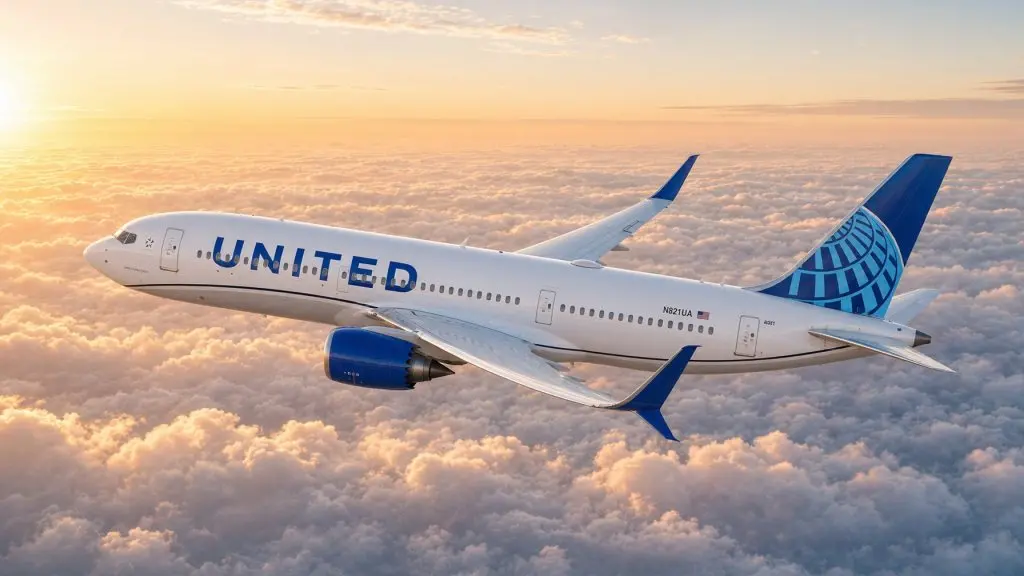
United Airlines has found an unusual way to poach rivals' best customers: free fast Wi-Fi. The carrier is running status matches aimed at American Airlines and Delta frequent flyers, essentially inviting their most loyal passengers to switch, try the Starlink internet that's generating so much buzz, and decide whether to stay. It's a loyalty play dressed up as a connectivity upgrade.
The scale matters. More than 600 United aircraft already carry Starlink, and the airline is targeting 1,000 planes by the end of the year. Compare that with American, whose own Starlink rollout doesn't begin until 2027, and Delta, which bet on Amazon's satellite network (Leo) and is already taking criticism for picking a system that hasn't been proven on commercial flights. For now, United simply has the better story to tell.
Why does this get frequent flyers excited? Anyone who has battled airline Wi-Fi knows the misery: connections that drop mid-download, speeds that make email feel like a chore, login portals that demand your details three or four times a flight. Starlink's low-earth-orbit satellites change the experience fundamentally. Instead of purchasing a slow, flaky connection, passengers get several uninterrupted hours of internet that behaves like the internet on the ground — enough to stream, work properly, or message family without the connection vanishing over the Rockies.
For travellers, this is part of a bigger shift in what airlines compete on. Seats and routes are largely similar across US carriers, so amenities like gate-to-gate Wi-Fi — United offers it free to passengers, including on some regional jets — become the tiebreaker. If you fly often enough to hold status, a status match means you don't lose your perks by switching: United will recognise your existing tier while you test the airline out. The pitch is low-risk: keep your lounge access and priority perks, sample the Wi-Fi, and see if the experience wins you over.
Who should care? Primarily US-based frequent flyers, for whom this could be the nudge to re-evaluate loyalty. But it's also a glimpse of where onboard connectivity is heading globally — expect Starlink-equipped aircraft to become a selling point on international routes too, and expect other regions to follow as low-earth-orbit satellite coverage expands. If your holiday flights have historically meant paying for unreliable Wi-Fi, the era of fast, free internet at 35,000 feet may be closer than you think.
First published by Skift.