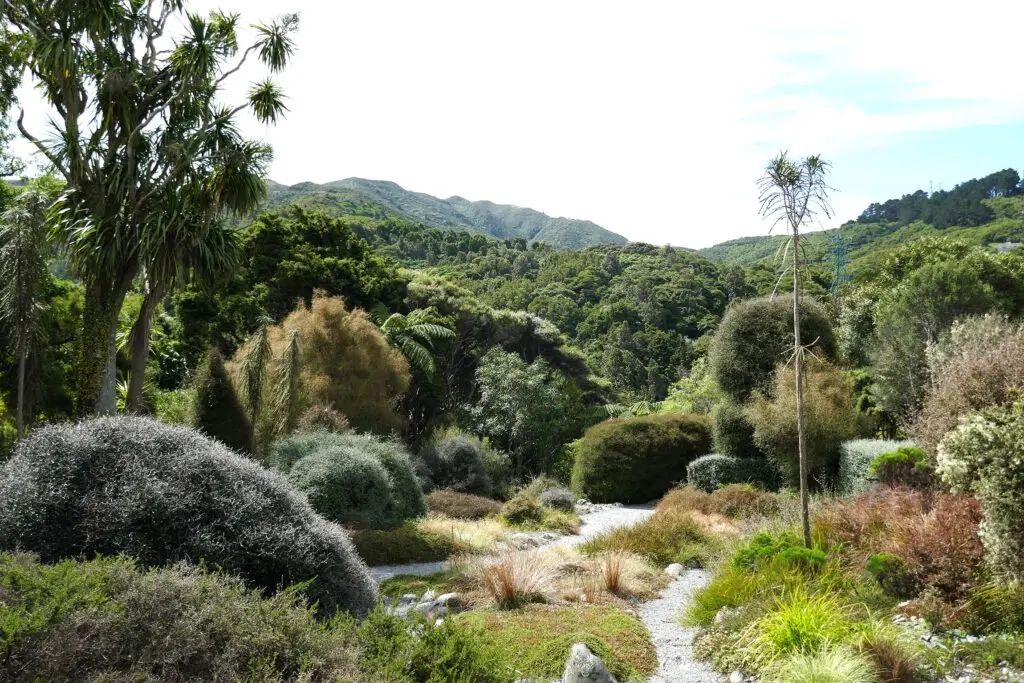
Tucked into Ōtari-Wilton's Bush, just a short drive from central Wellington, Ōtari Native Botanic Garden is celebrating its centenary this year. The garden holds the distinction of being the largest single collection of native plant species in New Zealand, and after a century it remains a working showcase of the country's botanical diversity — from alpine tussock country to coastal shrubland, all within a few hectares of regenerating forest.
What makes Ōtari unusual is its range. Visitors can wander past subalpine species like spiky taramea (speargrass), stroll through plantings of rare and threatened natives, and then step straight onto bush tracks through Ōtari-Wilton's Bush itself, one of the largest remnants of original lowland forest in Wellington. A single outing can take you from curated garden beds into genuinely old-growth podocarp woodland, with the city only minutes away.
The garden began a hundred years ago as part of a wider effort to protect and celebrate native flora at a time when most botanic gardens in the British tradition focused on exotic ornamentals. That mission still shapes the place today: Ōtari functions as both a public garden and a site for conservation, growing species that are scarce or endangered in the wild and giving Wellingtonians a living reference library of the country's plant life.
For travellers, Ōtari solves a familiar problem — you want to see New Zealand's remarkable native plants without driving to the South Island's alpine basins or far-flung reserves. Here, the highlights are gathered in one place, with interpretation that tells you what you're looking at and why it matters. It pairs naturally with Wellington's other drawcards: the cable car and Botanic Garden on one side of the city, Zealandia's predator-free sanctuary in Karori, and the waterfront's Te Papa museum, whose bush-themed exhibitions make more sense after a morning among the real thing.
Practically speaking, Ōtari-Wilton's Bush is an easy half-day trip. Entry is free, the tracks range from short loops to longer walks down to the Kaiwharawhara stream, and the canopy walkway gives you a raised view into the forest. Bring a layer — Wellington weather changes quickly — and allow time afterwards for a coffee in nearby Karori or on the way back through Wilton.
A centenary is a good excuse to visit, but the garden rewards trips at any time of year. Spring brings new growth and flowers in the collections; summer suits the shady bush tracks; even a moody winter day has its charm when the forest is dripping and quiet. If you're building a Wellington itinerary around food, culture and coast, slot in a couple of hours here — it's the fastest way to get your head around what makes New Zealand's plant life so distinct.
Whether you're a keen gardener after ideas for natives, a walker wanting a gentle forest fix, or simply someone with a free morning before a ferry or flight, Ōtari is one of the capital's most underrated stops. One hundred years on, it's doing exactly what it was created to do: keeping native plants front and centre.