A safari flight out of the Serengeti ended with sparks on the tarmac this week, after a turboprop carrying 30 people hit a zebra during takeoff and had to land on its belly.
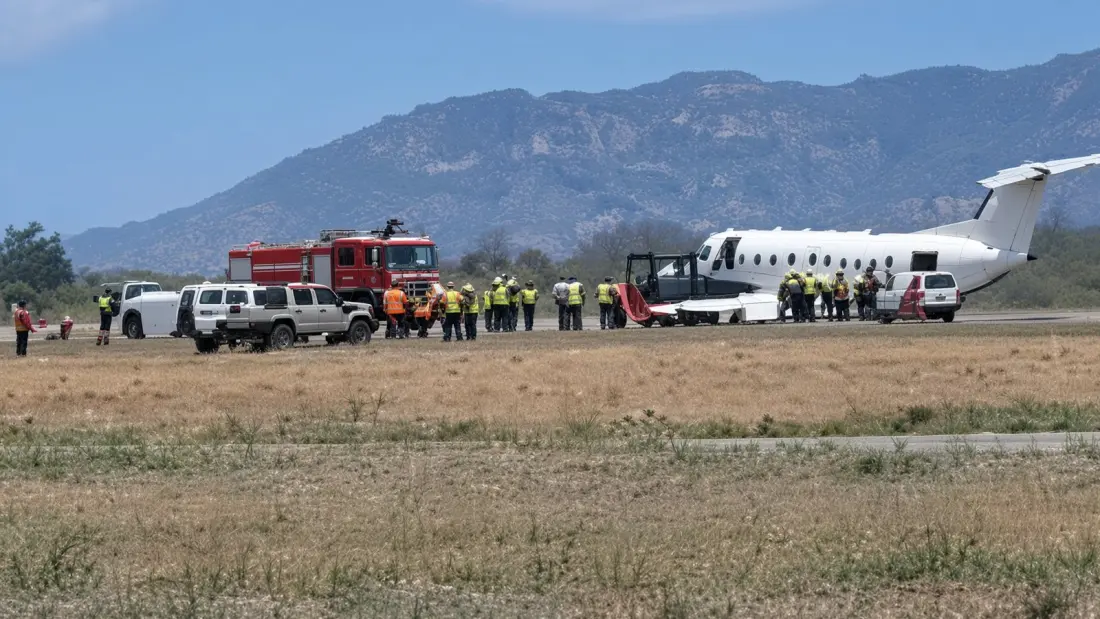
The Sindbard Air Embraer EMB-120 Brasilia, registration 5H-HLL, was departing Seronera airstrip inside Serengeti National Park, bound for Zanzibar, when it struck the animal on Sunday. The aircraft actually got airborne, but the collision took out its main landing gear, leaving the pilots unable to extend it. They diverted to Kilimanjaro International Airport and touched down on runway 9 with the gear retracted, the fuselage sliding along the pavement in a cloud of smoke and dust while fire crews stood by.
Everyone walked away. All 26 passengers and four crew escaped injury, but the zebra was killed and the aircraft took substantial damage. The airport shut for roughly five hours while the runway was cleared and inspected. Details of the landing were reported by The Aviation Herald, with video and aftermath photos circulating via FL360aero.
Strikes like this are rare but not freakish. Runway wildlife collisions happen well beyond African bush strips — an Alaska Airlines regional jet hit a deer at Santa Rosa, and an Alaska 737 struck a brown bear at Yakutat, Alaska, where the runway had apparently been checked just ten minutes before the aircraft arrived. Zebras, wildebeest and other grazers wander freely around the Serengeti's unfenced airstrips, and small bush planes come and go all day on the same strips.
For travellers, the takeaway isn't to avoid flying in Tanzania — these short hops are the standard way to link safari camps with the coast, and the safety record is broadly solid. It's that bush flying carries quirks you won't meet on a scheduled jet: unpaved runways shared with wildlife, small aircraft, strict baggage limits, and itineraries where a diversion can reshuffle a whole day of your trip. Booking flights through an operator who can re-arrange game drives and hotel transfers on the fly is worth more than saving a few dollars on the airfare.
It's also a nudge to keep buffer time in a safari itinerary. If you've got an international connection out of Kilimanjaro or Dar es Salaam the same day your bush flight lands, one stray zebra — or a flat tyre, or weather over the crater — can unravel it. Overnighting near your departure city before a long-haul flight home is cheap insurance.