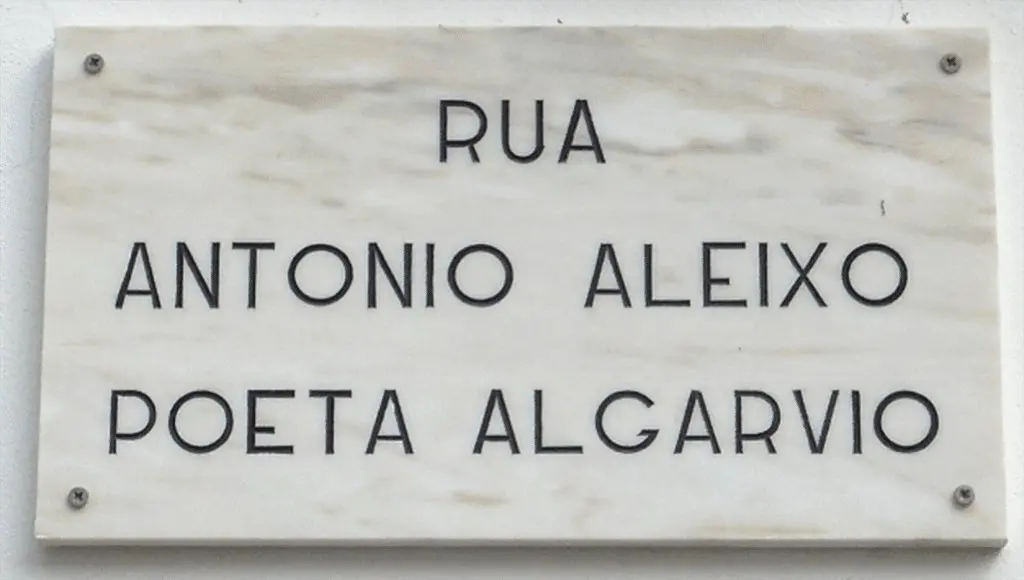
Outside the Café Calcinha in Loulé, an elderly man in a hat sits in bronze, watching the town go by. Locals know him well: António Fernandes Aleixo, the Algarve-born poet who sold lottery fractions at country fairs, sang fado for his supper, and left behind some of the sharpest popular verse Portugal has produced. A recent retrospective traces his remarkable, hard-scrabble life — and it makes a fine detour for anyone wandering the Algarve beyond the beaches.
Aleixo was born in 1899 in Vila Real de Santo António, son of a labourer from Loulé and a local domestic worker, and the family settled in Loulé when he was seven. Poverty shaped everything that followed. Having watched his father struggle with drink, he swore off alcohol for life. He married young, fathered fourteen children, and cycled through jobs with alarming speed: army corporal in Tavira, where he entertained officers with improvised fado singing; a brief, doomed stint as a police officer (he simply couldn't bring himself to fine or arrest anyone); factory work that damaged his health; goatherding; and emigration to France, where he laboured on building sites and sang fado among Portuguese emigrants, sending money home that was later wiped out in the 1929 crash.
Back in Loulé, he found his trade. Selling fractions of lottery tickets at fairs across the Algarve and Alentejo, he became known as the poeta-cauteleiro — the ticket-seller poet — reciting verses laced with irony and biting social observation. He was semi-literate and chronically poor, competing in poetry contests in borrowed clothes, yet his writing resonated. His first collection, Quando Começo a Cantar, appeared in 1943 thanks to friends; a square in Faro now bears its name. Even the austere writer Miguel Torga, famous for rarely dedicating books to anyone, gave Aleixo one after they met in a Coimbra sanatorium, where Aleixo was being treated for tuberculosis.
He died in November 1949, broke and out of medicine, and some of his notebooks were burned afterwards for fear the disease lingered in the paper — a loss now mourned as damage to Portuguese heritage. But his reputation only grew. In 1969, under the dictatorship, the two-volume anthology Este Livro Que Vos Deixo topped Portugal's bestseller list; in a society where open protest was impossible, his caustic, self-deprecating verse said what many couldn't.
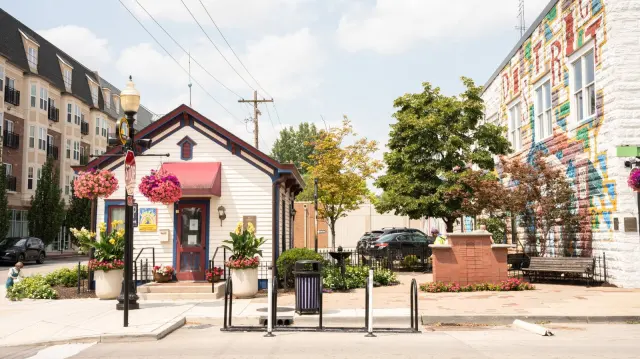
Today Aleixo sits in the cultural company of Fernando Pessoa — the two are Portugal's only bronze poets, each outside a favourite café, both sculpted by Lagoa Henriques. For travellers, this is a rewarding thread to pull: stop for coffee at the Café Calcinha where his statue has kept watch since 1996, browse the old streets of Loulé, and seek out his four-line poems, many translated alongside the original Portuguese in the source piece. It's a side of the Algarve far removed from golf resorts — a reminder that this region produced one of the country's great plain-spoken voices, a man who summed himself up: soldier, policeman, goatherd, ticket-seller, and, in his own telling, the only thing he never became was a thief.
Story via Portugal Resident.