
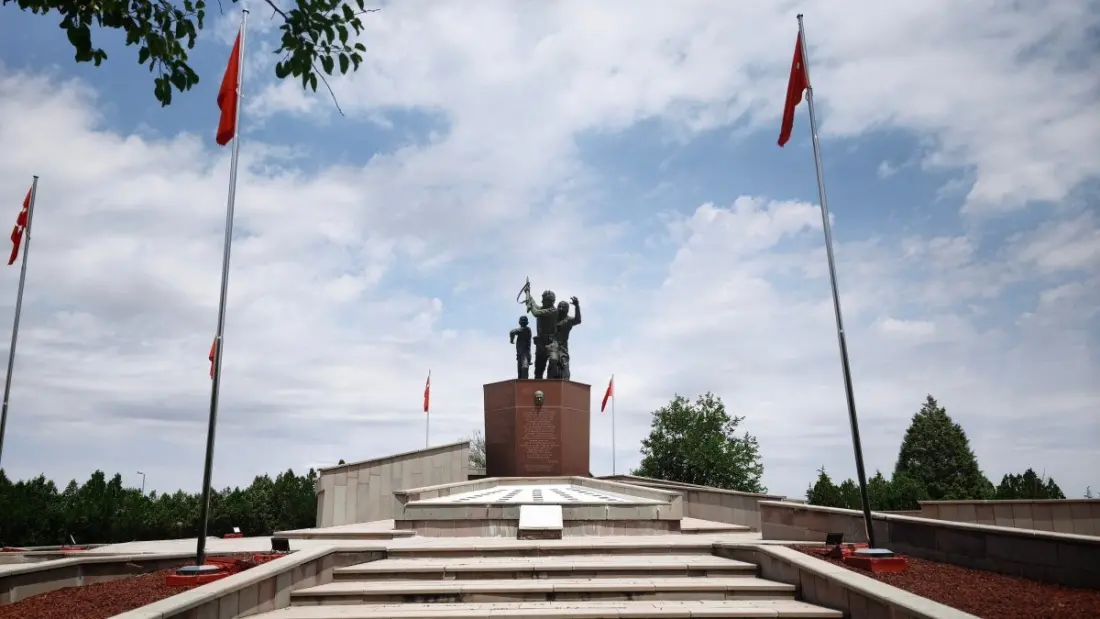
This month marked 105 years since the Battle of Sakarya, the 1921 clash that stopped the Greek advance on Ankara and effectively sealed the direction of modern Türkiye. President Erdoğan marked the anniversary with a message honouring the fallen, but the story behind the date is worth knowing for anyone travelling through the Turkish capital's outskirts, because the battlefield itself is close enough to visit.
The fighting raged from 23 August to 13 September 1921, mostly around Polatlı, now a district of western Ankara, and later spilled into Haymana to the south. The front stretched some 100 kilometres along the Sakarya River. Turkish forces under Mustafa Kemal Atatürk faced Greek troops pushing inland after landing at İzmir and advancing under the 1920 Treaty of Sevres, which aimed to place large parts of Anatolia under Greek control. With Ankara the ultimate prize, the Greek army never got close: the battle ended with a full Greek withdrawal eastward-turned-westward, and roughly 14,000 Turkish soldiers died in what remains one of the war's bloodiest engagements.
Atatürk's line before the fight became legendary: there was no line of defence, only a field of defence, and that field was the entire homeland. Parliament had handed him command amid low morale after an earlier defeat, and he rallied the population to supply the army with everything from weapons to food. The victory earned him the rank of Field Marshal and the title Ghazi. A year later, the Battle of Dumlupınar finished the campaign, leading to the 1922 Armistice of Mudanya and, in 1923, the Republic.
For travellers, the anniversary is a good prompt to look beyond Ankara's museums. Polatlı sits about 75 kilometres west of the capital and is reachable by high-speed train from Ankara, making a battlefield-history day trip entirely feasible. The area has memorials and commemorative sites tied to the fighting, and Haymana is known for its thermal springs, so you can pair sober history with a hot-spring soak. Ankara itself holds the War of Independence Museum and Anıtkabir, Atatürk's monumental mausoleum, which give context that makes a battlefield visit far more meaningful.
The story also resonates across the Aegean: in Greece, the defeat is remembered as part of the 'Asia Minor Catastrophe', the collapse of the Megali Idea of annexing Anatolian lands. That shared history makes the region compelling for travellers interested in how two modern nations were shaped by the same conflict.
If your trip coincides with mid-September, expect commemorative events and patriotic ceremonies around Polatlı and Ankara. Even outside the anniversary window, the open Anatolian plains, the river and the quiet district towns offer a side of central Türkiye most visitors skip on their way to Cappadocia.