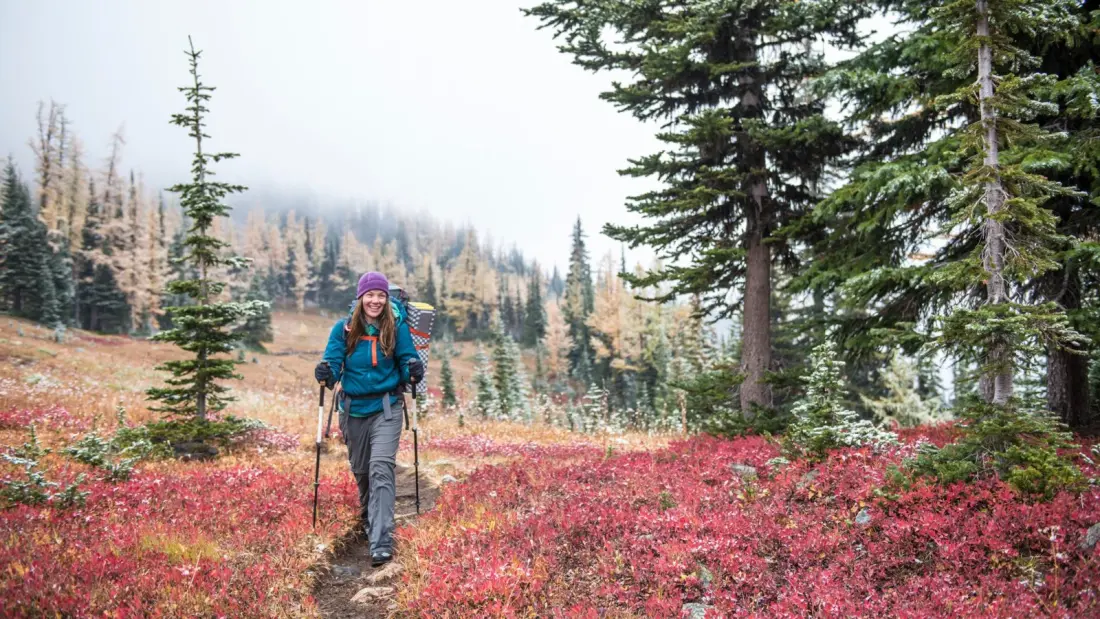
Autumn is prime hiking season, but it catches plenty of people out. Days shrink fast — sunset can jump from 9 p.m. in midsummer to around 7 p.m. by late September — and temperatures slide just as quickly. Hikers who pack the way they did in July end up cold, benighted, or borrowing their friends' spare layers and snacks. The good news: a short gear audit now prevents most of it.
First, sort out your light. Charge your headlamp or swap the batteries, then actually put it in your pack. With less daylight, running out of trail time is easy even on routes you know well, and landmarks become hard to pick out after dark. Navigation deserves a refresh too: download GPS maps to your phone, or dig out a paper map and compass. Phones drain faster in cold weather, so if you're navigating by screen, carry a power bank and charging cord as backup.
Second, pull your cold-weather kit out of storage early. Down jackets and sleeping bags need time to reloft after a summer in the attic, and you don't want to be rummaging for underfoot traction while your hiking partners wait in the car. Dig out the winter-rated gear now, air it out, and stash it where you can grab it.
Third, think about wet weather. On both US coasts, the rainy season closes in during autumn, so this is the moment to seam-seal your tent, reapply DWR treatment to rain shells, and check drybags for pinholes. Leather waterproof boots benefit from a conditioning treatment plus a fresh layer of DWR or Aquaseal. Even somewhere without a defined rainy season, getting soaked in cool weather is a fast route to a miserable day, so an afternoon of re-waterproofing is worth the trade.
Finally, accept that your minimalist summer pack won't cut it. The recommended autumn day kit: a slightly bigger pack of 25 to 35 litres, headlamp and spare batteries, a long-sleeved baselayer, a lightweight puffy or fleece, a windproof layer, a rain shell, an emergency blanket, extra snacks, and your navigation setup — downloaded maps, plus a map and compass or a power bank depending on how you navigate.
Why it matters: fall is arguably the best hiking window of the year — fewer crowds, cooler air, and colour on the trees — but the margin for error shrinks along with the daylight. These five fixes take a few hours total and apply whether you're heading into the mountains or just out for a local loop. New hikers get a ready-made checklist, while experienced ones will recognise at least one job they've been putting off. Do them before your next day off, not during it.