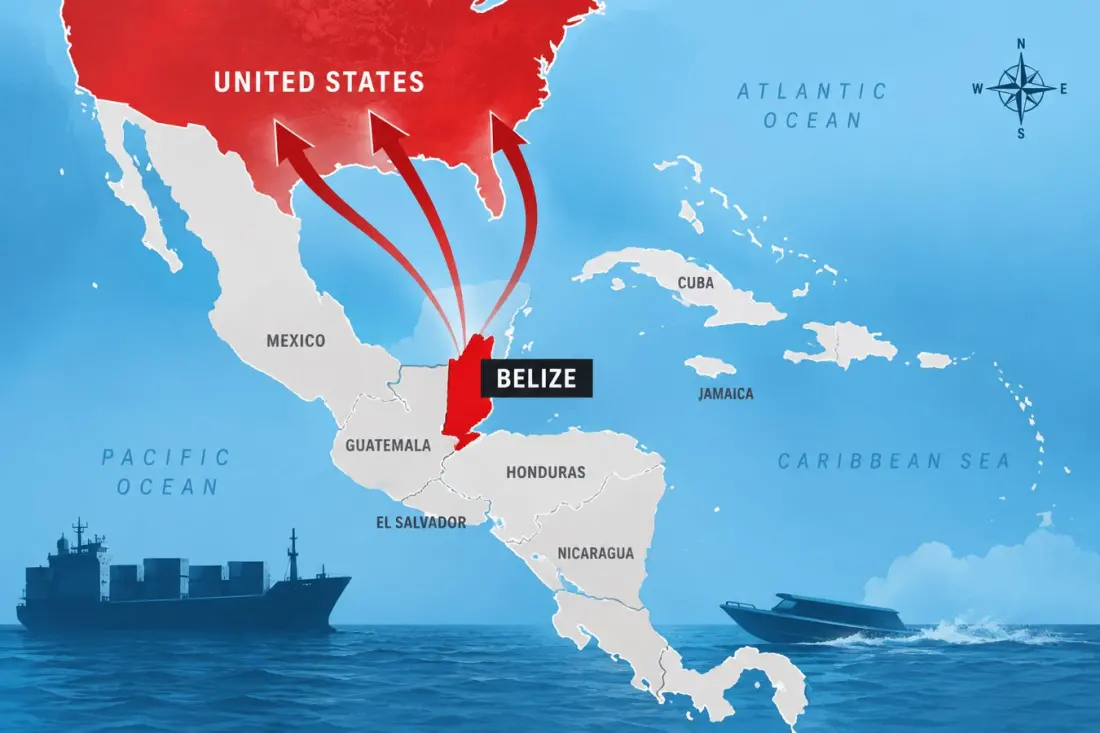
Belize has once again appeared on the United States' annual list of major drug-transit or illicit drug-producing countries, part of a presidential determination sent to Congress on September 15 covering Fiscal Year 2027. It sits alongside 22 others including Mexico, Colombia, The Bahamas, Jamaica and Honduras — neighbours and near-neighbours in the Caribbean basin.
Here's the key context: being on the list isn't an accusation of failure. The designation largely reflects geography and trade routes — Belize sits conveniently between South American production zones and the US market, so it shows up on the map whether or not anything changes on the ground. Crucially, the US did not tag Belize as having "failed demonstrably," the harsher category reserved for countries judged to have seriously fallen short on counternarcotics efforts. That label applies to just four countries this year: Afghanistan, Burma, Colombia and Bolivia. Last year Venezuela was also on it; the US has now removed Venezuela, citing cooperation from its interim government, while Colombia stays under close watch, with Washington signalling it could reconsider if coca eradication and action against trafficking networks improve under the De La Espriella administration.
So why should a holidaymaker care? Mainly because headlines like this can distort perceptions of a country that remains one of Central America's most relaxed and rewarding destinations. Belize's Caribbean coast — Ambergris Caye, Caye Caulker, the barrier reef — runs on tourism, and the areas visitors actually spend time in are far removed from the trafficking routes that put the country on Washington's list. The designation doesn't trigger travel warnings on its own, doesn't affect visa rules, and doesn't change anything about flying in, diving the Blue Hole or exploring the Maya sites inland.
What it does touch, indirectly, is reputation and aid. The "failed demonstrably" label can complicate international assistance and colour how a country is discussed abroad — which is why Belize's government will be quietly relieved to stay in the milder category. For travellers, the practical takeaway is simple: check your own government's current travel advice as usual, exercise normal urban caution in Belize City, and don't let a bureaucratic list put you off a country with world-class reef diving, jungle lodges and cave tubing.
The bigger picture is that this is an annual ritual of US counternarcotics policy, and a name on a 23-country list says more about shipping lanes than about safety on the sand. Belize keeps its spot, keeps its clean bill on effort, and keeps welcoming cruise ships and dive boats as normal.