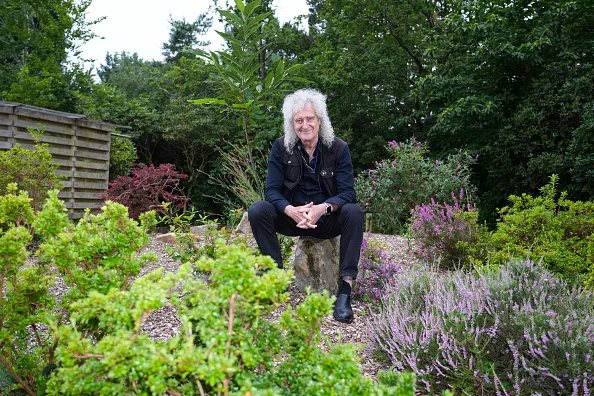
Queen's lead guitarist owns a forest in Dorset, and it's growing nicely. In 2012, Brian May bought 157 acres of former farmland near the village of Bere Regis — land that had been earmarked for housing — and set about turning it into a wildlife sanctuary instead.
The first tree went into the ground in September 2013, when May joined local residents for a planting ceremony and put in the reserve's inaugural oak. Just over a decade later, more than 100,000 trees grow on the site, known locally as May's Wood. The planting plan leaned heavily on native British species: hazel, hawthorn, bird cherry, spindle and viburnum, with patches managed for wildflowers to vary the habitat.
May was thinking beyond a simple wood. In a 2013 BBC interview he described the project as a sanctuary designed to work as a corridor, letting animals move through the wider countryside rather than being boxed into one patch. He framed it as a legacy — a landscape that would keep developing long after he's gone. It's a useful reminder that conservation isn't only about protecting pristine wilderness; restoring intensively farmed or development-threatened land can create genuinely valuable habitat too.
There's a rescue operation here as well. The reserve is home to Harper Asprey Wildlife Rescue, founded by Anne Brummer, who also co-founded the Save Me Trust with May. The organisation cares for injured, orphaned and vulnerable British wildlife — badgers, foxes, hedgehogs and deer are among the species found in and around the wood — and takes in roughly 750 animals a year, according to figures from the BBC.
For travellers, the story adds a quiet footnote to a corner of Dorset most people drive through on the way to the Jurassic Coast. Bere Regis sits in the Purbeck district, an area of chalk downland, heath and small villages. May's Wood shows how a piece of ordinary English countryside got a second life, and it's part of a broader rewilding movement gaining ground across Britain — from Knepp in West Sussex to community woodlands popping up on exhausted farmland nationwide. If you're walking the area's footpaths or exploring Thomas Hardy country (the author was born nearby), it's a good reminder that the woodlands and hedgerows around you may be newer, and more deliberately created, than they look.
The bigger takeaway is a simple one: land doesn't have to stay what it was. A farm slated for houses became a functioning ecosystem with a rock legend's name on it — no fences, no ticket booth, just trees doing their thing.