Syria is suddenly a name on hotel development slides again. Nearly two years after its civil war ended, several major hospitality brands — including France's Accor, US-based Wyndham, and Singapore-headquartered Minor Hotels — are scouting sites in the country, while UAE developers are drawing up plans worth billions.
The numbers behind the buzz are striking. Government figures carried by state news agency SANA put tourist arrivals at 3.52 million in the first half of 2026, more than double the same period a year earlier. But look closer: 2.13 million were Syrian expatriates coming home, roughly 660,000 came from Arab countries and about 720,000 from elsewhere. This is, for now, mostly a diaspora homecoming story — though that alone is enough to get hotel groups interested.
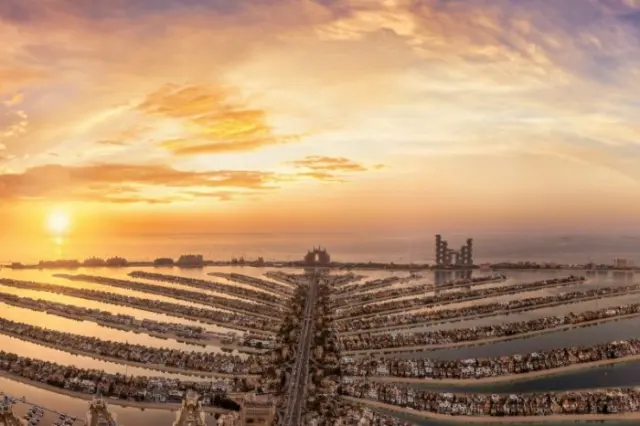
The most eye-catching project comes from Eagle Hills, the UAE developer founded by Mohamed Alabbar (who also chairs Emaar, the company behind the Burj Khalifa). It signed a framework deal covering a 10 million square metre development in Damascus and a 4.3 million square metre scheme in the coastal city of Latakia, with Emaar possibly joining in. Arada, another UAE firm, has flagged a $7 billion entry, and Wyndham says it expects to announce its first Syrian signing soon. Minor Hotels sees potential in converting old Damascus buildings into boutique properties, adding to the handful of traditional courtyard homes that have quietly hosted guests for decades.
Getting there is getting easier too. Etihad has just moved to a daily Damascus service, up from four flights a week, while Qatar Airways and flydubai already fly in. Etihad's chief executive says more Syrian destinations could follow if demand holds.
Still, anyone picturing a smooth relaunch should temper expectations. The US State Department continues to advise Americans not to travel to Syria, and the country still sees sporadic violence. Some local communities near Damascus have protested against the mega-projects. Card payments barely function — Visa and Mastercard only began launching operations there recently, and coverage is limited to certain foreign-issued cards at specific spots. And the hotel stock, in the words of one operator, is "very tired" after years off the grid: the World Bank's conservative estimate for rebuilding the country runs to $216 billion.
For travellers, the practical takeaway is this: Syria is re-emerging as a destination for adventurous visitors — drawn by Damascus, billed as one of the world's oldest continuously inhabited cities, plus ruins like Palmyra and Aleppo and a Mediterranean coastline — but it remains a frontier trip. Foreign ministries of most Western countries still warn against going, infrastructure is patchy, and you should expect cash-only travel and basic conditions outside a small set of restored boutique stays. If you go, do it with an experienced local operator, up-to-date security advice, and realistic expectations. The investment wave suggests the comfortable, polished Syria is a few years off — but it's clearly coming.