
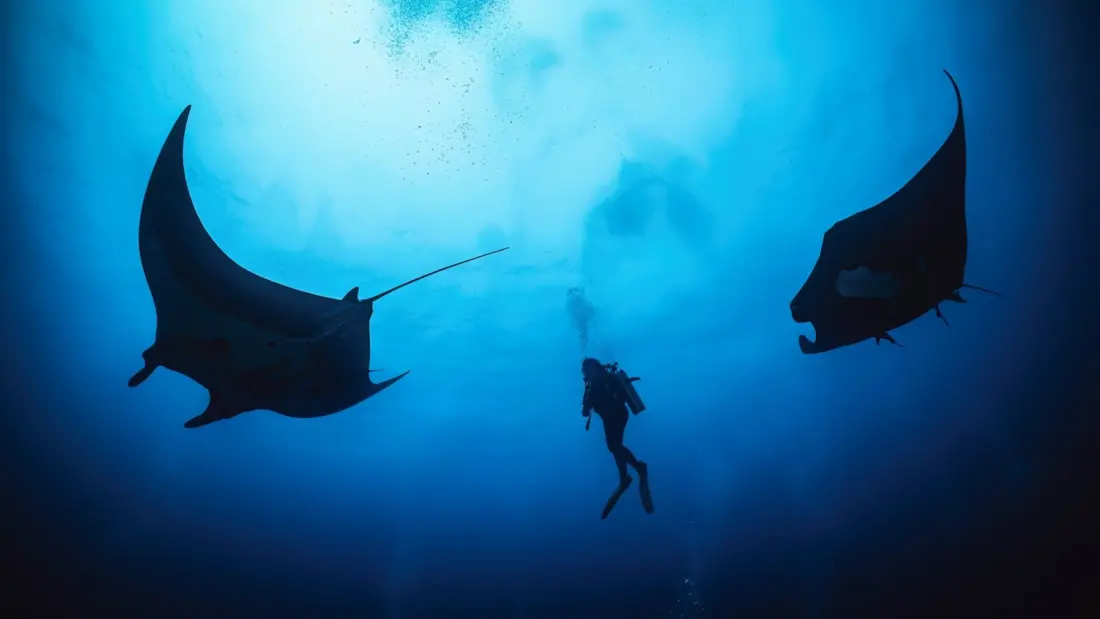
Twenty-foot manta rays that actively seek out divers sound like the stuff of dive-boat tall tales. But 250 nautical miles off Mexico's Baja California peninsula, in the uninhabited Revillagigedo archipelago, it's the norm. These four volcanic islands — often called the Galápagos of Mexico — sit more than 24 hours by boat from Cabo San Lucas, and the giant oceanic mantas that patrol their pinnacles behave differently here than anywhere else on the planet. They circle divers, hover a few feet away, and appear to track you with their eyes, as if curious about what you are.
The science backs up the strange intimacy. Mantas have among the largest brains of any fish, can recognise themselves in mirrors, and — according to researchers like Robert Rubin of the Pacific Manta Research Group, who has studied them here for over three decades — seem to recognise individual humans. Photo-identification records stretch back 33 years, and roughly 95 percent of mantas in old research photo sets reappear in newer ones. Even better for travellers: this is citizen science you can join. Photo of a manta's patterned belly? Submit it, and researchers use it to identify individuals and track migrations. One recent liveaboard trip added 44 new mantas to the database.
Getting here is a commitment. The only way in is a liveaboard boat — no tourists are allowed on the islands themselves, which are UNESCO-listed (2016) and form North America's largest marine protected area (2017), patrolled by a small Mexican Navy contingent. Trips run about seven days and cater to a range of experience levels: one recent departure included a diver with just 45 logged dives alongside veterans with thousands. Conditions can be demanding — plankton blooms and currents — but the payoff is hammerhead sharks, humpbacks, whale sharks, and those famously engaged mantas.
Operators such as Dive Ninja Expeditions, the first designated PADI Eco Center in Mexico, build conservation education into the trip, with evening talks from researchers and photo workshops. And tourism here has a real protective function: before dive boats started coming, the fishing ban around the islands was barely enforced. The revenue and jobs justify keeping the area protected, so divers are effectively helping fund the manta rays' safety. The main ongoing threats are boat strikes and overtourism elsewhere in their range — not here, for now.
One counterintuitive tip from experienced hands: consider diving without a camera. Strong currents and depth already demand attention, and — anecdotally, at least — the mantas seem to prefer eye contact to lenses, giving camera-free divers closer encounters. Divers say hovering motionless as a winged giant the width of a small boat glides overhead is the kind of experience that makes the long boat ride and hefty price tag worth it. For anyone who's ever dreamed of flying, this is the closest thing the ocean offers.