
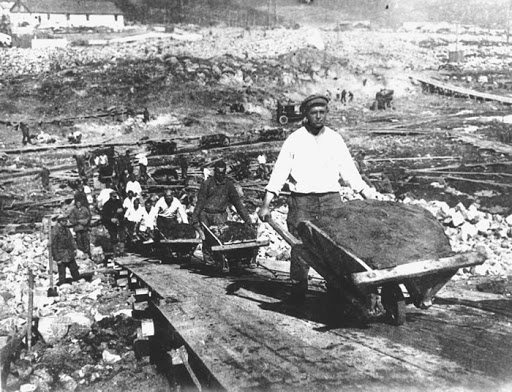
Few adventure books have gripped readers like The Long Walk. Published in 1956 and ghostwritten by journalist Ronald Downing, it recounts Slavomir Rawicz's supposed escape from a Soviet gulag and an 11-month, 6,500km trek to freedom through Siberia, the Gobi Desert, Tibet and the Himalaya into British India. It sold over half a million copies, has been translated into 25 languages, and remains in print. There's just one problem: it almost certainly isn't true.
Scepticism starts with the details. The book describes crossing the Tibetan Plateau without ever mentioning the relentless winds that define the place — an omission any traveller who has been there finds baffling. Then there's the claim of walking more than a week across the Gobi without water, and an encounter with two Abominable Snowmen in the Himalaya. Not exactly field notes.
The hard evidence came in 2006, when a BBC investigation dug into Soviet records. They included a statement from Rawicz himself confirming he was released in 1942 as part of a general amnesty for Poles held in the USSR — no escape involved. He then rejoined the Polish army and later settled in the English Midlands, dying in 2004 at 88. His children have continued to defend him, but the documents are hard to argue with.
Here's the twist, though: the walk itself might have happened — just without Rawicz. In 1941, a group of seven men and one woman allegedly broke out of Camp 303, a brutal labour camp south of Yakutsk, and walked to India, arriving in 1942. Four of them died along the way: two crossing the Gobi, two more in a winter crossing of the Himalaya. A 2009 claim by Polish veteran Witold Glinski, who said he was one of the walkers, was championed by author John Dyson but fell apart under scrutiny — the dates and Glinski's age don't line up, and he produced no evidence.
So the truth sits somewhere unresolved. A real escape may have occurred, but no one can say who made it. The supposed American escapee known only as Mr Smith never surfaced. What's certain is that Rawicz's version is fiction — gripping fiction, and still worth reading as a classic of the genre, as long as you read it with a raised eyebrow. For anyone who has travelled the Silk Road, Mongolia or the Himalaya, the book doubles as a curious case study in how myth-making works in adventure writing.