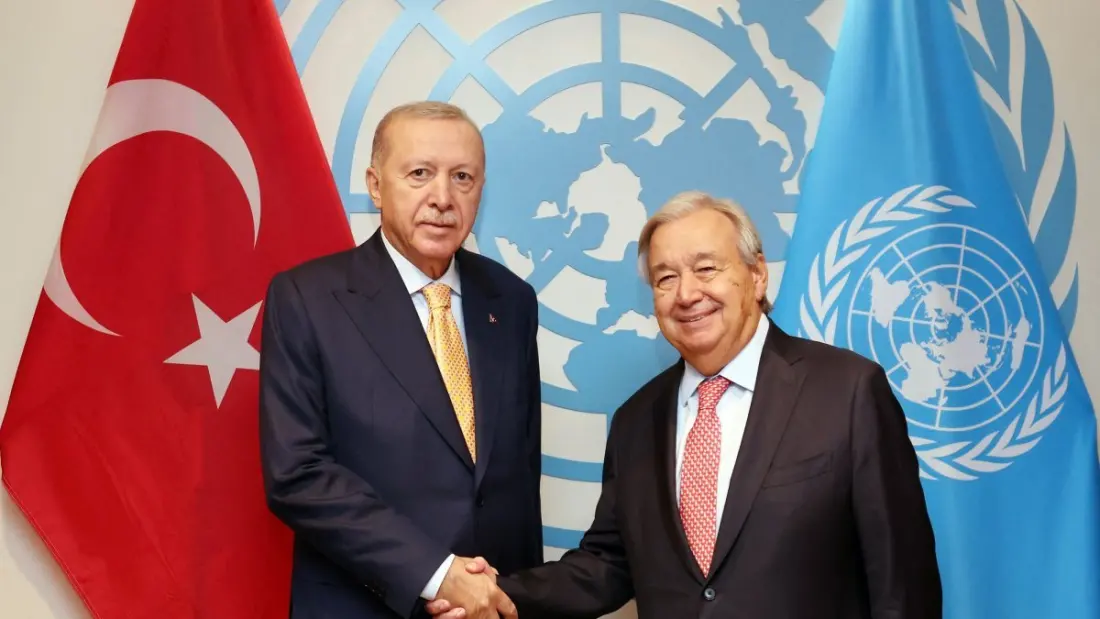
Türkiye's President Recep Tayyip Erdoğan spent Tuesday in New York working the sidelines of the 81st United Nations General Assembly, cramming in meetings with the UN secretary-general and the leaders of Britain, Qatar and Senegal while conflicts in Gaza and Ukraine dominated the agenda.
The busiest sit-down was with UN chief António Guterres at headquarters. Erdoğan used it to press Ankara's long-standing positions: Israel's apparent unwillingness to pursue peace in Gaza, settler violence in the occupied West Bank, and assaults on holy sites in Jerusalem, which he argued are undermining the basis for a two-state solution. He also flagged tensions around Iran, suggesting a process driven from within the region could ease pressure on the Strait of Hormuz — a waterway whose security matters directly to global shipping and, by extension, to travellers' fuel prices and flight costs.
On Ukraine, Erdoğan voiced concern over attacks on commercial vessels in the Black Sea and urged all parties to safeguard navigation — a reminder of how much the war continues to shape shipping routes and regional travel. He repeated Ankara's familiar line on Cyprus too, insisting any settlement must recognise the sovereign equality and international status of Turkish Cypriots. Talks with UK Prime Minister Andy Burnham and Qatar's Emir Sheikh Tamim bin Hamad Al Thani were held behind closed doors with no details released.
The meeting with Senegal's President Bassirou Diomaye Faye underlined Türkiye's quiet pivot toward Africa. Ankara opened its embassy in Dakar back in 1962 — one of its first on the continent — and the two countries have since deepened ties in trade, politics and culture.
Why should a traveller care? UN General Assembly week turns Midtown Manhattan into a fortress of road closures and security perimeters every September, so anyone visiting New York then should plan around it. Beyond logistics, the diplomacy touches destinations directly: Cyprus remains divided, with the Turkish Cypriot south-vs-north question still unresolved; Black Sea shipping disruptions affect routes through Türkiye and Ukraine; and Gulf tensions involving Iran and Qatar can ripple into flight availability and insurance across the Middle East. Türkiye itself sits at the crossroads of all these conversations, and its tourism hubs — Istanbul, Antalya, Cappadocia — remain open and welcoming even as its government navigates a crowded geopolitical deck.
For holidaymakers, the takeaway is simple: none of this changes the appeal of Türkiye or Senegal as destinations, but it's worth keeping an eye on regional headlines when booking flights through the eastern Mediterranean or the Gulf.