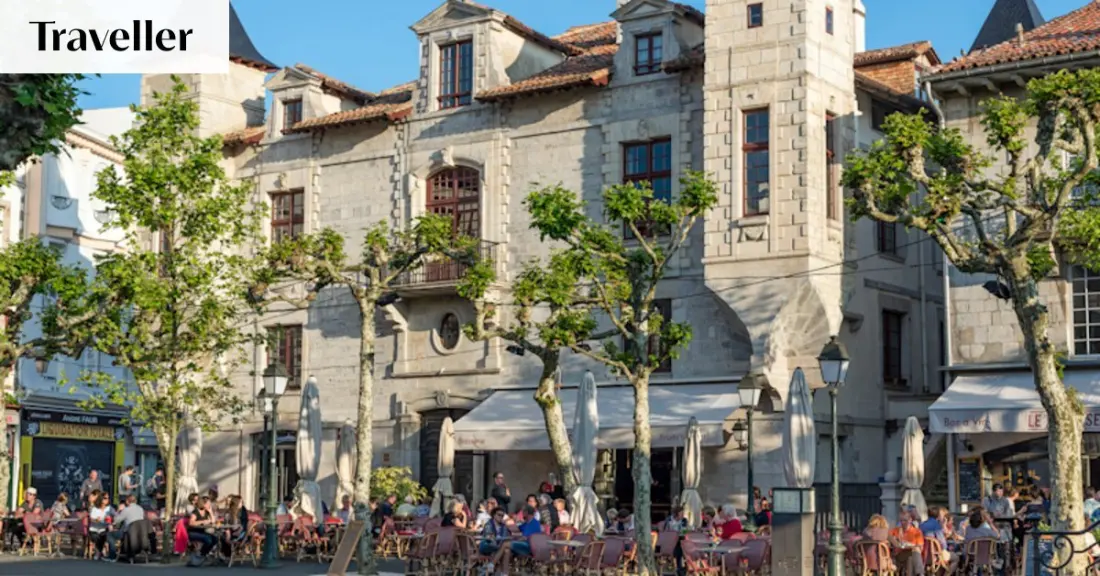
In Ciboure, a quiet French-Basque village just across the harbour from busy St-Jean-de-Luz, a bistro called Maitenia sits so close to the village pelota court that diners at the outdoor tables are genuinely at risk of a stray ball landing in their cheese course. That's part of the charm: simple daily menus worked out with local fishermen and market growers, wooden bench tables, relaxed staff, and prices that don't hurt. It's the kind of place that defines France for many visitors — and it's exactly the kind of place that keeps almost going under. Maitenia has changed hands several times, closed for a stretch, and replaced an older village fixture, Bar du Fronton, which shut for good back in the 1980s.
The struggle isn't unique. In the early 1900s, France had roughly 500,000 humble cafe-bistros serving hearty, traditional food to locals. By the 1960s that figure had halved to under 250,000. Today, only 30,000 to 40,000 remain, and they're closing at a rate of about two per day. These venues were never just restaurants — they were the community's 'third place', where villages gathered naturally over food and wine.
Why the decline? Rural France is emptying out as people move to cities, leaving villages without even a boulangerie or bar-tabac to sustain. At home, people increasingly spend evenings watching TV or scrolling rather than going out, and they're drinking less alcohol than previous generations. Fewer customers, fewer owners willing to take on remote village businesses.
Here's the twist: this is one problem mass tourism can actually solve. France welcomed more than 100 million international visitors last year — more than any other country on earth. If even a fraction of those travellers skipped the Michelin-starred listings, the Instagram-famous spots and the familiar chains, and instead ate lunch in an unassuming village bistro, the economics change. It also means venturing beyond Nice, Lyon or Bordeaux into small towns where the 'attractions' are subtler. Ciboure proves the point: a ten-minute walk from St-Jean-de-Luz's crowds, yet it sees only a sliver of the visitors.
For holidaymakers, this is a low-effort, high-reward way to travel better. You get genuinely local food, often cheaper than the famous addresses, in rooms where regulars still dominate. France gets to keep an institution it gave the world. Booking nothing, planning nothing — just choosing the bistro by the fronton over the branded chain — is the whole strategy. Save a cultural icon, one entree at a time.