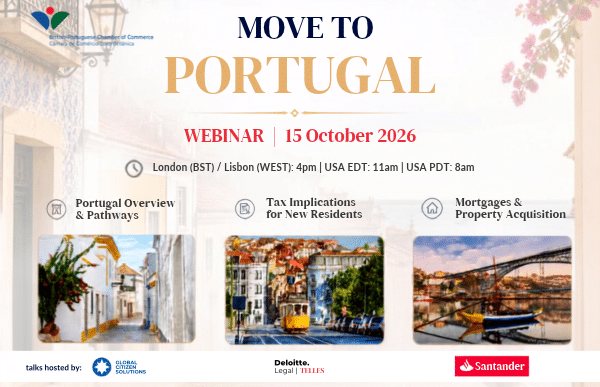
Thinking about swapping grey skies for the Algarve or a Lisbon apartment? A free online session on October 15 could save you months of confused Googling. The British-Portuguese Chamber of Commerce has lined up tax, residency and property experts to walk prospective movers through the practical side of relocating to Portugal — and attendees can put their own questions to the panel.
The webinar targets a fairly broad crowd: retirees, remote workers, entrepreneurs and investors all get explicit mention. Three organisations are presenting. Tax specialists from Deloitte Legal Telles will cover what becoming a Portuguese tax resident actually means, how income and pensions are treated, and how double taxation agreements with the UK and US come into play. There will also be guidance tailored to remote workers, business owners, buyers and investors — groups whose tax situations can differ sharply.
On the residency side, Global Citizen Solutions will run through the main visa routes. Expect detail on the D7 (popular with retirees and passive-income earners), the D8 for digital nomads, the D2 for entrepreneurs, and the Golden Visa programme — including eligibility criteria, paperwork and the less glamorous realities of actually relocating. For house-hunters, Santander Portugal will explain how mortgages work for foreign buyers, what lenders require, the banking documents you'll need and how the property purchase process unfolds in practice.
After the presentations there's a live Q&A, and you can submit questions in advance if you want a specific problem addressed. The session runs on Microsoft Teams at 4pm Portugal and UK time — 11am US East Coast, 8am West Coast — which makes it accessible from either side of the Atlantic. Registration is free and done online.
Why bother with a webinar? Because Portugal keeps ranking high on lifestyle and safety, but the paperwork trips people up. Visa categories have shifted in recent years, tax rules for newcomers have changed, and mortgage lending to non-residents comes with its own quirks. Getting a broad briefing from three specialists in one hour — at no cost — is a sensible first step before you commit to anything as heavy as a property viewing trip or a visa application. It's equally useful if you're just at the daydreaming stage and want to know whether your pension, freelance income or savings would realistically qualify you for a D7 or D8 route.
If you can't attend live, it's still worth registering — these sessions are often recorded or followed up with materials, and the BPCC is a good ongoing contact for Brits navigating the move. Either way, an hour of expert answers beats forum threads and secondhand advice.