
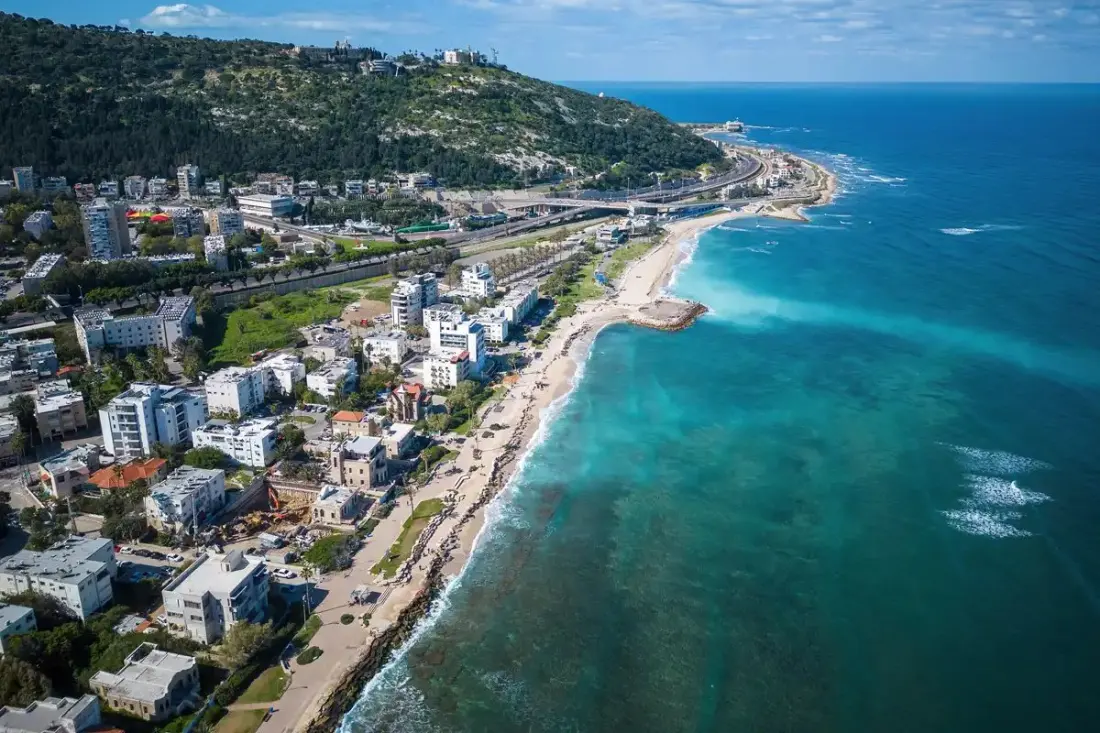
A large-scale search operation off the Israeli city of Haifa has ended in tragedy, with the recovery of a 23-year-old freediver who disappeared while diving near Students Beach.
Itai Persson, a Master Sergeant First Class in the Israeli Border Police's counter-terrorism unit, Yamam, went missing on Thursday, 10 September, while freediving with his uncle. His uncle was kayaking at the surface and raised the alarm when Persson failed to come back up. The young officer's body was located on the seabed two days later, on Saturday 12 September, roughly half a mile from shore.
What followed was one of the more extensive search efforts the area has seen. Israeli police deployed rescue divers supported by boats, jet skis, drones and a helicopter, with teams also combing the coastline. The Israeli Navy joined the operation with its underwater missions unit, Yaltam, and naval commandos from Shayetet 13. The search ran through the nights as well as the days until the recovery was confirmed. Carmel district police commander Boaz Samucha said hundreds of officers, personnel and volunteers had been involved and thanked everyone who assisted. Police have opened an investigation into the incident, and Persson's family — his parents, two brothers, two sisters and his partner — were informed before any public announcement.
For travellers and locals who swim or dive along Israel's Mediterranean coast, the story is a sobering reminder of how quickly freediving can go wrong. Freedivers typically operate without tanks, breathing gear or much in the way of visibility aids, and even experienced practitioners can black out underwater with little warning. Having a companion nearby, as Persson's uncle was, is not always enough: the surface is far away when someone sinks, and currents or poor visibility can move a casualty quickly. Safety bodies generally urge freedivers to never dive alone, use a buoy or line so they can be located, stay within easy reach of shore, and make sure someone on land or sea knows their plan. Haifa's beaches are popular with swimmers and divers in the warm months, and incidents like this are rare — but they show how serious the consequences can be when something goes wrong beneath the surface.
Persson served in Yamam's observation and drone team. His death has drawn attention to both the risks of breath-hold diving and the scale of resources Israel will commit to a search-and-recovery operation, with police, navy and volunteers all taking part over three days of continuous effort.
The piece was reported by Dive Magazine.