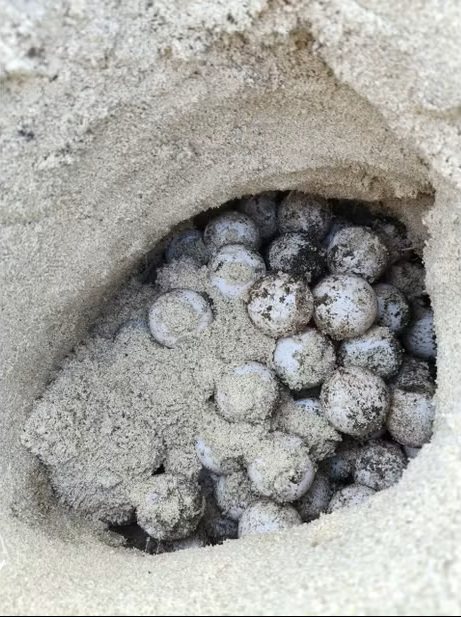
A green turtle hauled herself ashore at Mũi Tàu beach on Hòn Cau island on October 8 and laid 82 eggs — the sixth nest recorded on this small Vietnamese island since the start of the year. Patrol staff from the Hòn Cau Marine Protected Area found the nest during a routine check after a night of rain, then moved the eggs to a guarded incubation area where they should hatch in 45 to 60 days.
The island, about 10km off the coast of Lâm Đồng province in central Vietnam, has now seen nesting at three of its beaches this season: Nhật, Mũi Tàu and Ba Hòn. Six nests have been logged in total, holding 246 eggs. Three were left where they were because the spots were already safe; the rest were relocated. The nesting season runs from May to October, and green turtles — listed as endangered in Vietnam's Red Data Book — are the main species here.
What makes Hòn Cau work is the human effort behind it. Staff and volunteers patrol the beaches through the season, monitor nesting females, and once a turtle has slipped back into the sea they remove every trace of her tracks. That last detail matters: egg poachers have historically followed fresh trails to dig up nests for the illegal wildlife trade.
The marine protected area covers roughly 12,500 hectares — the island itself plus core, buffer and restoration zones — and is one of 16 marine protected areas Vietnam considers nationally important. Coral reefs and seagrass beds support a range of rare aquatic species, and turtle numbers returning to nest are read as a sign the habitat is holding up. Local communities have been pulled into the work too, with volunteers helping hatch and release thousands of baby turtles over recent years.
For travellers, this is a rare chance to see conservation in action rather than a staged wildlife show. The island isn't a resort hub — it's a working protected area — which is exactly the appeal. If you're drawn to off-track Vietnamese islands, sea-life-focused trips or community-run conservation, Hòn Cau fits, and late in the nesting season or early hatching months offers the best odds of seeing hatchlings make their first scramble to the water. Just go with the rules: keep distance from nesting females, no lights or flash on the beach at night, and follow the guidance of the management board or local guides.