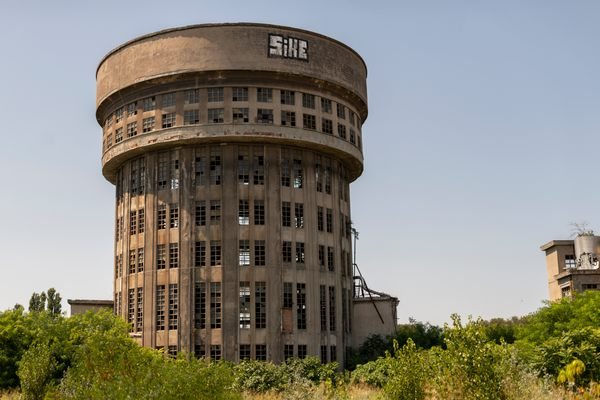
Ferrara is known for its Este dynasty castles and Renaissance streetscapes, but on the edge of the city stands something altogether different: a seven-storey circular concrete tower with a giant void at its centre and a glass skylight crowning the whole thing. Locals and architecture fans call it the Oculus Tower, and it is what remains of one of Italy's big industrial operations.
The tower was the centrepiece of the Eridania complex, a vast alcohol-production plant that once churned out spirits on an industrial scale. Beet molasses arrived here and left as raw spirit, refined alcohol, and denatured alcohol destined for everything from liqueurs to cosmetics and pharmaceuticals. The building itself was designed with real drama: seven levels of galleries ring the open central shaft where the distillation equipment lived, and a huge oculus above poured daylight into the working heart of the plant. Rows of punched windows across the reinforced-concrete frame give it an uncanny resemblance to a modernist Colosseum — more sports arena than factory.
When the complex shut down in the 2000s, most of the site was demolished in phases. The circular tower survived, and it is now the most recognisable leftover of the entire operation — a piece of Italian industrial archaeology that is monumental, geometric, and oddly theatrical even though the machinery that filled it is long gone.
A note of caution for anyone tempted to go looking: the area around the tower has been heavily demolished and redeveloped, and conditions on the ground keep changing. There is no guarantee of public access, and trespassing is not the move. The structure is best enjoyed from a safe, legal vantage point — and Ferrara's compact, bike-friendly centre means the detour costs you little. Respect the barriers and private property signs; the building photographs beautifully from a distance anyway.
Why bother? Industrial architecture is having a moment among travellers who have done the cathedrals-and-museums circuit, and the Oculus Tower delivers genuine spectacle without queues or tickets. Pair it with Ferrara's UNESCO-listed old town, the Castello Estense, and the city's famous cycling culture, and you get a day trip that spans six centuries of Italian design — Renaissance loggias to Brutalist-adjacent concrete in a few pedal strokes.