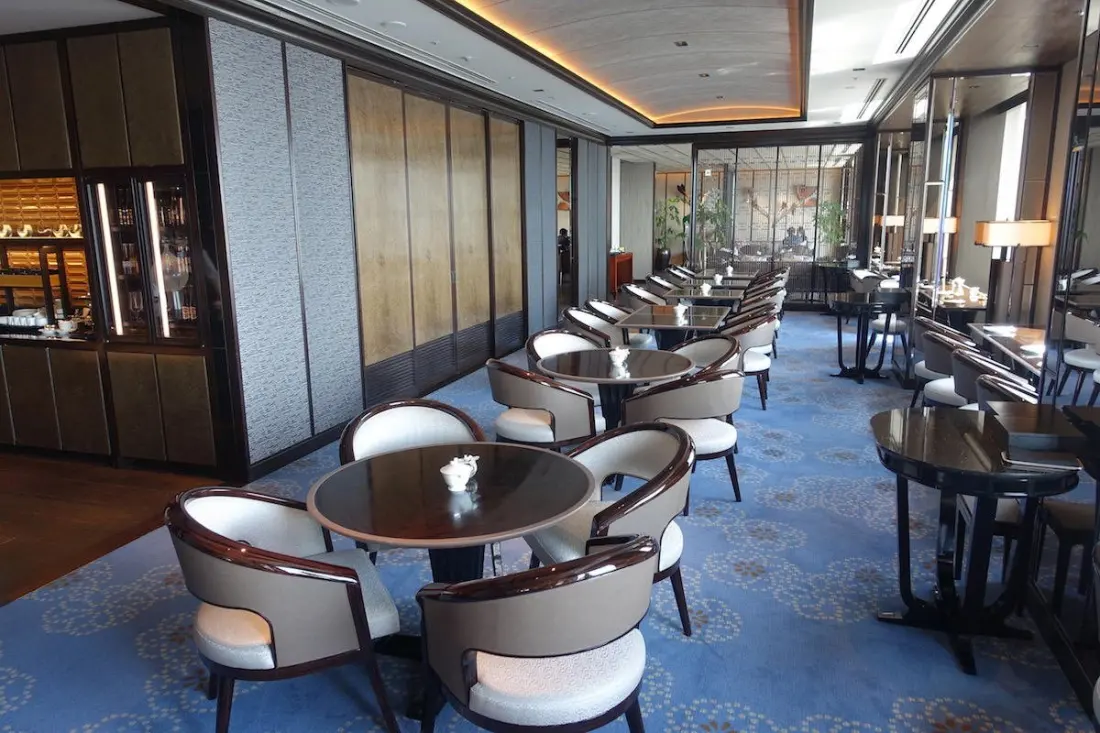
Club lounges — sometimes called executive or concierge lounges — are private hotel spaces offering free breakfast, an evening drinks hour, and often snacks and coffee all day. Access usually comes via a club-level room (anywhere from $50 to $500+ extra per night) or through hotel elite status, though policies vary widely by brand and property.
Here's the catch: they're wildly uneven. The best lounges tend to be in Asia, at luxury brands, and at properties where too many guests don't get in free. At the top end, Ritz-Carlton lounges in Asia serve five food presentations a day — full breakfast and lunch buffets, afternoon tea, an evening spread with champagne and bartender-made cocktails, and desserts — often with skyline views and live music. Standouts beyond Ritz-Carlton include the Manor Club at Rosewood Hong Kong and the Specialty Salon at the Osaka Station Hotel, which pours free champagne all day and serves caviar and cooked-to-order beef tenderloin at night. At the other end? A basic US Marriott lounge: a bland room, a TV blaring, a thin evening snack spread, and paid drinks you didn't want to pay for.
Why bother, when you could be out eating at restaurants? For frequent travellers who work remotely — or just want somewhere comfortable between outings — a good lounge solves a real problem. Hotels rarely have quiet, comfortable public spaces: lobbies are busy, and sitting for hours in a restaurant over one coffee feels awkward. Lounges are typically on top floors with the best views, and unlimited coffee, soft drinks and a pre-dinner drink in familiar surroundings add up. At resorts, where off-site dining is limited, the food and drink value is genuinely significant.
The amenity is under threat, though. Many lounges closed during the pandemic and never reopened, even at busy hotels, as owners chase cost savings. New properties from lounge-friendly brands are increasingly opening without them. The economics are the issue: when lounges are given free to a growing pool of elite members (thanks largely to credit cards), they become cost centres, quality gets watered down, and paying guests stop seeing the point. Ritz-Carlton is the exception proving the rule — Bonvoy elites don't get complimentary lounge access, which is partly why its lounges stay good.
Practical takeaway: if you're booking a big-chain hotel and value a quiet workspace or an easy breakfast, check whether the property still has a lounge before paying for club access. In Asia, it's often worth it; in the US, manage expectations. And don't assume the lounge exists just because the brand usually has one — the era of guaranteed club lounges may be ending.