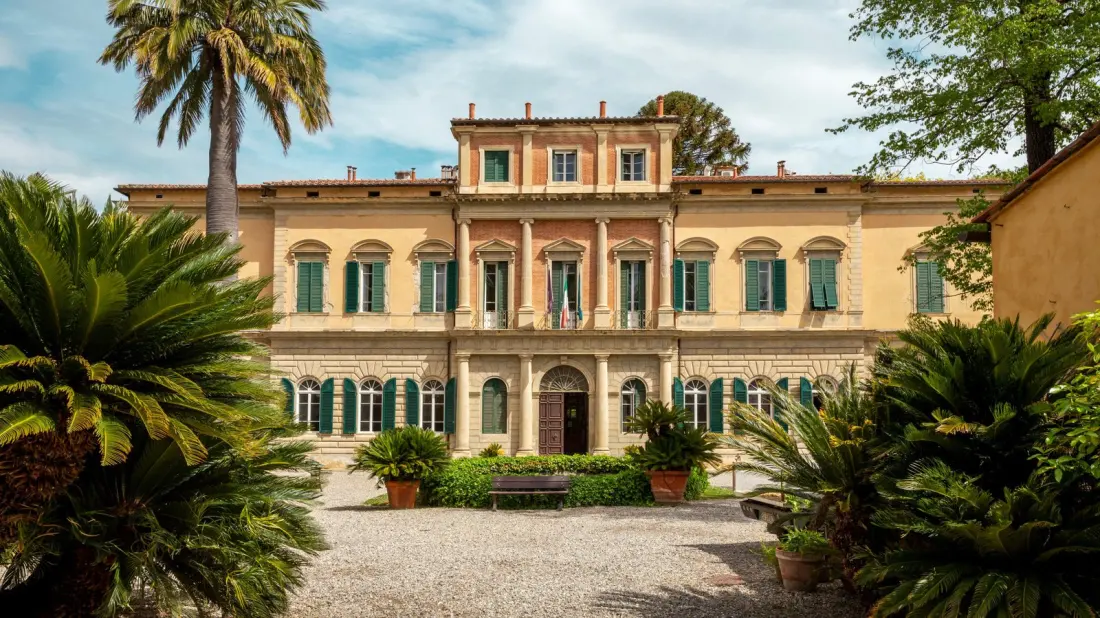
Most visitors to Pisa make a beeline for the Leaning Tower, snap the obligatory photo, and leave. A few hundred metres away, they're missing one of the city's quietest treasures: the Orto e Museo Botanico, the oldest university botanical garden in the world. Founded in 1543, it is approaching its 500th birthday.
The garden was established by botanist Luca Ghini as a living classroom, planted so that medical students could study medicinal plants at a time when botany was essentially a branch of medicine. In 1591 it moved to its present site near the Piazza dei Miracoli, and today its roughly two hectares hold around 3,000 species gathered from across the globe — desert succulents from Africa, Mediterranean herbs, Chilean wine palms and banana plants among them.
The layout rewards a slow wander. The oldest section, the Scuola Botanica, dates to the late 16th century and keeps its plants in tidy, scholarly rows — including some 150 varieties of salvia and a bed of edible wild species. Head towards Piazzale Arcangeli and the geometry loosens: paths curve under shady trees, and a small artificial lake offers a bench-friendly spot to stop. Several greenhouses add a tropical and arid contrast to the open beds.
For a dose of history, the two-floor Botanical Museum holds 19th-century plant models, the original Studiolo where the garden's seeds were once studied, and centuries-old dried specimens from the Herbarium, which is normally reserved for researchers. One caveat: the museum has been temporarily closed following earthquake damage, so check ahead before planning a visit around it.
Why bother, when the Tower is a few minutes' walk away? Because the garden is exactly what Pisa's main square is not: calm, cool and uncrowded. Travellers consistently describe it as a low-key escape where you can have the place almost to yourself, and it slots neatly into a day-long Pisa itinerary. Admission is inexpensive, and on the first Sunday of each month entry is free — handy if you're exploring Tuscany on a budget.
Give yourself a couple of hours here, then carry on to the rest of the city's sights. Pisa works well as a day trip or an overnight stop on a wider Tuscan route, and a visit to a 16th-century scientific garden makes for a far better story than another photo holding up the Tower.