The United States Air Force operates some seriously long strips of concrete, and the five longest tell a story about heat, ice, altitude and experimental flight. The shortest on the list is still over 10,000 feet — nearly two miles. Here's the ranking, and why each base exists where it does.
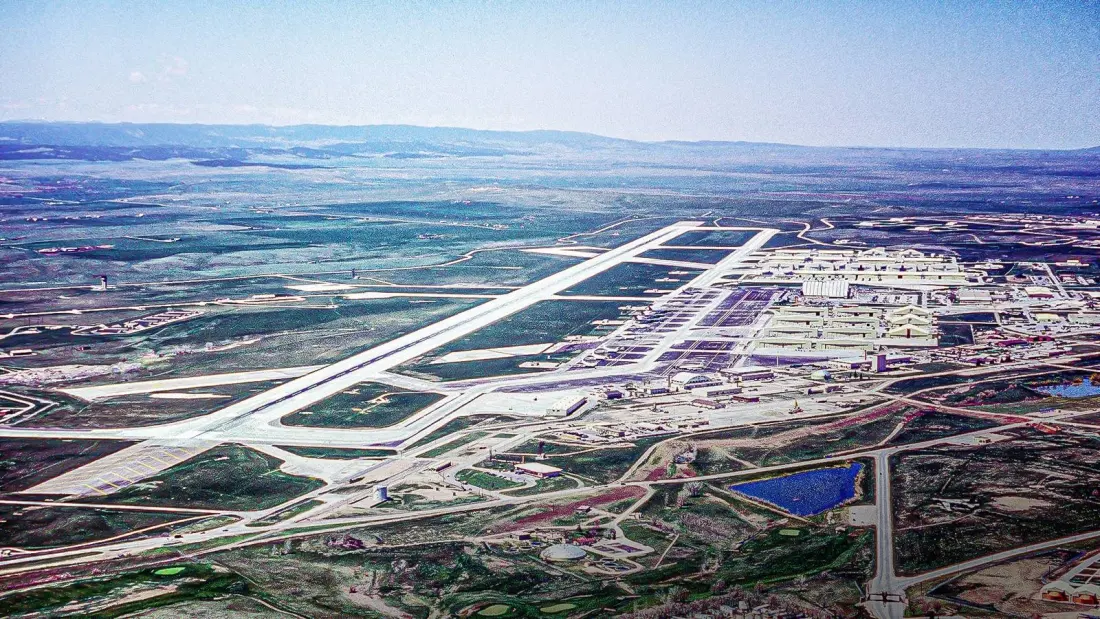
Coming in fifth is Nellis Air Force Base near Las Vegas, with a 10,120-foot (3,085 m) runway. Nellis is the heart of American fighter aviation, home to the Air Force Warfare Center and exercises involving F-35s, F-22s and A-10s. That length isn't luxury: southern Nevada's triple-digit summer heat thins the air and stretches takeoff rolls, even for jets.
Fourth is Kirtland Air Force Base in Albuquerque, New Mexico, at 13,795 feet (4,205 m). Sitting more than a mile above sea level, Kirtland shares its airfield with Albuquerque's civilian airport and hosts over 100 tenant units, from special operations aviation to nuclear sustainment and research flights. Thin mountain air can add 15–35% to takeoff distances depending on the aircraft, so the extra pavement is essential. The base's roots go back to 1940s flight testing tied to the Manhattan Project.
Third and second both belong to Alaska. Eielson AFB, deep in the boreal forest near Fairbanks, has a 14,530-foot (4,429 m) runway built for conditions where temperatures fall below -40°F and ice contamination changes braking entirely. It hosts the multinational Red Flag–Alaska exercises and sits beside one of the world's largest training ranges. Slightly longer is Joint Base Elmendorf–Richardson in Anchorage at 14,998 feet (4,571 m) — a Cold War NORAD hub now central to Pacific air defense, where C-17s and F-22s rely on every foot during snowy winters.
The winner is Edwards Air Force Base in California's Mojave Desert at 15,024 feet (4,580 m) — the longest runway in the entire Air Force. Edwards has hosted nearly every major American flight-test program, from the X-1 and X-15 to the B-2 bomber and today's uncrewed platforms. Test flights demand huge safety margins, and the desert heat cuts lift further. There's a bonus: the dry lakebeds around the base, notably Rogers Dry Lake, form natural runways miles long and famously hosted Space Shuttle landings.
Why should a traveller care? Because four of these five sit beside genuinely visitable destinations. Aviation enthusiasts can watch fighters over Las Vegas, spot military traffic at Albuquerque's shared airfield, or catch heavies around Anchorage. Edwards runs public tours and its NASA-affiliated visitor center is a pilgrimage site for flight-test history. You can't stroll onto an active base, but the perimeter roads, nearby museums and spotting locations make this a niche itinerary that aviation geeks will happily build a road trip around — Nevada to California to New Mexico to Alaska, following the longest runways in American military aviation.