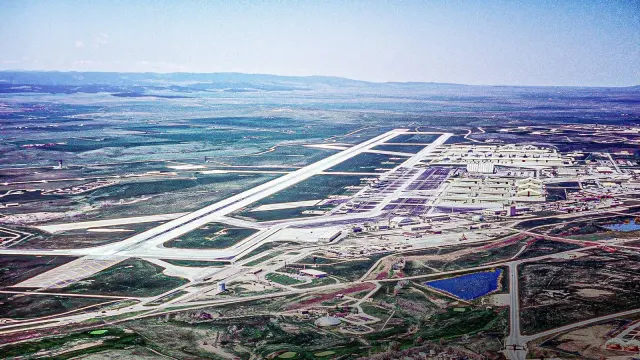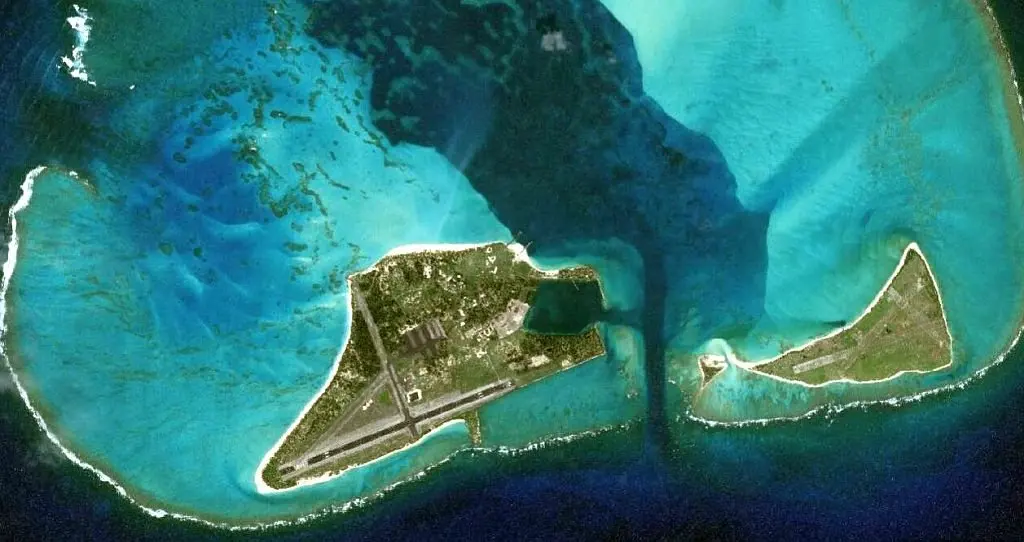
Midway Atoll is a speck of land 1,300 miles northwest of Honolulu, home to roughly 40 people — mostly US Fish and Wildlife Service staff. Its airport, Henderson Field, hasn't seen a scheduled commercial flight since 2002. Yet the fate of this lonely runway is now the subject of a fight involving the US Department of Transportation, airline dispatchers and Qantas.
The problem is simple: the airport is falling apart. Keeping it barely functional costs about $5 million a year, split between FAA Airport Improvement Program funds and FWS money. A proper rehabilitation — repaving the 7,800-foot runway and repairing the seawall — is estimated at over $100 million. Without that investment, the airport is expected to lose its Part 139 certification within five years.
Why should anyone care about an airport nobody flies to? Because transpacific aviation quietly depends on it. Modern long-haul jets have two engines, so they operate under ETOPS rules — they must always be within a set number of flying minutes of a suitable diversion airport. Midway sits almost exactly halfway between North America and Asia, making it the pivotal diversion point in the central Pacific.
The Aircraft Dispatchers Federation has warned that closing Midway would leave Pacific ETOPS coverage resting on just four airports. With Russian airspace off-limits to US carriers, flights to Japan, Korea, China and Southeast Asia are already squeezed onto narrow routings. Losing Midway could force ETOPS-207 or ETOPS-240 operations, against FAA guidance, adding equipment costs for carriers. The docket shows the airport isn't theoretical: 11 diversions landed there between 2003 and 2021, including airline flights with more than 800 passengers and crew combined, prompted by cabin smoke, a cracked windshield and engine oil pressure warnings.
The most striking consequence concerns Qantas. When Project Sunrise launches in 2027, the Sydney–London service will become the world's longest flight, with the westbound leg routing north over the Pacific toward Alaska. That optimal track relies on Midway as a diversion. Without it, Qantas says it would need to carry an extra 2,200 kilograms of fuel and sacrifice more than 20 seats' worth of payload — a serious hit on an ultra-long-haul route that's marginal economically to begin with. The airline has flagged the risk to the project's long-term viability outright.
A decision is pending at the DOT. The odds probably favour saving the airport — a $100 million price tag is small next to the disruption of losing it — but for now, one of the most important runways in the Pacific sits empty, deteriorating, and waiting on paperwork.