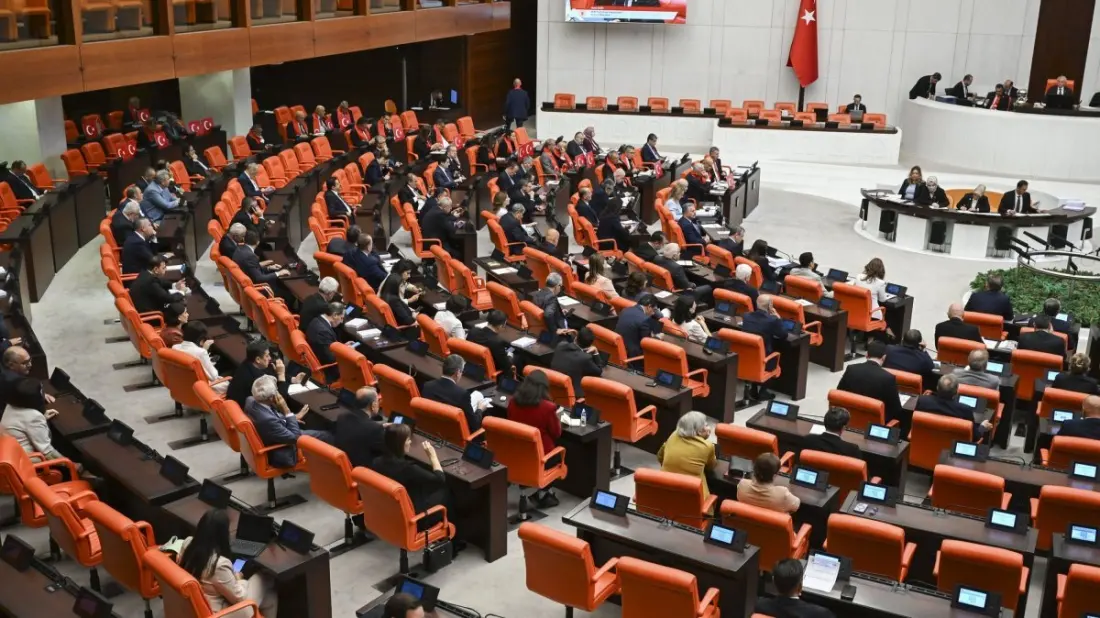
Ankara's Parliament campus has quietly become one of Turkey's more diligent recyclers. According to the institution's own activity report, its waste programme between October 2025 and August 2026 kept 90,654 kilograms of paper out of landfill — the equivalent of sparing 1,541 trees. Plastic recycling added another win: 13,667 kilograms of plastic saved 35,643 litres of oil.
The numbers stack up across the board. Recycling glass and metal saved more than 9,000 kilograms of raw materials, while the whole programme — paper, plastic, glass and metal combined — preserved 274 cubic metres of landfill space, 454,177 kilowatt-hours of energy and 2,538 cubic metres of water, and avoided 17,186 kilograms of greenhouse gas emissions. Even the leftovers get used: 3,175 kilograms of biodegradable waste became 884 kilograms of organic fertiliser.
This isn't a new push. Parliament has run an Environmental Management System since 2014, and in January it renewed that certificate after an audit by the Turkish Standards Institution, with the new one valid until February 2029. Its Zero Waste Certificate was also renewed for another five years. Day to day, the campus runs on sorted bins for organic, non-recyclable, paper, plastic, glass and metal waste, all routed to companies licensed by the Ministry of Environment, Urbanization and Climate Change. Kitchen and tea room scraps go to two 1,000-litre composting machines, while cooking oil, batteries and hazardous waste are handled separately. Four deposit-return bins have also been installed in cooperation with the Turkish Environment Agency.
The social side of the programme is arguably the most interesting. Surplus food from Parliament kitchens and receptions goes to families identified by the Provincial Directorate of Social Services, and plate scrapings are collected in hygienic containers and driven to an animal shelter in the Gölbaşı district with help from the local municipality. Clothing donation boxes on campus yielded 1,926 kilograms of garments for the Turkish Red Crescent, and staff filled 100 sacks of acorns that were passed to the Ankara Forest Nursery Directorate for replanting across all 81 provinces.
For travellers, the takeaway is less about one government building and more about where Turkey's zero-waste movement is heading. The Zero Waste Project — launched nationally in 2017 and championed by First Lady Emine Erdoğan — has spread to hotels, airports, restaurants and beaches, and is increasingly visible to visitors. Seeing the scheme applied rigorously at the seat of government suggests it's more than a tourism brochure gesture. If you're visiting Ankara, expect sorted waste bins in public buildings and growing deposit-return infrastructure, and it's a good nudge to pack a reusable bottle and sort your own rubbish while you're there.