
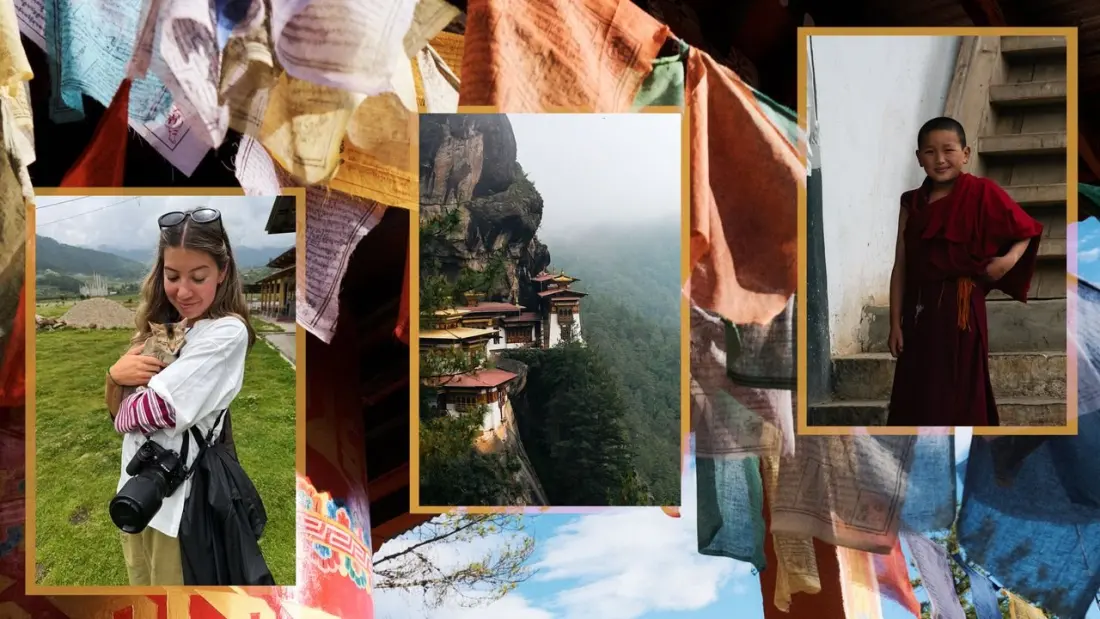
Bhutan has spent the last 50 years quietly becoming the world's case study in doing things differently. Tourists weren't even allowed in until 1974. Today you can visit — but it'll cost you a $100 (about £73) daily tourist tax, a deliberate filter that discourages box-ticking travellers and attracts people after something slower and deeper.
The country's guiding framework is Gross National Happiness, developed in the 1970s to put collective wellbeing above GDP. The numbers back it up: education and healthcare are free, life expectancy has climbed sharply, and strict environmental laws — including a mandate to keep 60% of the country forested (actual coverage sits around 71%) — have made Bhutan the world's only carbon-negative nation.
Writer Olivia Morelli spent a week travelling the country for Condé Nast Traveller UK to see what happiness here actually looks like. Her itinerary ran from Pangri Zampa Lhakhang near Thimphu — Bhutan's only college of astrology and its oldest Buddhist monastery, where a monk reads visitors' astrological charts — through a stay at Six Senses Bhutan with archery, butter tea rituals and tsa-tsa crafting, to a farmstay in Punakha with stargazing and natural dye workshops, and on to Gangtey Lodge in the Phobjikha valley for dharma debates with the head monk of Gangtey Monastery. The through-line: happiness as a practice, something locals compare to a muscle that needs regular exercise.
The mood is less solemn than you might expect. Bhutan has no traffic lights, drivers rarely exceed 50km/h, and the roadside signs read things like "No hurry no worry" and "Mind my curves". Even the capital's fast food comes with a wink — one outlet goes by Karma Fried Chicken.
Wellness here predates the spa industry. Hot stone baths, with spring-heated water infused with artemisia, remain the traditional remedy for tired muscles, and traditional medicine leans on herbs, mushrooms and butter applied to the skin. As one guide puts it: life is to be lived, not worked.
There's also a reason to go sooner rather than later. The King's Gelephu Mindfulness City project — three times the size of Singapore — is underway, with a new international airport, rail links to India, biodiversity corridors and a wave of meditation centres and monasteries planned. It promises growth measured against spiritual wellbeing, but it will change the country. For now, Bhutan remains one of the few places where the national conversation is about presence, gratitude and how you hang your prayer flags.