
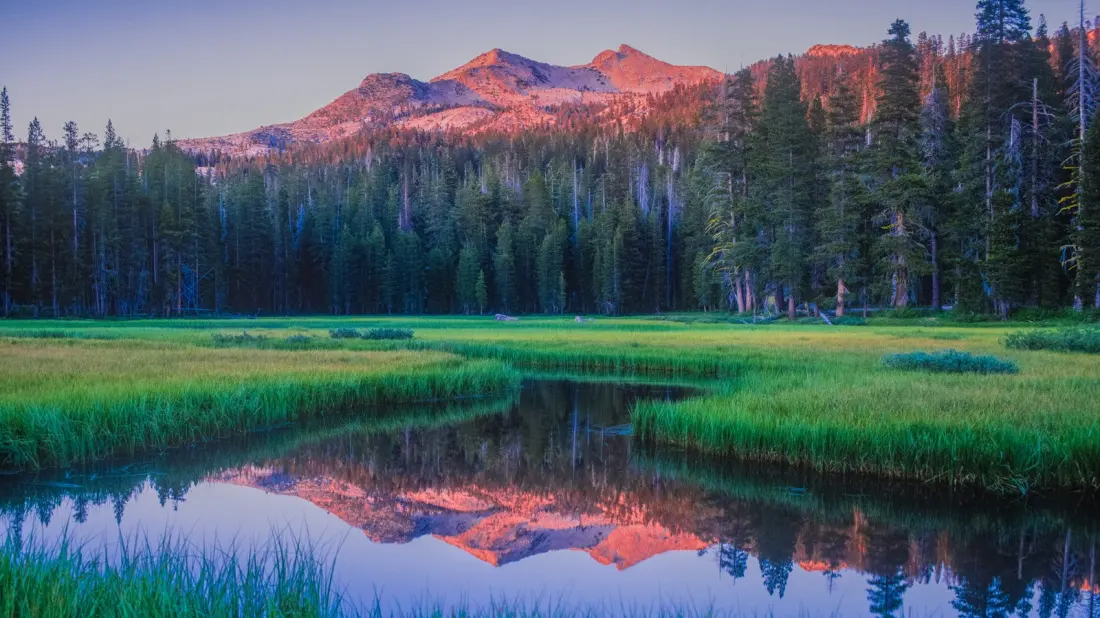
California's Sierra Nevada is enormous — a 400-mile-long range with more than 2,500 named peaks, three headline national parks, and famous routes like the Pacific Crest and John Muir Trails running through it. From Lake Tahoe and Mammoth Lakes to the Alabama Hills and Sequoia National Forest, there's far more ground than any single trip can cover. A recent guide from Islands rounds up the unwritten rules worth knowing before you go, and they're genuinely useful.
First: accept you can't see it all. The region holds over 5,300 square miles of wilderness, and even veterans say they're still finding new corners after decades. A former park ranger suggests budgeting three to five days for Yosemite alone, plus travel time. Decide early whether you're doing a road trip — the fast-paced option — or basing yourself at one alpine lake and hiking, soaking in hot springs, and paddling nearby.
Second: take the backcountry seriously. Huge swaths of the range have no phone service, and services can be a full day's hike apart on long trails. Overnight wilderness stays in national parks and Sierra National Forest require permits, and you should carry a paper map and compass rather than trusting GPS and battery life. Weather flips fast at altitude, nights are cold even in summer, and packing an extra layer, food, and water in case you're out longer than planned is standard practice here, not paranoia.
The east and west sides of the range are almost two different trips. The Eastern Sierra along U.S. 395 is drier and dramatic — jagged granite rising sharply from the fault line, the off-road trails and film-set boulders of the Alabama Hills near Lone Pine, and hot springs around Mammoth Lakes. The western slope rises gently from the Central Valley, wetter and forested, and it's where Yosemite, Sequoia, and Kings Canyon sit, along with lakes like Shaver and Huntington.
A few surprising specifics: filter your water even when a stream looks pristine — popular corridors like the JMT see heavy use and contamination later in summer is a real issue. Skip the bear spray: grizzlies are long gone from California, the black bears here are skittish, and spray is actually prohibited in Yosemite, Sequoia, and Kings Canyon. Sunscreen matters more than you'd think, since thinner atmosphere at 11,000-plus feet burns skin quickly even on cool days.
There's also a cultural layer worth respecting. Many hiking routes began as seasonal trade paths used by Native nations including the Washoe, Miwok, Paiute, and others — the John Muir Trail is known to the Paiute as Nüümü Poyo — before becoming 19th-century mule routes for miners and homesteaders. Mules still pack into the backcountry today.
Who is this for? Anyone planning a first Sierra trip feeling paralyzed by the options, road-trippers weighing Highway 395 against the park-heavy west side, and hikers who want the practical grounding — permits, water, layers, wildlife — before heading somewhere that really is remote. The core message: pick one slice, slow down, and plan to come back.