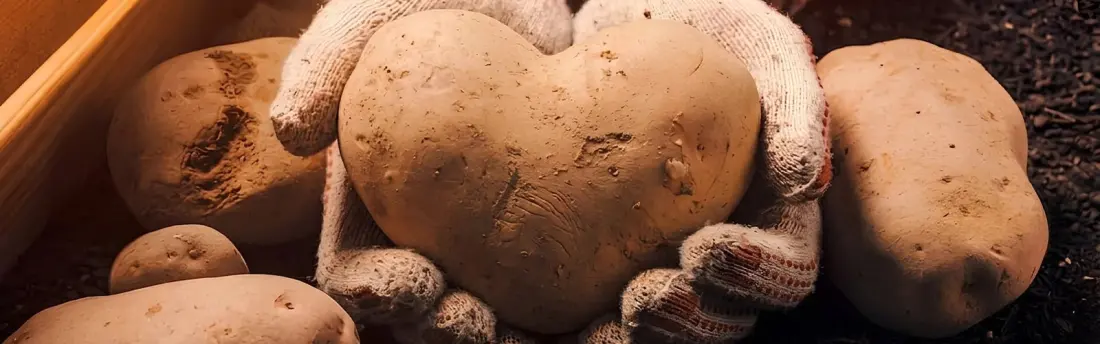
France's obsession with pommes de terre was never a given. In 1743 the tuber was actually banned for human consumption after claims it spread leprosy, and most farmers grew it purely for fattening pigs. That a spud now stars in everything from truffade to frites comes down to one determined pharmacist from the Somme.
Antoine Auguste Parmentier, born in Montdidier in 1737, was captured five times by the Prussians during the Seven Years' War. Fed a diet of nothing but boiled potatoes during one imprisonment, he came out healthy and quietly impressed. Back in Paris after the war, he made it his mission to promote the potato as an answer to the famines that had ravaged France, winning a 1772 prize from the Académie de Besançon for a treatise proving the case. The Faculty of Medicine duly lifted the ban.
What followed was 18th-century marketing at its finest. Parmentier hosted a celebrity dinner at Les Invalides in 1778, guests including Benjamin Franklin and chemist Antoine Lavoisier — the Journal de Paris hyped it as 'the most important discovery of the century'. He founded a bakery school in 1780 pushing potato flour as a wheat substitute, and in 1786 Louis XVI handed him a plot of wasteland at Les Sablons in Neuilly to prove potatoes grow anywhere. Parmentier posted armed guards around the ripening crop, then quietly let Parisians 'steal' the vegetables — forbidden fruit, it turned out, tastes excellent. At Versailles he presented the king with potato flowers; Louis wore one in his buttonhole and Marie Antoinette wore another in her hair.
Parmentier never slowed down: Napoleon gave him the Légion d'Honneur, and in 1805 he made the smallpox vaccine mandatory in France. He died in 1813 with 189 treatises to his name and is buried in Père Lachaise beneath a tomb carved with a basket of potatoes. His reward today is a naming convention — any French dish labelled Parmentier involves spuds, most famously hachis Parmentier, France's take on cottage pie.
For travellers, this is a fun bit of backstory to carry around a French bistro menu. Order truffade in the Auvergne — molten cheese and potato — or hachis Parmentier in Paris, and you're tasting the end of a genuine famine-fighting campaign. There are edible landmarks too: the Les Sablons site in Neuilly is now a district near the Seine, and food lovers can hunt Parmentier dishes nationwide. His name even hangs over a Paris Métro station in the 11th arrondissement, a fitting tribute to the man who talked France into eating its hog feed.