Madeira keeps getting compared to Hawaii, and once you're there it's hard to argue. The Portuguese island sits closer to Morocco than to mainland Europe, on the African tectonic plate, and its volcanic peaks, subtropical greenery and surf breaks give it a genuinely Pacific feel. American visitors apparently say the same thing constantly, and there's a historical echo too: thousands of Madeirans emigrated to Hawaii in the 19th century to work the sugar plantations.
The comparison holds up on the water as well. Thanks to exceptionally deep sea close to shore, Madeira punches above its weight for whale and dolphin watching. A short speedboat trip from Funchal can deliver Bryde's whales — warm-water giants up to 15 metres long — feeding at the surface, along with pods of bottlenose dolphins. The route back past Câmara de Lobos, the fishing village Winston Churchill painted in 1950, is a bonus.
Inland, the island gets properly wild. Jeep tours tackle the impossibly steep tracks north-west of the capital, threading through banana plantations and past avocado, mango and passion fruit groves sustained by the rich volcanic soil. High on the Paul da Serra plateau sits Fanal, an ancient laurel forest where some trees are 800 years old and cows graze freely among them. Cloud often banks above the plateau — locals call it Madeira's second ocean — yet you can be back eating black scabbard fish with banana guacamole at a Funchal restaurant within 90 minutes.
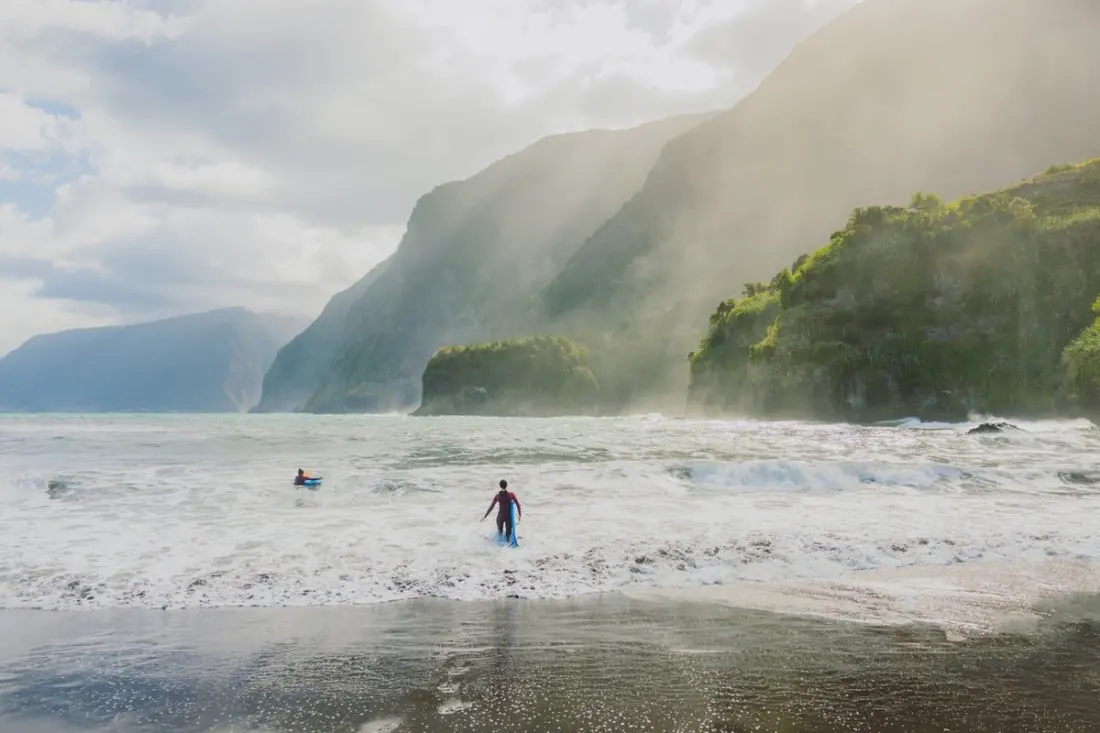
For hikers, the levadas are the signature experience. These narrow irrigation channels, first cut in the 15th century to water sugar cane and vines, thread through Laurissilva, a subtropical forest millions of years old. The Levada do Rei trail on the island's north-east side leads through dripping ferns and moss, under a waterfall, and eventually to a ravine called Ribeiro Bonito. Surfers, meanwhile, gravitate to Seixal's black-sand beach on the north coast, where lessons cost a fraction of Pacific prices.
The real pitch here is timing. Madeira's subtropical climate makes shoulder season — roughly spring and autumn — genuinely pleasant rather than a compromise, and prices drop accordingly. Compared to an actual trip to Hawaii, it's a short-haul flight from the UK with a fraction of the jet lag and cost.
Getting there is easy: Jet2 flies from Manchester and British Airways from London Gatwick, among others. In Funchal, The Vine Hotel is a contemporary design option with a rooftop restaurant, cocktail bar and ocean-view pool, with rooms from £177 a night.
If you want the volcanic drama, rainforest hikes and whale encounters of a long-haul destination without the long-haul price or flight time, Madeira in the shoulder season makes a very convincing case.