
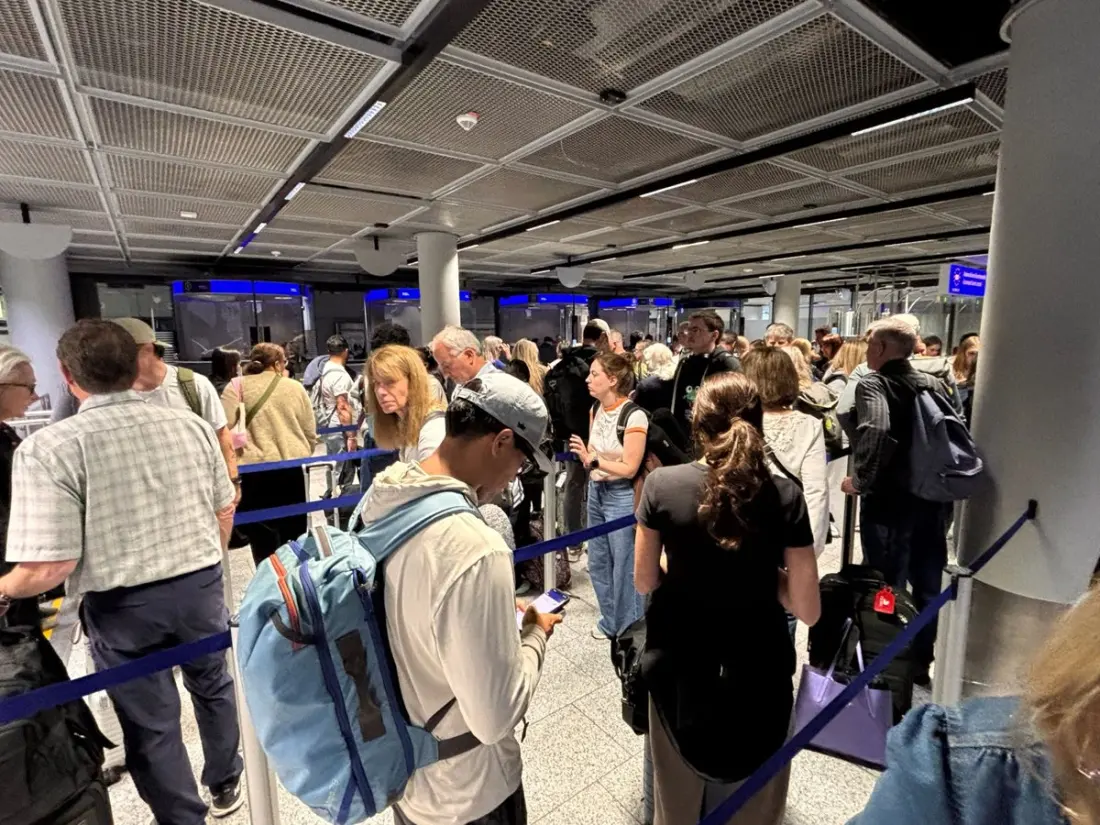
If you flew into Europe this summer and found yourself stuck in a long border queue, fingerprinting session after fingerprinting session, there's a reason — and now there's a partial fix. At least nine countries have quietly delayed full enforcement of the EU's new entry-exit system (EES), the biometric border regime that requires British and other non-EU travellers to provide fingerprints and a facial scan when entering the Schengen area.
France, Belgium, the Netherlands, Germany, Greece, Malta, Portugal, Italy and Switzerland have all told the European Commission they won't enforce the new controls until the technology actually works, according to reporting by The Sunday Times. Brussels has informally allowed the delays, which the countries say are needed to "maintain border fluidity" — bureaucratic shorthand for keeping the queues moving.
The EES rollout began in October last year, with full enforcement originally expected by April. Countries were then given a 150-day grace period over the summer to ease off the checks and avoid exactly the kind of disruption that ended up happening anyway. That grace period expired on 6 September, but the nine countries have effectively kept the pause going anyway, citing software problems and lengthy processing times at borders. The European Commission declined to comment.
The aviation industry is furious. Ryanair has called on the Commission to extend the current exemption until at least April 2027, giving airports and border authorities time to hire more staff and get the system running properly. The airline's chief operational officer Neal McMahon didn't mince words, describing the EU's handling of EES as "a shambles from start to finish" and arguing that airlines, airports and border authorities had repeatedly warned Brussels the rollout wasn't ready — warnings he says were ignored, with passengers left paying the price in delays.
The UK government, meanwhile, has been spending money to soften the blow at its own chokepoints. It has put £10.5 million into infrastructure at the Port of Dover, Eurotunnel and Eurostar, plus a further £20 million to boost passport-checking and vehicle-holding capacity at Dover. It's also supporting traffic management measures and dedicated welfare sites where stranded passengers can access food, water and facilities if severe disruption hits. A government spokesperson thanked French authorities for their collaboration and extra border staffing over the summer.
For British holidaymakers, the practical upshot is mixed news. The good bit: in nine major destinations — including perennial favourites France, Spain's neighbours Portugal and Italy, and Greece — you're less likely to face the full biometric rigmarole at the border for now. The caveat: this is an informal, piecemeal arrangement. Enforcement can resume country by country as systems come online, so expect inconsistency depending on where and how you cross into the Schengen area. If you're driving through Dover or taking the Eurostar, the UK-funded improvements should help, but allowing extra time at borders remains wise until EES is fully bedded in.
This story matters to anyone with a UK passport heading to the continent: the rules of entry are changing in real time, and how smoothly your trip starts may depend on which country you land in — and how ready its border tech is that day.