
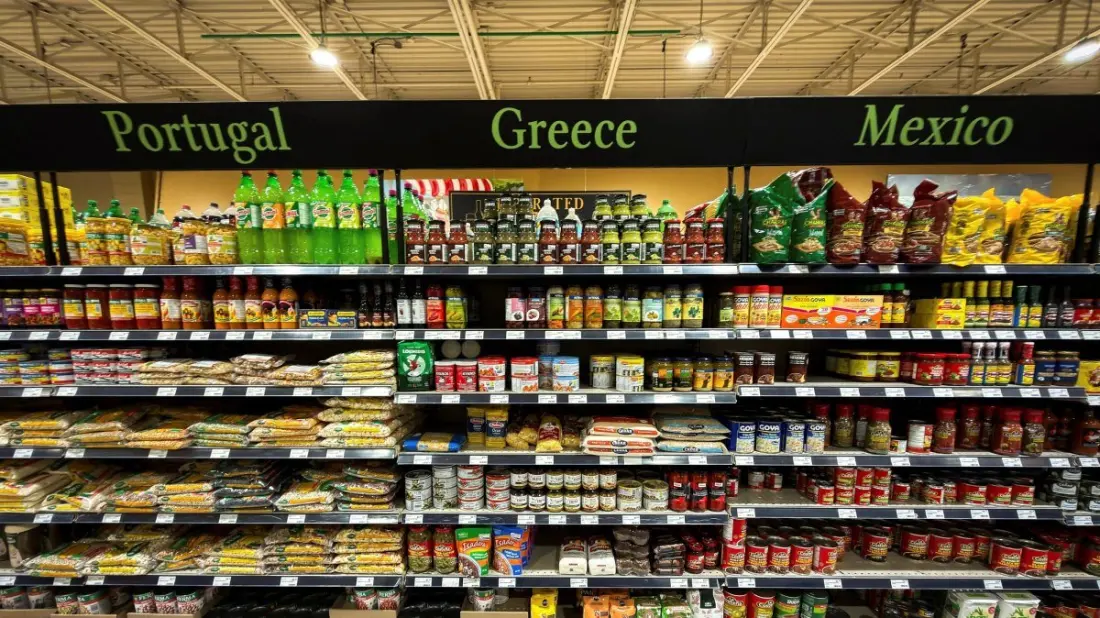
A trade spat between Washington and Ottawa has spilled into something unexpected: the produce aisle. Since US tariffs on Canadian goods triggered a grassroots "Buy Canadian" movement last year, shoppers across Canada are checking labels, avoiding American products and pushing grocers to rethink where their food comes from.
The movement picked up steam after trade talks collapsed on August 21 and a fresh round of tariffs and countertariffs followed, along with Trump's executive order renaming Lake Ontario as "Lake America." Giancarlo Trimarchi, who runs four Vince's Market stores in the Greater Toronto Area, took to Facebook to reassure customers after angry emails about US produce — his shelves are now roughly 90% Canadian, with Quebec strawberries replacing American ones. He's trimmed his advertising budget to absorb the extra sourcing costs, saying country of origin has become a third factor alongside the usual quality-versus-price equation.
Big chains are following suit. Loblaw, Canada's largest grocer, has reinstated maple-leaf signage in fresh sections and brought back a "T" tag to flag tariff-affected products. Metro, the third-largest chain, says it will keep prioritizing local suppliers. The shift shows in the data too: the US share of Canada's vegetable imports fell to 62.6% in July, down from 69% before Trump took office. Rural grocers like Mike Dean, who operates stores in Ontario and Quebec, are quietly diversifying with produce from Spain, Brazil and Honduras instead.
There are real limits. Canadian winters make year-round domestic produce tough — hence a government commitment of about C$3 billion ($2.16 billion) over ten years for greenhouse construction, aimed partly at tackling some of the highest food inflation in the G7. Interprovincial trade rules also complicate moving food within Canada, which keeps many grocers tied to US suppliers. Experts at the University of Guelph suggest economics could reassert itself if relations improve, since American produce is often cheaper.
For travellers, this is a genuinely interesting snapshot of a country in the middle of rethinking its food identity. Visitors to Toronto or Ottawa will notice the maple-leaf signs and tariff tags in supermarkets — a small but telling cultural shift. Buying a Quebec strawberry or an Ontario greenhouse tomato has become a quiet political act for locals, and joining in is an easy way to connect with the mood on the ground. As one 27-year-old Toronto shopper put it, supporting Canadian brands feels like helping "in my small way."