
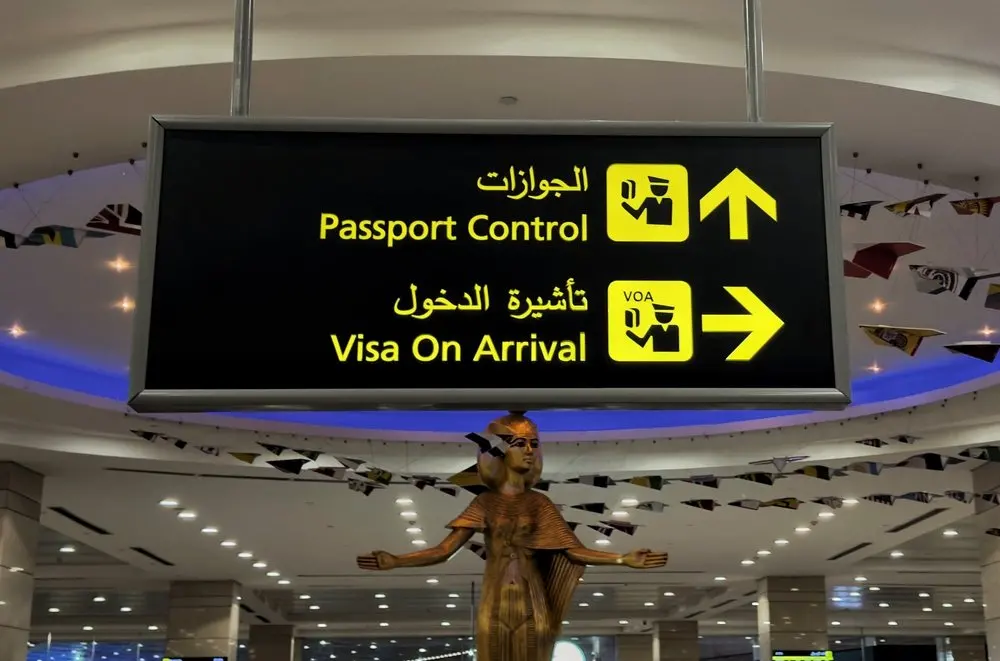
Getting into Egypt is about to involve one less queue. From August 1, 2026, Cairo International Airport will run a pilot programme letting visitors sort their visa-on-arrival digitally before they fly. Apply online or via an app up to 48 hours before departure, pay electronically, and land with a QR code to show at immigration — no more hunting for cash at a bank teller window to buy the famous paper visa sticker.
The price barely changes: $36 in total, made up of the existing $30 visa fee plus a $6 processing charge. During the pilot, the old-school options remain available — you can still buy the physical sticker from bank windows in the arrivals hall, or use self-service kiosks if you haven't applied ahead.
Why does this matter? Anyone who's landed in Cairo after a long-haul flight knows the routine: after passport control looks imminent, you first have to join a separate line to purchase and pay for the visa sticker, then present that proof to the immigration officer. It works, but it confuses plenty of first-timers, and when several international flights land at once, the queues stack up. Travellers regularly skip the visa line by mistake and get sent back by immigration officers. The new system removes that whole dance.
Cairo is the first airport to get the technology, and the Egyptian government has said the long-term plan is to scrap the physical sticker entirely, eventually extending the QR-code-based system to other airports across the country. It's a step that brings Egypt in line with destinations that already use eVisas or electronic travel authorisations.
For visitors, the savings are modest — a few dollars, really. The real win is time and stress, particularly in Cairo, where arrivals can feel chaotic if it's your first trip. Whether you're heading straight to the pyramids, boarding a Nile cruise in Luxor, or diving in the Red Sea, a smoother entry sets the tone for the whole holiday.
Note that U.S. citizens still need a visa to enter Egypt — this change doesn't remove that requirement, it just digitises how you get it. Travellers from the EU, UK and many other countries who currently use the same visa-on-arrival arrangement can expect the digital option to apply to them too, though it's worth checking eligibility before you book.
It's a small change on paper, but anything that gets you out of an airport line and to the Sphinx faster is worth knowing about.