
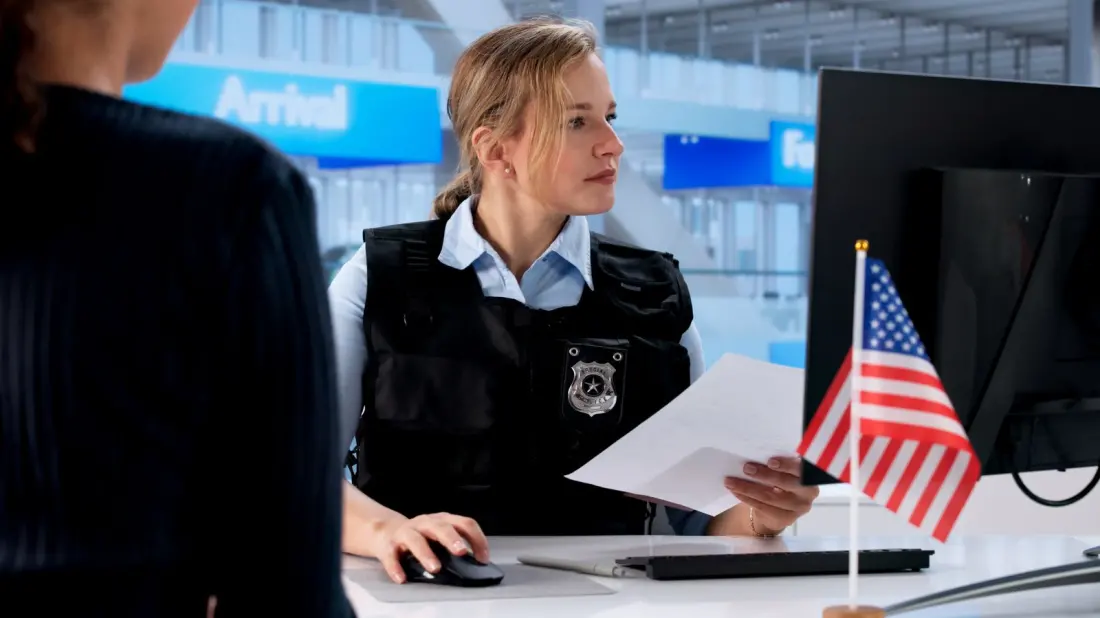
Landing after a long-haul flight and shuffling through immigration with everyone else is rarely the highlight of a trip. That's changing for US citizens, though: Customs and Border Protection has been rolling out Enhanced Passenger Processing (EPP), a facial-recognition setup that lets eligible travellers clear passport control without ever digging out their document.
Here's the mechanics. Instead of handing your passport to an officer or scanning it at a kiosk, you pause for a moment in front of an auto-capture camera. The system matches your photo against images already on file, confirms your identity and citizenship, and runs the relevant security checks behind the scenes. If all is well, you walk on through in seconds with little or no interaction with an officer. Your passport is still required — it just gets verified electronically rather than physically. And if anything flags up, CBP officers are on hand to step in as usual.
The numbers behind it are notable. CBP screens roughly 390,000 passengers a day at airports alone, and since EPP launched it has recorded an average 25% drop in wait times. Dallas-Fort Worth International — the third-busiest airport in the US — piloted the programme in 2024, and it has since spread to 33 US airports plus several preclearance locations abroad, including Dublin and Montreal. The newest addition is L.F. Wade International Airport in Bermuda, which joined on August 31, 2026. For mega-hubs like Hartsfield-Jackson Atlanta, faster processing means fewer missed connections and less time stuck in line.
Worth clarifying the differences from what already exists: Global Entry is a paid, application-based membership for pre-vetted low-risk travellers, while EPP is free and voluntary — every US citizen arriving at an equipped airport can use it, no sign-up needed. Foreign nationals continue through standard CBP channels, though a companion programme called Seamless Border Entry, aimed at Global Entry members, is open to some other nationalities. CBP's Diane Sabatino, who oversees the country's 328 ports of entry, has suggested walk-through processing for Global Entry members could become the norm across all US airports in the next few years.
Why should this matter to you? If you're an American flying home from abroad, the practical upshot is simple: less queueing, less fumbling for documents, and a decent shot at making that tight connection. And if you're flying out of a preclearance city like Dublin or Montreal, you'll arrive in the US already cleared, so the time savings apply before you even board. Expect the list of participating airports to keep growing — worth a quick check before your next trip so you know what to expect at arrivals.