
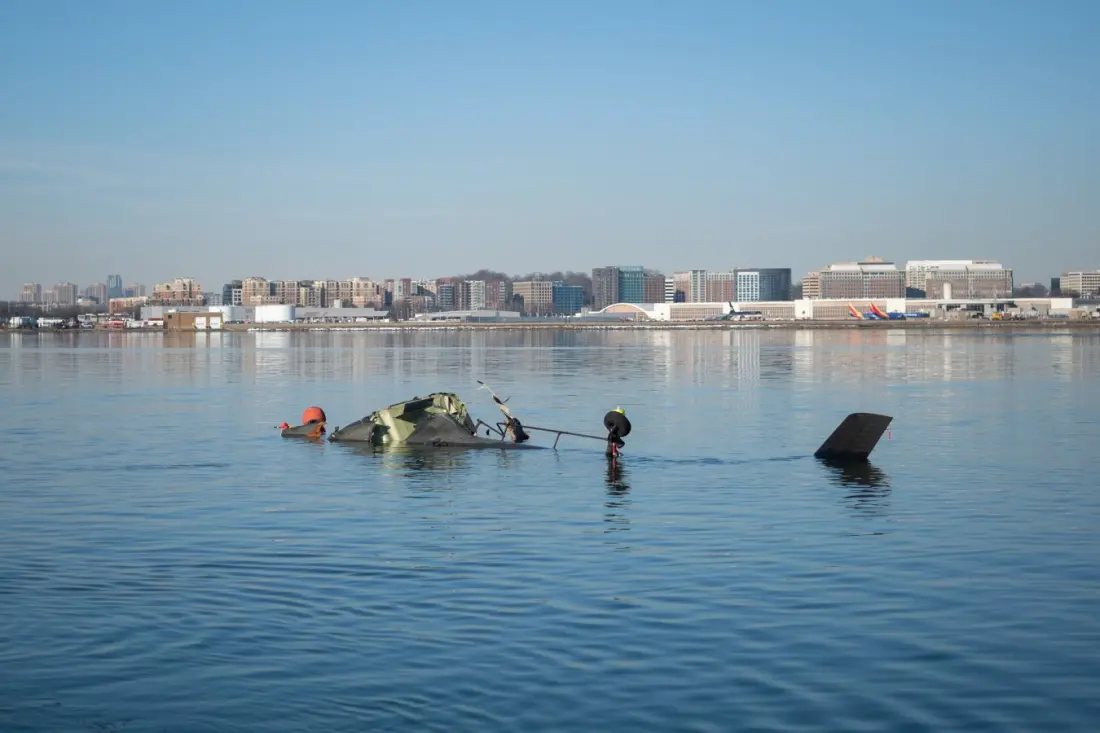
Nearly a year after a midair collision over the Potomac River killed 67 people, America's top aviation safety board says the regulator responsible hasn't done enough to stop it happening again.
The crash happened in January 2025, when an American Airlines regional jet collided with an Army Black Hawk helicopter near Ronald Reagan Washington National Airport. It was the deadliest US aviation disaster since 2001, and an NTSB investigation concluded that systemic failings at the Federal Aviation Administration were to blame — helicopters had been allowed to fly close to the airport without proper separation safeguards, and years of warnings about relocating helicopter routes went unheeded.
Now the NTSB has rated the FAA's responses to 11 of its 33 post-crash safety recommendations as "unacceptable". The sharpest point of contention is a technology called ADS-B In, which lets pilots see nearby aircraft in real time. The board says fitting it would have given the passenger jet's pilot a 59-second warning and the helicopter crew 48 seconds before impact. NTSB chair Jennifer Homendy didn't hold back: "How many more decades have to go by before we again and again and again have to recommend it after terrible tragedy?"
The FAA, for its part, says it has completed helicopter route reviews in four cities, is assessing six more major metro areas, and has ordered physical separation between planes and helicopters. FAA Administrator Bryan Bedford has said the agency could mandate ADS-B In on its own but would rather Congress give explicit direction. The NTSB counters that no rulemaking on the technology is even in the works.
Meanwhile, lawmakers have struggled to act. The House passed a broad aviation safety reform package 396-10 in April, but the Senate's ROTOR Act fell one vote short of the two-thirds majority needed to fast-track it through the House. On Tuesday, Homendy and families of the victims will press Congress directly to legislate on the crash's root causes.
Why does this matter if you're not an aviation policy wonk? Reagan National is one of the busiest and most constrained airports in the US, popular with leisure and business travellers alike for its proximity to downtown Washington. The routes commercial flights and military helicopters share there became a national scandal after the crash, and the pace of reform — or lack of it — shapes how safely that airspace operates. If you're flying in or out of the US capital, this ongoing standoff between the safety board and the regulator is worth keeping an eye on.