
Elephants are terrified of bees. It sounds like a party trick, but it's now serious conservation strategy: in Tanzania, more than 16km of beehive fences line the boundaries between farmland and elephant corridors, and communities there report a 75 per cent drop in crop damage and human-elephant conflict. When an elephant bumps the wire, swarms of wild bees drive it off — no harm done to either side.
The beehive story is one of several profiled by conservationist Holly Budge, founder of the charity How Many Elephants and World Female Ranger Week, who spent time with women using technology and low-tech ingenuity to protect African wildlife. The timing matters: rangers are badly stretched, and experts estimate the world needs 1.5 million more of them to hit global biodiversity targets by 2030.
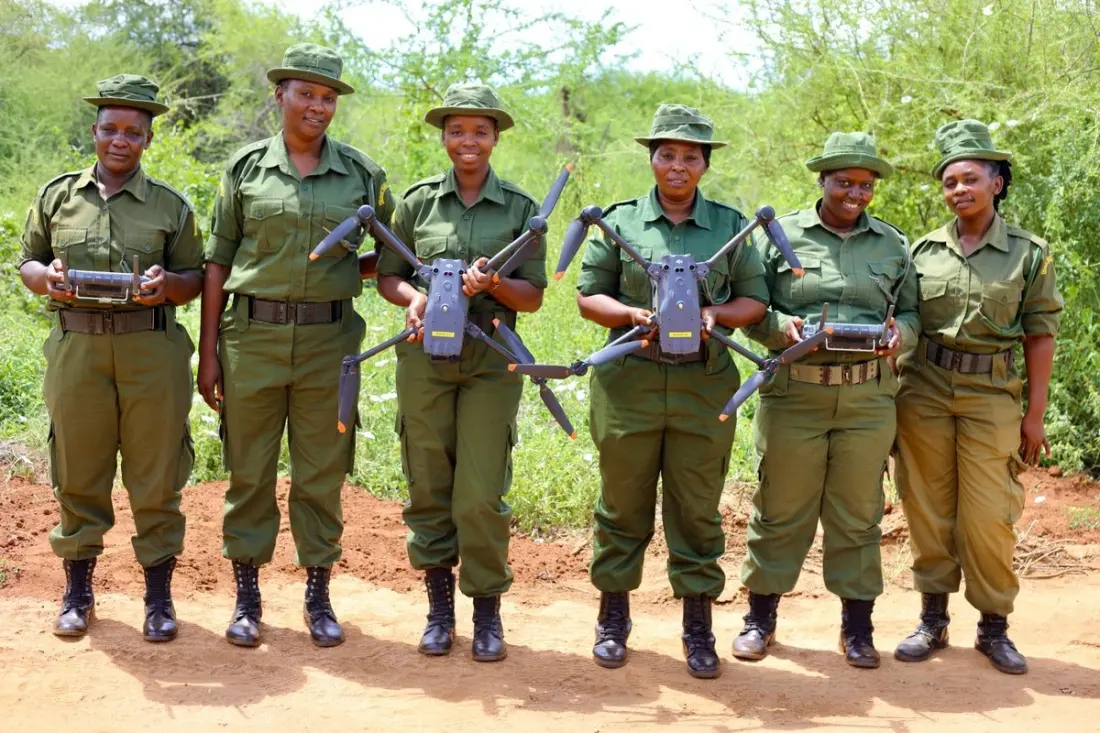
In Kenya, a six-woman unit called Team Owl now flies drones over the Kasigau Corridor, a key elephant route between Tsavo East and Tsavo West national parks. Where patrols once depended entirely on footsteps and vehicles, the drone pilots can scan wide areas, spot illegal activity and call in emergency response teams from above. For ranger Jane Mwaingati, the shift is personal as much as practical — her family proudly follows her progress, and fellow pilot Florence Mwakio says the job proves "there's truly no job a woman cannot do".
Data is doing quiet work in Zambia too. Ruth Chitindi of Conservation South Luangwa was part of the team that became the first in the country to log human-wildlife conflict in real time using SMART digital tools, replacing handwritten records. The payoff has been stark: human deaths linked to conflict fell from 12 in 2023 to zero in 2025.
Further south, marine scientist Dr Loraine Shuttleworth flies drones over South Africa's coastline to measure southern right whales and the endangered Indian Ocean humpback dolphin. Drone photogrammetry lets her take precise body measurements from aerial images — one flight can identify individuals, track calf growth and record behaviour all at once.
Artificial intelligence is entering the field as well. Ranger Sylvia Pemba has helped roll out VirtualRanger, an AI platform backed by the Mara Elephant Project that moves reports of elephant movements or illegal activity from community members to rangers in under three minutes. More than 340 people have been trained to use it. And on a trial farm in the Maasai Mara, Abigael Pertet is figuring out which crops elephants refuse to eat — early findings point to lavender, rosemary, chilli, tea tree, geranium and onions — which could let farmers diversify their income while keeping their fields intact.
Why should a traveller care? Because these are the landscapes and animals many visitors cross the world to see, and their future increasingly depends on community-led work like this. Choosing safari operators and lodges that support local rangers, beehive fence projects and community reporting schemes puts your money behind the people — very often women — actually keeping elephants, whales and lions alive. The smartest conservation, as Budge found, tends to be the simplest: trust, local leadership and a good swarm of bees.
Reported by The Independent Travel.