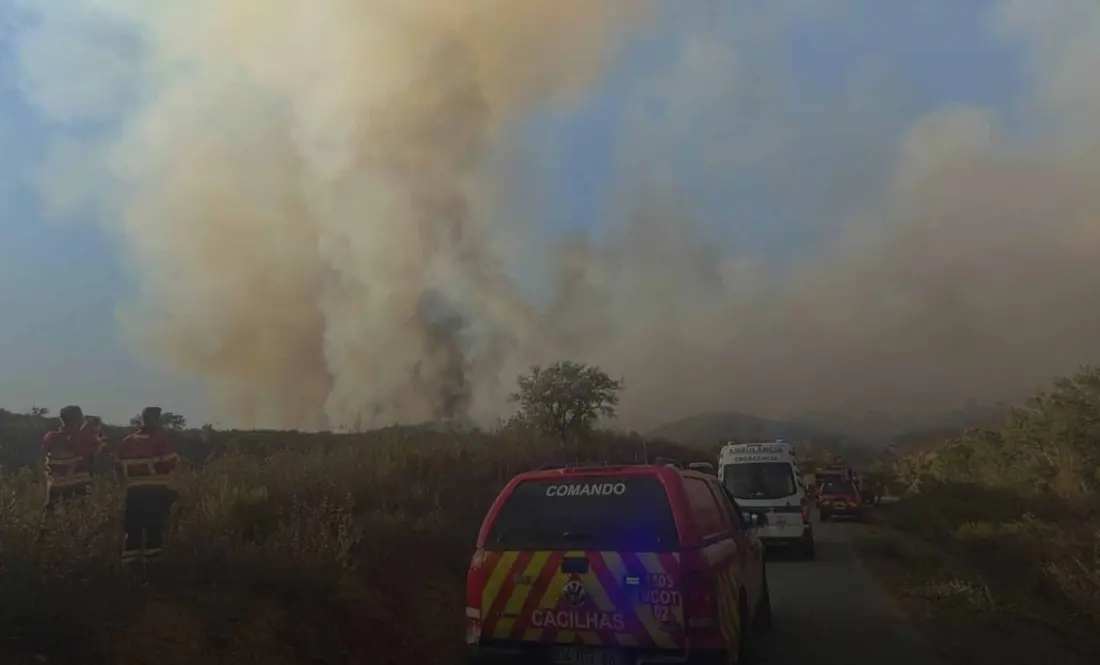
A fast-moving wildfire in the Odemira municipality of Portugal's Alentejo region was still burning out of control on Friday morning, after breaking out in the Nave Redonda area late Thursday afternoon.
The blaze was first reported at 4.51pm on Thursday and spread quickly through the evening. By 5.45am on Friday, Portugal's civil protection authority (ANEPC) had 439 personnel and 149 vehicles on the ground, with reinforcements sent in overnight. Operations officer Paulo Santos described a fire moving with considerable speed and intensity, fuelled by dry vegetation and hampered by difficult terrain.
The human cost came early. Four firefighters from the Portimão brigade were hurt when one of their vehicles was involved in an accident and then destroyed by flames. Initially reported as two injuries, the brigade later confirmed all four had suffered minor injuries; each was taken to hospital and has since been discharged.
Through the night, specialised teams assessed vulnerable spots around the fire zone to decide whether residents would need to be evacuated, with authorities urging anyone in the affected area to follow official instructions. As of Friday morning, the operation was ongoing and the fire remained uncontained.
For travellers, the timing matters. Odemira is one of Portugal's largest and least densely populated municipalities, stretching from the Alentejo plains down to the Vicentine Coast — a stretch of shoreline popular with surfers, hikers on the Rota Vicentina and anyone chasing a quieter alternative to the Algarve. Late September is shoulder season, when the region still draws visitors for its beaches and trails. Anyone with a trip booked to the area, or currently en route, should check ANEPC updates and local civil protection channels before travelling, as road closures and evacuation orders can change quickly. Smoke can also affect air quality well beyond the fire perimeter, including along the coast.
This incident is also a reminder of how fire-prone southern Portugal remains at the end of a dry summer. Rural Alentejo and the Algarve hinterland see significant blazes most years in August and September, and travellers visiting in that window should keep an eye on conditions, follow any instructions from GNR police and emergency crews, and have flexible plans if access to rural areas is restricted. Source: Portugal Resident