Most people tick off one Camino and call it done. A writer for The Trek just linked three of them into a single 52-day, 1,200-kilometre walk across France, Spain and Portugal — and his account is a useful primer for anyone tempted to try the same.
The route began classically enough: fly into Paris, train to Bayonne, then a smaller train to Saint Jean Pied de Port in the foothills of the Pyrenees. From there came the Camino Frances, the 800 km route popularised by the Martin Sheen film 'The Way'. It crosses into Spain, climbs the Montes de León and the O Cebreiro pass, traverses the flat high plains of the Meseta and threads through medieval towns before reaching the cathedral in Santiago de Compostela, where the bones of St James have drawn pilgrims for centuries.
Instead of stopping at the cathedral, he kept going. Another 90 km on the Camino Finisterre took him over Galician hills to the Atlantic coast at Finisterre, a place the Romans once considered the end of the world. Still restless, he turned south and covered more than 300 km on the Portuguese routes — the Central, Coastal, Litoral and Spiritual variants — walking the Spanish and Portuguese coastline until he reached Porto, where he ran out of time before his flight home.
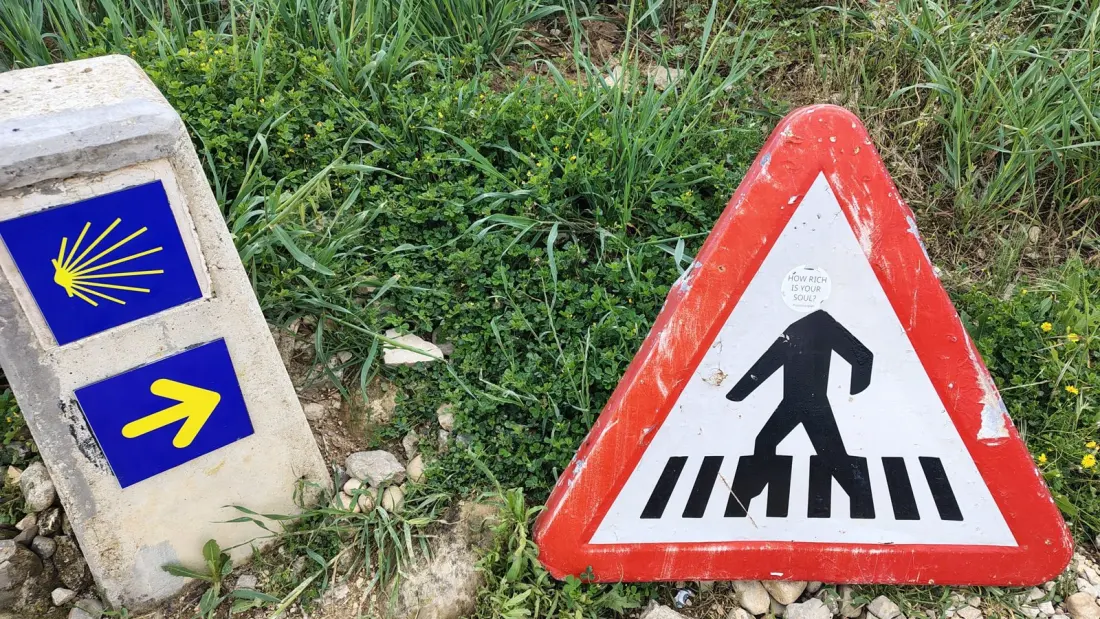
What stands out is how un-wilderness the whole thing is. This isn't the Appalachian Trail, which he thru-hiked the year before. The Camino is a network of well-marked paths — pavement, dirt roads, forest tracks, even sidewalks — all signposted with the scallop shell symbol. Cafes, restaurants and shops line the route, and public fountains, some centuries old, supply drinking water, so there's little need to carry food. He and his companions slept in monasteries, hostels, hotels, houses and even barns, meaning no tent required.
He hiked with just a 30-litre pack: a 55-degree sleeping bag, spare clothes, cold-weather layers and a rain jacket. Bag-transfer services exist if you'd rather slackpack, but he chose to carry everything as part of the pilgrimage spirit — the point, for him, was less about mileage and more about travelling light and learning to trust the road. That mix of physical challenge and personal reflection is exactly what draws hundreds of thousands of walkers a year, whether they're religious, spiritual or simply after a long walk with good coffee at the end of it.
For travellers, the takeaway is that the Camino is genuinely flexible. You can do the classic 800 km French route in roughly a month, add Finisterre for a coastal finale, or walk the Portuguese way from Porto if you'd rather end in Santiago than start there. Pilgrim hostels keep costs low, and the infrastructure means you can focus on the walking rather than the logistics. Fit hikers with five or six weeks off could realistically replicate this triple route — just book your flight out of Porto, not Santiago, if you plan to keep going.