
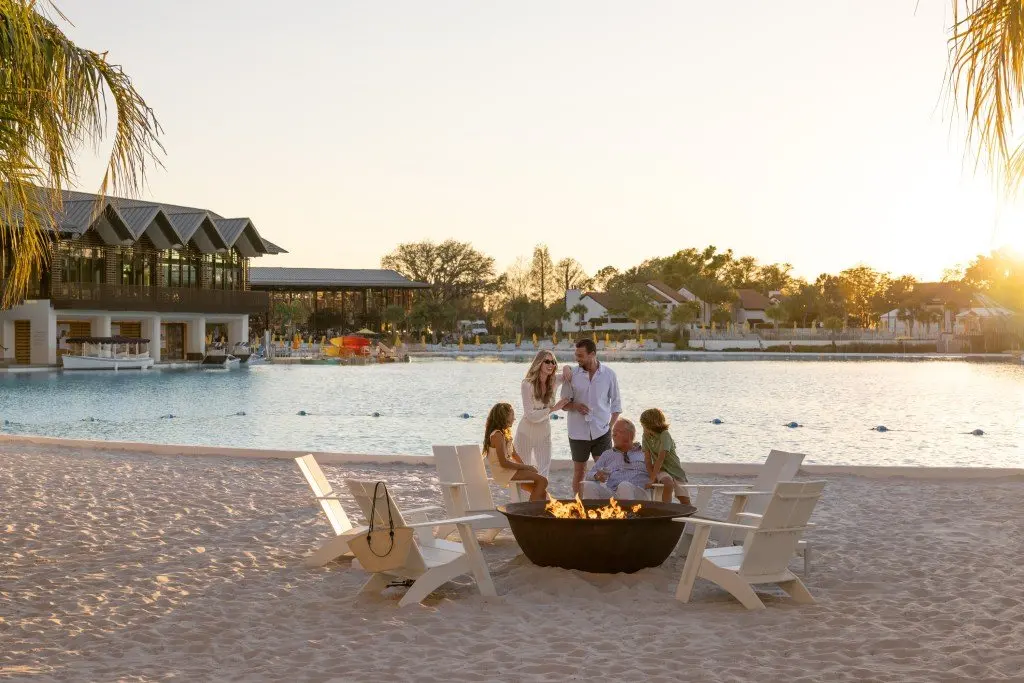
Evermore Orlando Resort is trying something unusual in wellness travel: treating stronger relationships between guests as an actual, measurable outcome of a stay. The resort has partnered with social scientist Kasley Killam, author of 'The Art and Science of Connection,' to weave what it calls relational wellness into everything from guest programming to employee routines — and to survey guests before and after their visit to see whether a holiday genuinely brought people closer.
The timing makes sense. Skift Research found 36% of travellers plan to spend on health and wellness activities in 2026, while the WHO estimates one in six people worldwide experience loneliness. Killam points out that 72% of Americans spend in-person time with loved ones no more than twice a month. Decades of research link strong relationships to better mental and physical health and even longevity — putting connection on par with exercise and nutrition as a wellness pillar.
Evermore, interestingly, was built for groups before the strategy had a name. Resort president Elizabeth Mullins describes the design as 'a home, a magnet, a slide, and a long table': accommodation ranging from four to 11 bedrooms that sleeps up to 32 people; a central bay that pulls guests together for boating, walks and cabanas; a waterslide built for four riders at a time; and dining tables long enough to seat an entire 32-person household. Killam, whose graduate work studied how the built environment shapes social life, says the resort already felt like a neighbourhood on arrival.
The partnership has pushed things further. Staff now start every shift with a relational wellness challenge — meeting someone from another department, or asking a colleague about their weekend and truly listening — and the employee survey tracks whether the culture is landing. On the guest side, Killam reviewed more than 150 activities and is looking at the full arc of a stay: a Thanksgiving visit, for example, could be designed so connection builds moment to moment rather than playing out as separate events. Small rituals, like everyone sharing a highlight of the day around the long table, are the kind of thing research suggests can change the quality of time families spend together — and ideally carry on after the trip. A zine and field guide of connection tips is in the works.
Perhaps the most surprising stat: guests stay about four days on average, spending closer to two and a half or three of those at the resort and just one at the theme parks. Evermore was built to complement Orlando's rollercoaster circuit, but it's quietly becoming the main event — a place to catch your breath while the parks deliver the thrills.
Why it matters: if you travel with a big family or friend group and want quality time rather than another queue, this signals where resort design is heading — shared spaces, group-sized rooms and programming built around the 'party' rather than the individual guest. Expect more properties to follow as social health gets the same cultural attention mental health has had over the past decade.