
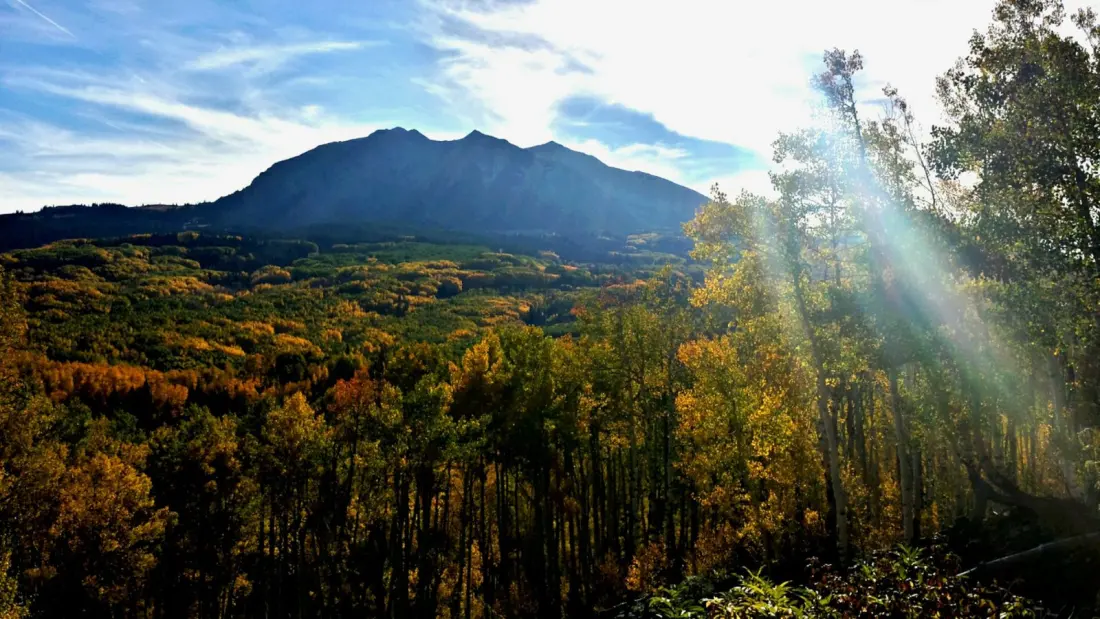
Autumn is arguably the best time on trail — quiet paths, colour, fewer bugs — but packing for it is a headache. A sunny October afternoon can hit 70°F, then the same day can end with temperatures in the low 30s once the sun drops behind the ridge. Go heavy and you're hauling dead weight; go light and you're shivering through camp. The trick is a small, smart kit built around layers.
Start with the core. A synthetic t-shirt, a lightweight fleece, and a packable down jacket cover nearly every fall scenario; add a rain shell if the forecast says so. One writer's rule of thumb: skip the hiking pants entirely. Legs handle morning cold fine once you're moving, and shorts plus a fleece is genuinely the sweet spot for a 40–50 degree day. Where pants do earn their keep is camp — a pair of lightweight merino base-layer pants to swap into at night doubles as sleepwear, resists odour, and packs down tiny.
The small stuff punches above its weight. A merino beanie and a few ounces of light gloves live in an outside pocket and go on and off as conditions shift, and a beanie alone can retain about as much warmth as an extra torso layer. Mornings clutching trekking poles with frozen fingers are exactly what those gloves are for.
Night is where fall trips get risky. In mountain country, temperatures can drop 20 degrees within minutes of losing sun, and warm days actually make the swing feel worse. The advice: when choosing between two sleeping bags, take the warmer one. A 25- or 30-degree mummy bag is the default for most autumn trips — and always compare the forecast against a bag's 'comfort' rating, not the more optimistic 'lower limit.' As for the sleeping pad, you can get away with a summer-weight model, because ground that baked in sunshine all day holds heat even when the air hits freezing. A pad around a 3.5 R-value has handled nights down to 20 degrees.
One final mistake worth avoiding: daylight. Post-solstice evenings shrink fast, and mild temperatures trick people into assuming long days. A common error is finishing miles in the dark with a headlamp that can't handle camp setup. Bring a proper one, even if the weather looks perfect — the alternative is building your tent by phone flashlight, or worse, a desperate big-box store run mid-trip.
Who is this for? Anyone planning shoulder-season hikes, whether a weekend in the Rockies, the Ozark-height trails of Arkansas and Oklahoma, or an autumn trek in the Alps or Scottish Highlands. The principle travels anywhere with big day-night temperature gaps: prioritise your core layers, treat accessories as modular warmth, over-insulate for the night, and respect the clock as much as the forecast.