
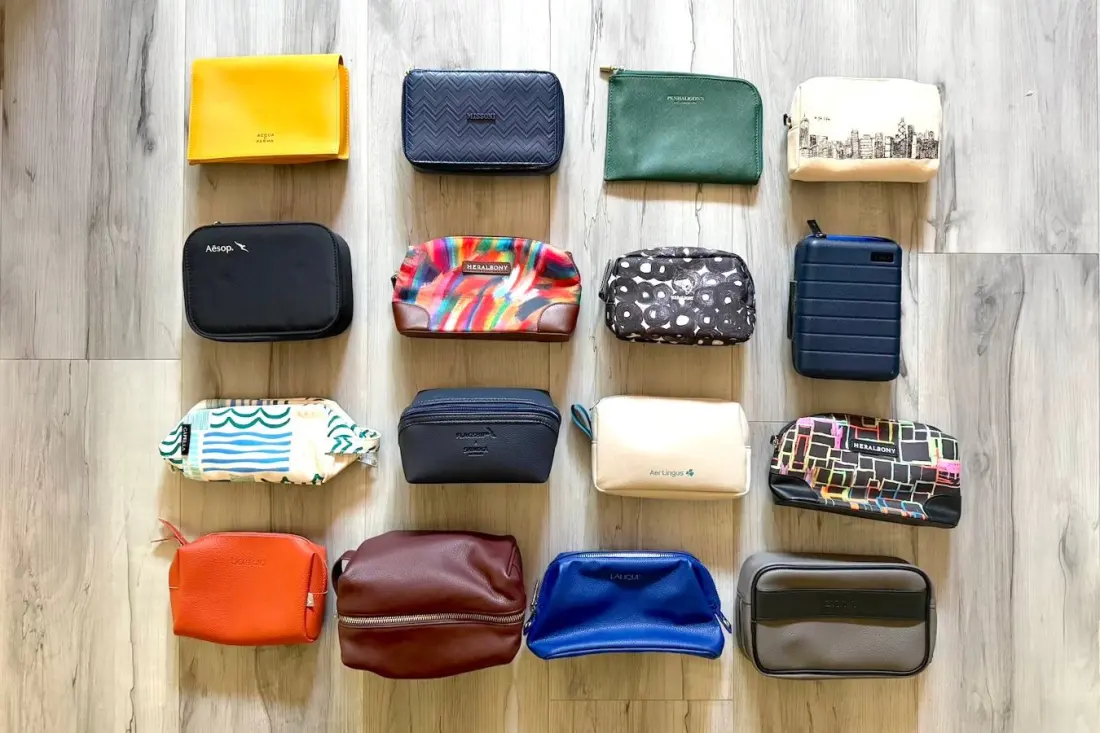
Premium cabin amenity kits are nice, but they're a lottery. You might get Shiseido skincare in Japan Airlines first class or L'Occitane products in Lufthansa Allegris business — or you might get a pouch full of products that don't suit your skin at all. One writer at The Points Guy, who is allergic to aloe vera (an ingredient lurking in a surprising amount of airline skincare and hand sanitizer), got tired of the gamble and started building his own in-flight kit. The good news: you don't need a business class ticket to do the same, and the kit arguably earns its keep more in economy, where nothing is provided.
The container matters first. Because most of the contents are liquids and gels, a clear pouch (even a Ziploc) saves time and hassle at airport security. From there, the packing list splits into hygiene, comfort and freshness.
For hygiene: sanitizing wipes for the seat tray and armrests, hand sanitizer, tissues, a compact folding toothbrush, travel toothpaste (or toothpaste tablets, which skip the liquid limit entirely), and a small stick of deodorant for freshening up before landing. Facial wipes are a smart alternative to washing your face with lavatory water — which the author flatly advises against.
For comfort: silicone or foam earplugs, a breathable eye mask (airline ones are often itchy), saline nasal spray used every few hours to counter the bone-dry cabin air, lubricating eye drops on longer flights, and chewing gum for dry mouth and takeoff/landing pressure changes. A long-haul veteran flying routes of up to 16 hours also swears by a compact pill pack — daily vitamins plus a few ibuprofen or Tylenol — instead of hauling full bottles.
For arriving human rather than zombie: hand cream (CeraVe is the pick — a small tube lasts months), an unscented eye cream that doubles as face moisturizer, and lip balm with SPF so you're protected if you land in midday sun. Oh, and a pen. The one person on the plane with a working pen becomes instantly popular when immigration forms appear.
A few details are worth stealing regardless of your skin situation. Saline spray, the author notes, has coincided with getting sick far less often after flights. Wipes containing harsh disinfectant mean washing your hands afterwards; gentler brands like Wet Ones work if you don't have an aloe issue. And many sanitizing gels contain aloe, so allergy-prone travellers should check labels.
Who is this for? Basically anyone facing more than about six hours in a seat. In economy, where airlines hand you nothing beyond a blanket, a kit like this is the difference between landing wrecked and landing ready. Even in premium cabins, bringing your own earplugs, eye mask and moisturizer sidesteps the quality lottery entirely. Everything fits in a pouch the size of a paperback, and most items are things frequent travellers should be carrying anyway.